Mak W C, Olesen K, Sivlér P, Lee C J, Moreno-Jimenez I, Edin J, Courtman D, Skog M, Griffith M
Integrative Regenerative Medicine Centre, Department of Clinical and Experimental Medicine, Linköping University, SE58185, Linköping, Sweden.
Biosensors and Bioelectronics Centre, Department of Physics, Chemistry and Biology, Linkӧping University, SE58183, Linköping, Sweden.
J Funct Biomater. 2015 Jun 18;6(2):439-53. doi: 10.3390/jfb6020439.
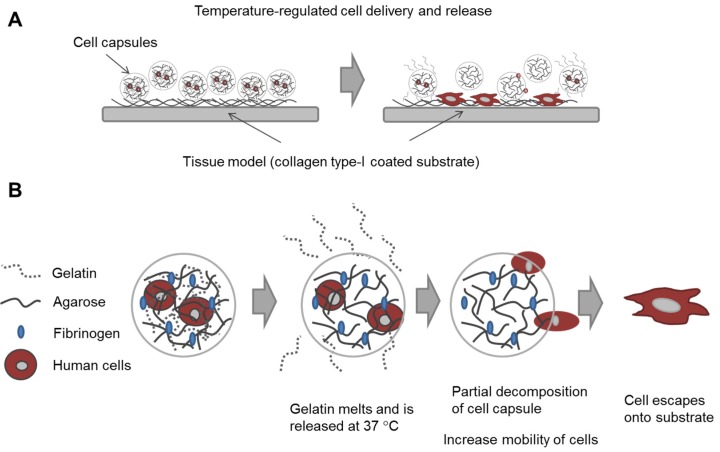
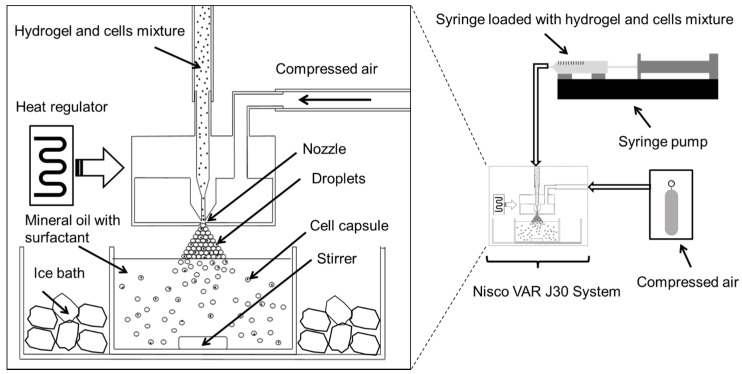
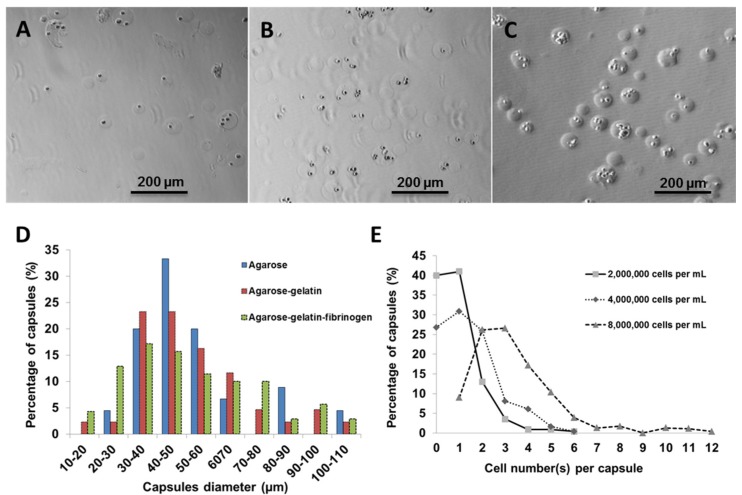
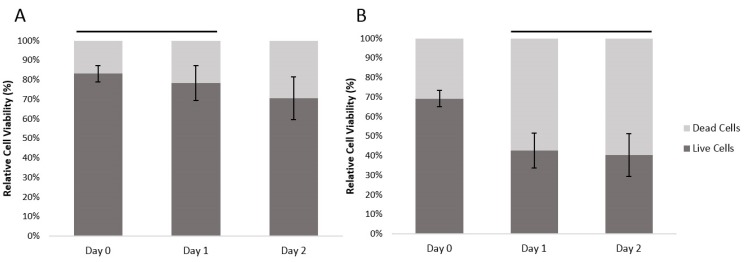
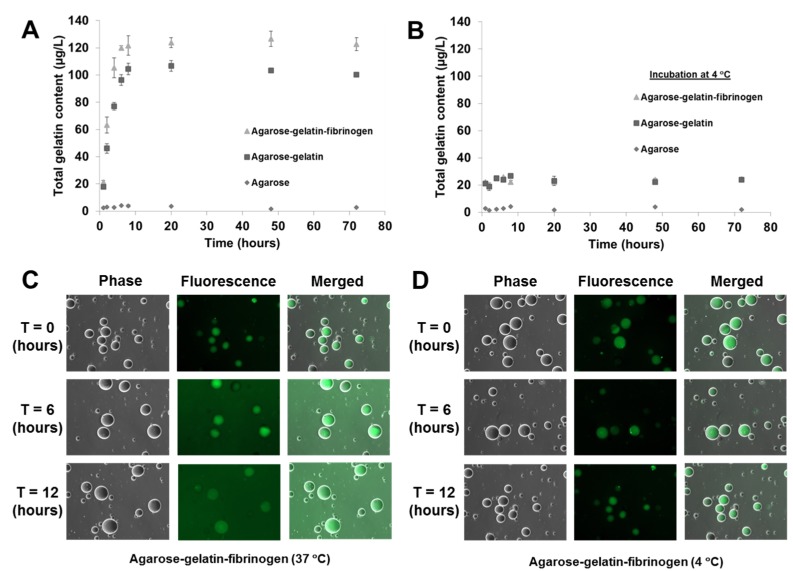
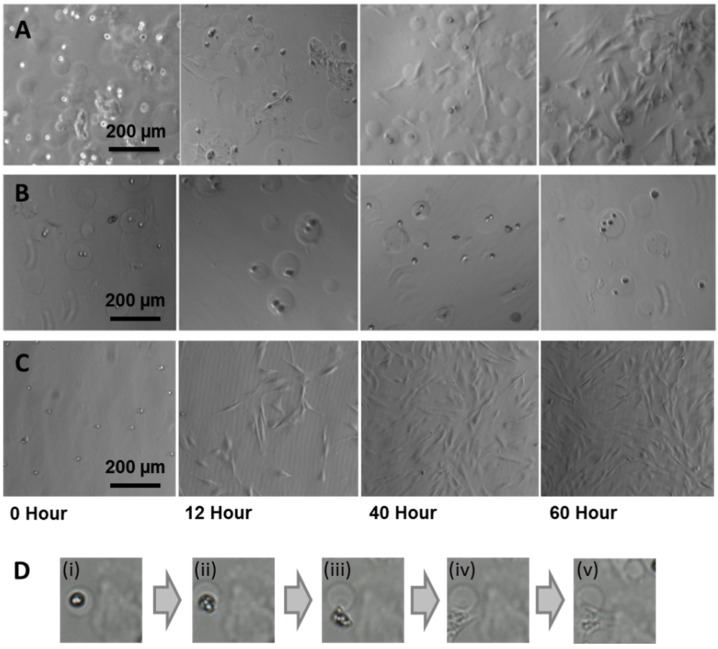
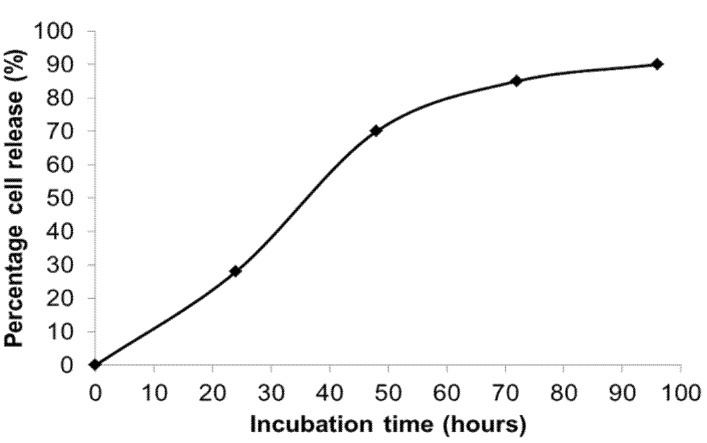
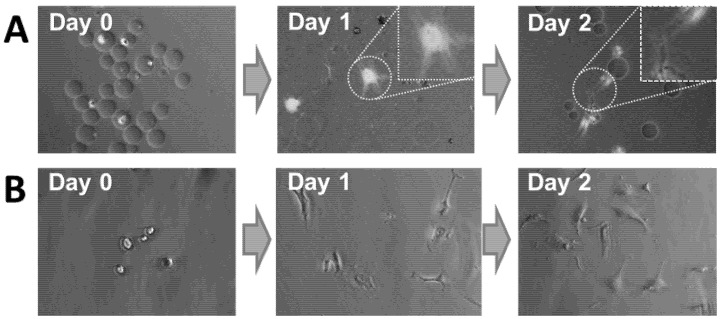
Cell therapy is one of the most promising areas within regenerative medicine. However, its full potential is limited by the rapid loss of introduced therapeutic cells before their full effects can be exploited, due in part to anoikis, and in part to the adverse environments often found within the pathologic tissues that the cells have been grafted into. Encapsulation of individual cells has been proposed as a means of increasing cell viability. In this study, we developed a facile, high throughput method for creating temperature responsive microcapsules comprising agarose, gelatin and fibrinogen for delivery and subsequent controlled release of cells. We verified the hypothesis that composite capsules combining agarose and gelatin, which possess different phase transition temperatures from solid to liquid, facilitated the destabilization of the capsules for cell release. Cell encapsulation and controlled release was demonstrated using human fibroblasts as model cells, as well as a therapeutically relevant cell line-human umbilical vein endothelial cells (HUVECs). While such temperature responsive cell microcapsules promise effective, controlled release of potential therapeutic cells at physiological temperatures, further work will be needed to augment the composition of the microcapsules and optimize the numbers of cells per capsule prior to clinical evaluation.
细胞疗法是再生医学中最具前景的领域之一。然而,其全部潜力受到限制,因为导入的治疗性细胞在充分发挥作用之前就迅速丧失,部分原因是失巢凋亡,部分原因是细胞移植到的病理组织中常存在的不利环境。有人提出将单个细胞封装起来作为提高细胞活力的一种方法。在本研究中,我们开发了一种简便的高通量方法,用于制备包含琼脂糖、明胶和纤维蛋白原的温度响应性微胶囊,以用于细胞递送及后续的控释。我们验证了这样一个假设,即结合了琼脂糖和明胶的复合胶囊(它们具有不同的从固体到液体的相变温度)有助于胶囊的不稳定以实现细胞释放。使用人成纤维细胞作为模型细胞以及一种具有治疗相关性的细胞系——人脐静脉内皮细胞(HUVECs),证明了细胞封装和控释。虽然这种温度响应性细胞微胶囊有望在生理温度下有效、可控地释放潜在的治疗性细胞,但在临床评估之前,还需要进一步开展工作来改进微胶囊的组成并优化每个胶囊中的细胞数量。