Stotz Sabrina J, Elbert Thomas, Müller Veronika, Schauer Maggie
Department of Psychology, University of Konstanz, Konstanz, Germany;
Department of Psychology, University of Konstanz, Konstanz, Germany.
Eur J Psychotraumatol. 2015 Jun 22;6:25863. doi: 10.3402/ejpt.v6.25863. eCollection 2015.
The relationships between traumatic stress and self-conscious emotions, such as shame and guilt, remain to be fully explored, especially in refugees, who frequently are exposed to a multitude of stressors.
The aim of the present study was to investigate shame and guilt in refugee minors and to assess to what extent a greater cumulative exposure to traumatic stressors would result not only in more severe posttraumatic stress disorder (PTSD) symptoms but also in higher levels of shame and guilt.
Thirty-two male refugee minors, who were all below the age of 18 when they sought asylum in Germany, agreed to participate. At the time of the assessment, the age ranged from 11 to 20 years. Eighteen refugees had arrived without relatives in their host country ("unaccompanied minors"). In structured diagnostic interviews, a PTSD diagnosis was established using the UCLA PTSD Index. Posttraumatic guilt was assessed by means of the Trauma-related Guilt Inventory, and the Shame Variability Questionnaire was used to record the intensity, duration, and frequency of shame episodes.
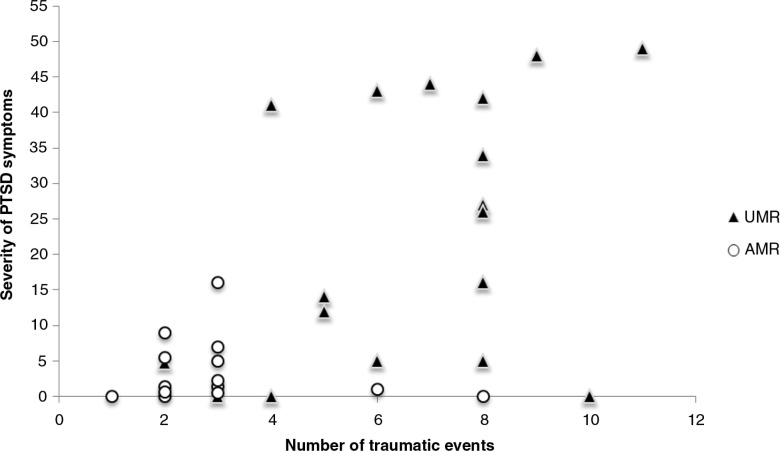
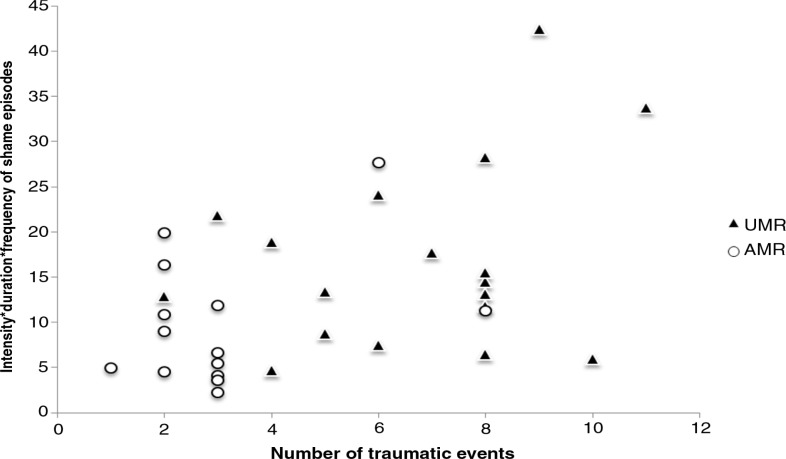
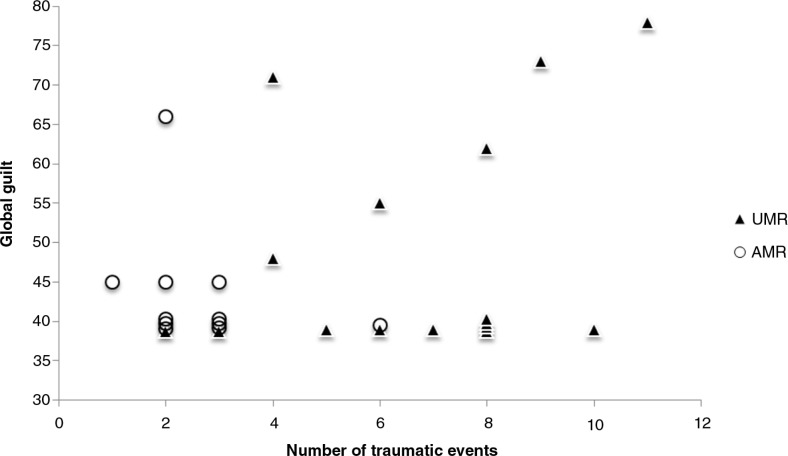
Feelings of guilt and shame as well as trauma symptoms were all associated with the number of traumatic event types subjects had experienced. Posttraumatic guilt and shame were both correlated with PTSD symptom severity.
The findings indicate that cumulative stress such as exposure to multiple traumatic events poses a risk factor for the mental health including greater suffering and functional impairment due to shame and guilt.
创伤应激与诸如羞耻和内疚等自我意识情绪之间的关系仍有待充分探索,尤其是在经常暴露于多种应激源的难民群体中。
本研究旨在调查难民未成年人中的羞耻和内疚情绪,并评估累积暴露于更多创伤应激源在何种程度上不仅会导致更严重的创伤后应激障碍(PTSD)症状,还会导致更高水平的羞耻和内疚感。
32名男性难民未成年人同意参与研究,他们在德国寻求庇护时均未满18岁。评估时,年龄在11至20岁之间。其中18名难民在东道国无亲属陪伴(“无人陪伴未成年人”)。在结构化诊断访谈中,使用加州大学洛杉矶分校PTSD指数进行PTSD诊断。通过创伤相关内疚量表评估创伤后内疚感,并使用羞耻变异性问卷记录羞耻发作的强度、持续时间和频率。
内疚感、羞耻感以及创伤症状均与受试者经历的创伤事件类型数量相关。创伤后内疚和羞耻均与PTSD症状严重程度相关。
研究结果表明,累积应激如暴露于多种创伤事件是心理健康的一个风险因素,会因羞耻和内疚导致更多痛苦和功能损害。