Alexander William H, Fukunaga Rena, Finn Peter, Brown Joshua W
Department of Psychological & Brain Sciences, Indiana University, 1101 E 10th St., Bloomington, IN 47405, USA ; Department of Experimental Psychology, Ghent University, Henri Dunantlaan 2, Ghent B-9000, Belgium.
Department of Psychological & Brain Sciences, Indiana University, 1101 E 10th St., Bloomington, IN 47405, USA.
Neuroimage Clin. 2015 Mar 28;8:59-71. doi: 10.1016/j.nicl.2015.02.025. eCollection 2015.
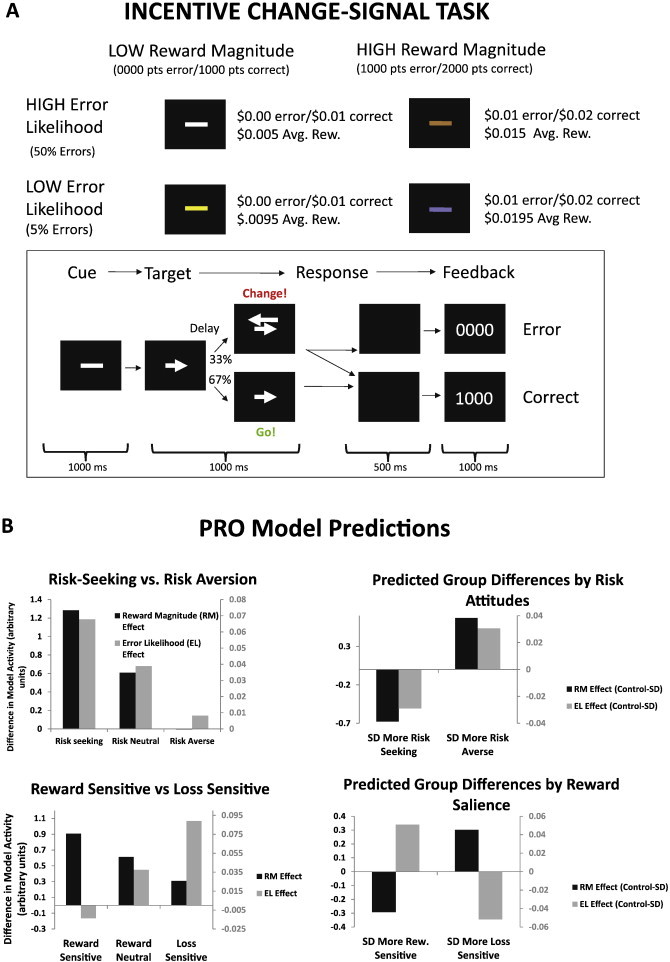
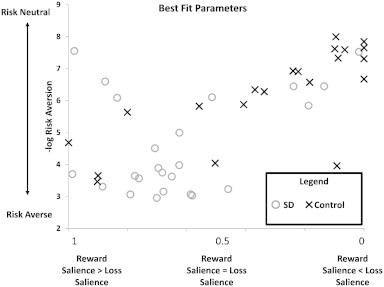
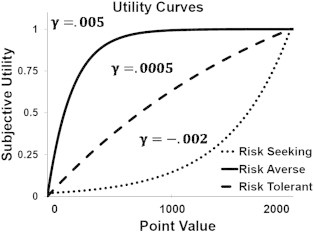
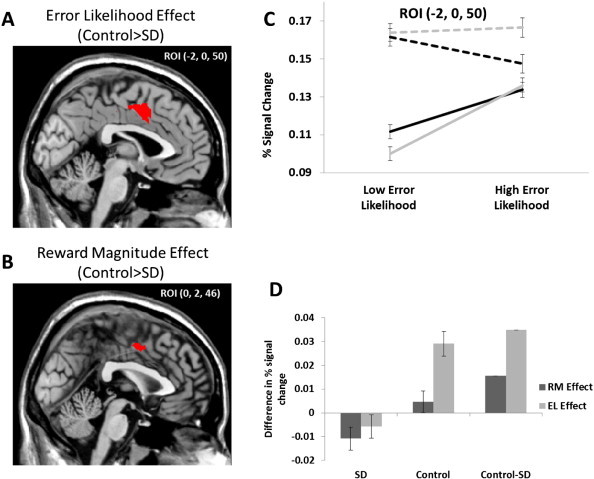
The medial prefrontal cortex, especially the dorsal anterior cingulate cortex (ACC), has long been implicated in cognitive control and error processing. Although the association between ACC and behavior has been established, it is less clear how ACC contributes to dysfunctional behavior such as substance dependence. Evidence from neuroimaging studies investigating ACC function in substance users is mixed, with some studies showing disengagement of ACC in substance dependent individuals (SDs), while others show increased ACC activity related to substance use. In this study, we investigate ACC function in SDs and healthy individuals performing a change signal task for monetary rewards. Using a priori predictions derived from a recent computational model of ACC, we find that ACC activity differs between SDs and controls in factors related to reward salience and risk aversion between SDs and healthy individuals. Quantitative fits of a computational model to fMRI data reveal significant differences in best fit parameters for reward salience and risk preferences. Specifically, the ACC in SDs shows greater risk aversion, defined as concavity in the utility function, and greater attention to rewards relative to reward omission. Furthermore, across participants risk aversion and reward salience are positively correlated. The results clarify the role that ACC plays in both the reduced sensitivity to omitted rewards and greater reward valuation in SDs. Clinical implications of applying computational modeling in psychiatry are also discussed.
内侧前额叶皮质,尤其是背侧前扣带回皮质(ACC),长期以来一直被认为与认知控制和错误处理有关。尽管ACC与行为之间的关联已经确立,但ACC如何导致诸如物质依赖等功能失调行为尚不清楚。对物质使用者的ACC功能进行研究的神经影像学研究结果不一,一些研究表明物质依赖个体(SDs)的ACC脱离,而另一些研究则表明与物质使用相关的ACC活动增加。在本研究中,我们调查了SDs和健康个体在执行金钱奖励的变化信号任务时的ACC功能。利用从最近的ACC计算模型得出的先验预测,我们发现SDs和对照组在与奖励显著性和SDs与健康个体之间的风险规避相关的因素上,ACC活动存在差异。计算模型对功能磁共振成像数据的定量拟合揭示了奖励显著性和风险偏好的最佳拟合参数存在显著差异。具体而言,SDs的ACC表现出更大的风险规避,定义为效用函数中的凹性,以及相对于奖励遗漏对奖励的更多关注。此外,在参与者中,风险规避和奖励显著性呈正相关。这些结果阐明了ACC在SDs对遗漏奖励的敏感性降低和更高的奖励估值中所起的作用。还讨论了在精神病学中应用计算模型的临床意义。