Reverey Julia F, Jeon Jae-Hyung, Bao Han, Leippe Matthias, Metzler Ralf, Selhuber-Unkel Christine
Institute for Materials Science, Biocompatible Nanomaterials, Christian-Albrechts-Universität zu Kiel, Kaiserstr. 2, D-24143 Kiel, Germany.
School of Physics, Korea Institute for Advanced Study, Seoul 130-722, Republic of Korea.
Sci Rep. 2015 Jun 30;5:11690. doi: 10.1038/srep11690.
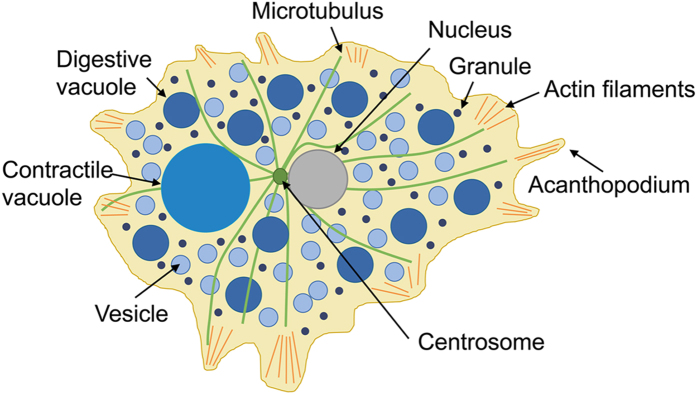
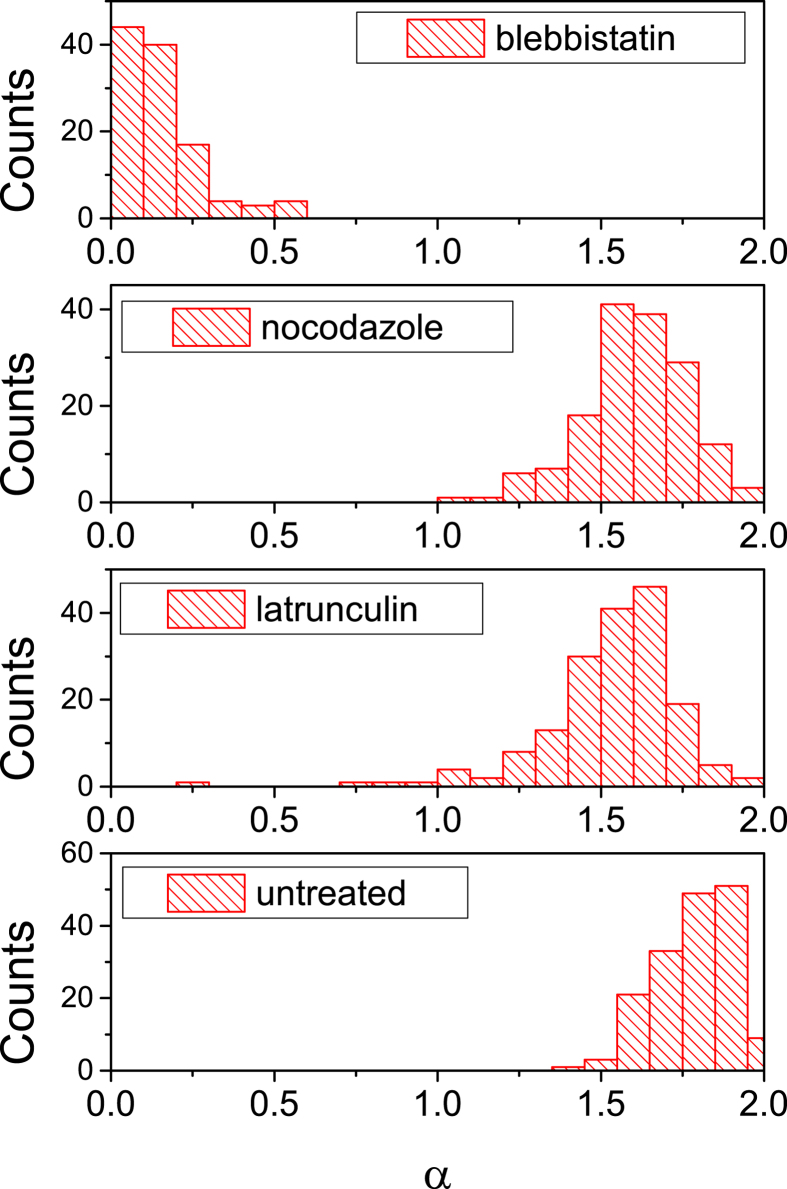
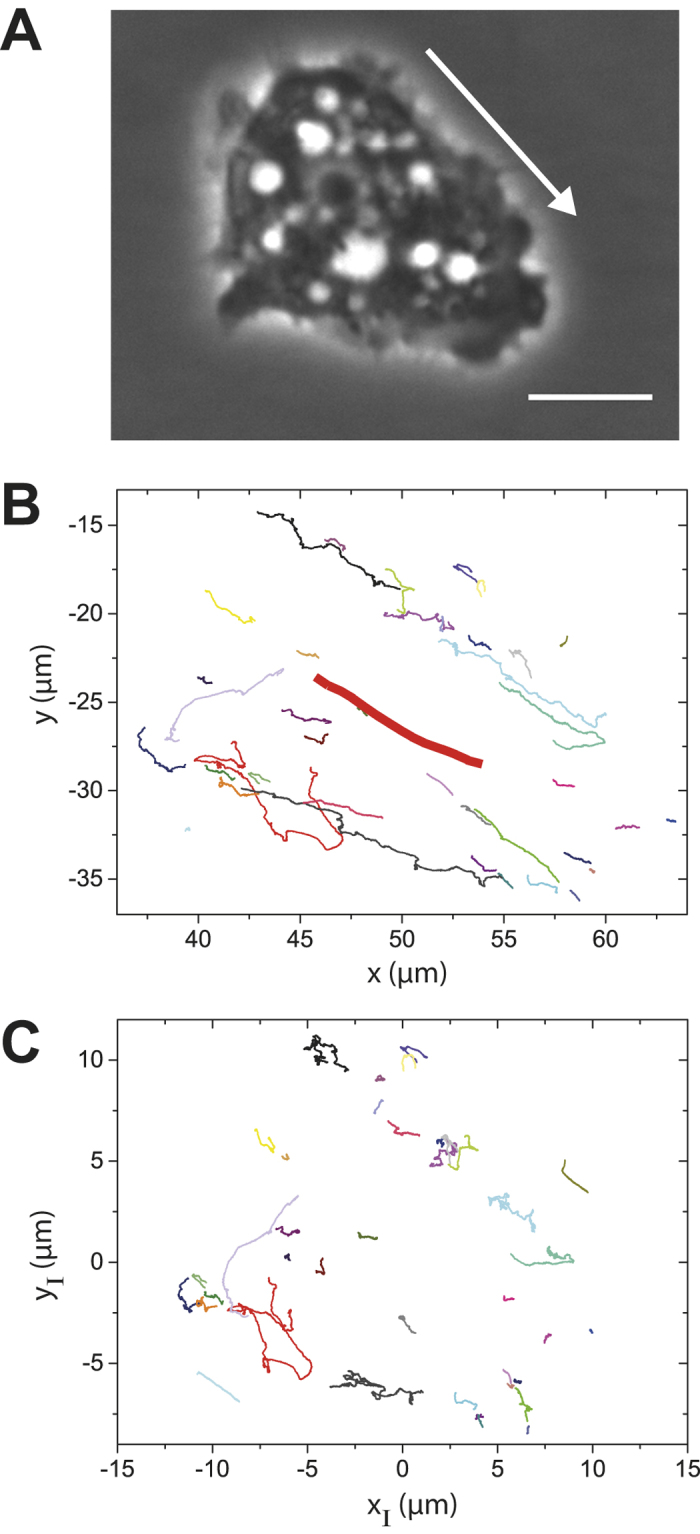
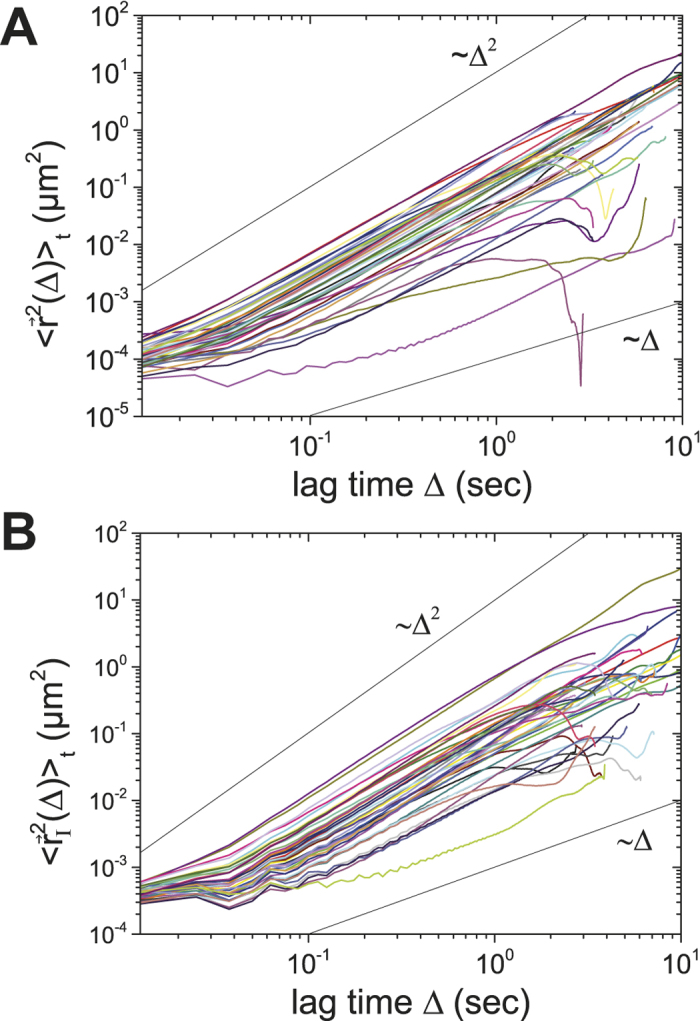
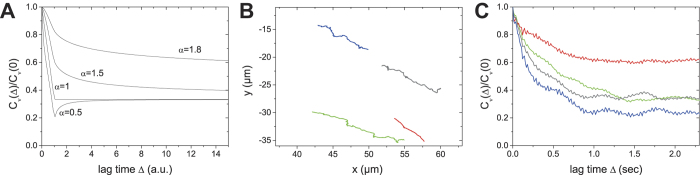
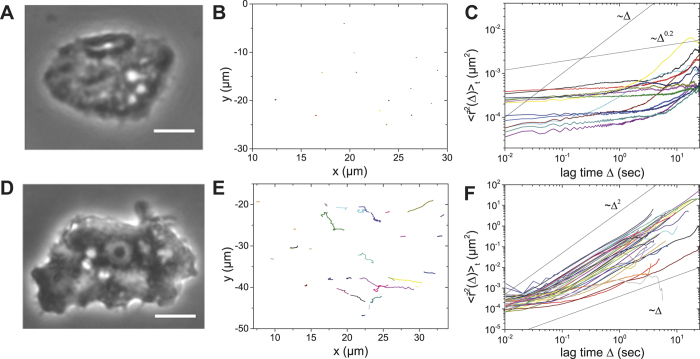
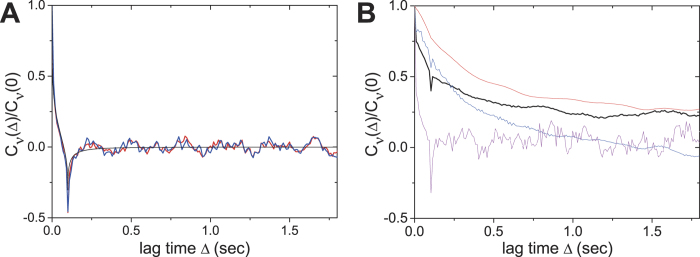
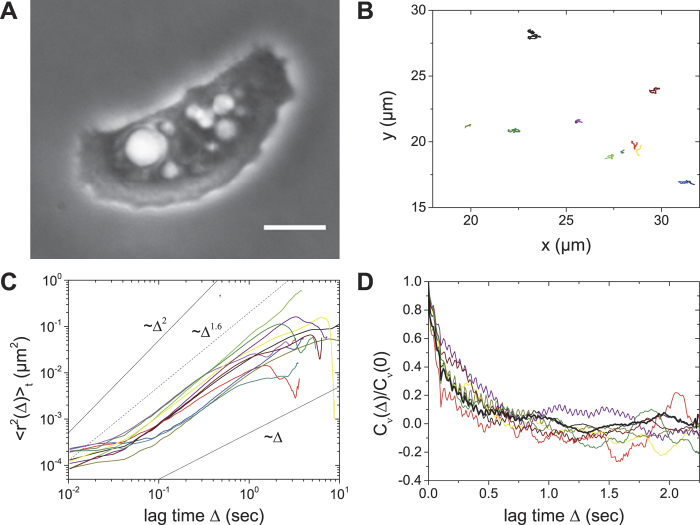
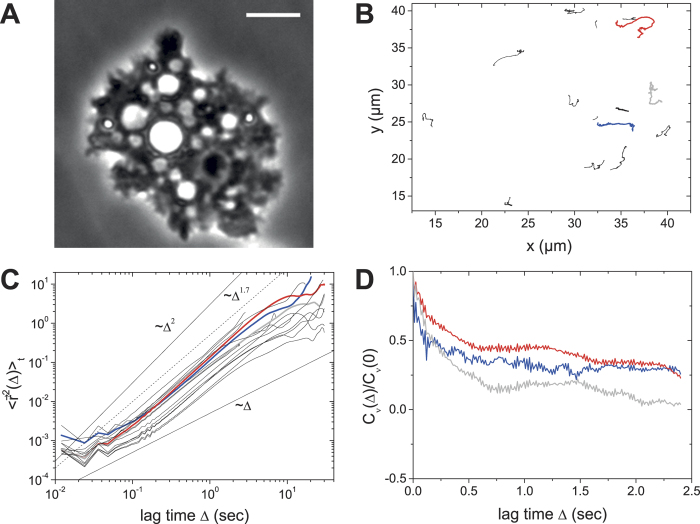
Acanthamoebae are free-living protists and human pathogens, whose cellular functions and pathogenicity strongly depend on the transport of intracellular vesicles and granules through the cytosol. Using high-speed live cell imaging in combination with single-particle tracking analysis, we show here that the motion of endogenous intracellular particles in the size range from a few hundred nanometers to several micrometers in Acanthamoeba castellanii is strongly superdiffusive and influenced by cell locomotion, cytoskeletal elements, and myosin II. We demonstrate that cell locomotion significantly contributes to intracellular particle motion, but is clearly not the only origin of superdiffusivity. By analyzing the contribution of microtubules, actin, and myosin II motors we show that myosin II is a major driving force of intracellular motion in A. castellanii. The cytoplasm of A. castellanii is supercrowded with intracellular vesicles and granules, such that significant intracellular motion can only be achieved by actively driven motion, while purely thermally driven diffusion is negligible.
棘阿米巴原虫是自由生活的原生生物和人类病原体,其细胞功能和致病性在很大程度上依赖于细胞内囊泡和颗粒在细胞质中的运输。通过结合高速活细胞成像和单粒子追踪分析,我们在此表明,在卡氏棘阿米巴中,大小从几百纳米到几微米的内源性细胞内颗粒的运动具有强烈的超扩散性,并受到细胞运动、细胞骨架成分和肌球蛋白II的影响。我们证明细胞运动对细胞内颗粒运动有显著贡献,但显然不是超扩散性的唯一来源。通过分析微管、肌动蛋白和肌球蛋白II马达的贡献,我们表明肌球蛋白II是卡氏棘阿米巴细胞内运动的主要驱动力。卡氏棘阿米巴的细胞质中充满了细胞内囊泡和颗粒,以至于显著的细胞内运动只能通过主动驱动的运动来实现,而纯粹由热驱动的扩散可以忽略不计。