Morrison M M, Williams M M, Vaught D B, Hicks D, Lim J, McKernan C, Aurisicchio L, Ciliberto G, Simion C, Sweeney C, Cook R S
Department of Cancer Biology, Vanderbilt University School of Medicine, Nashville, TN, USA.
Takis Biotech, via di Castel Romano 100, 00128 Rome, Italy.
Oncogene. 2016 Mar 3;35(9):1143-52. doi: 10.1038/onc.2015.169. Epub 2015 Jul 6.
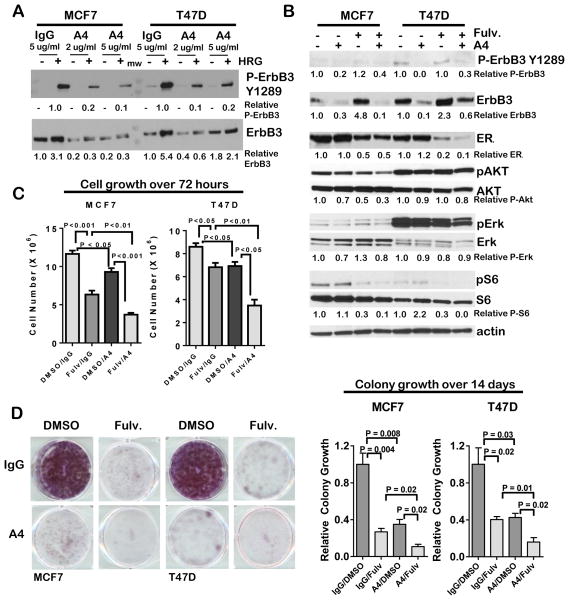
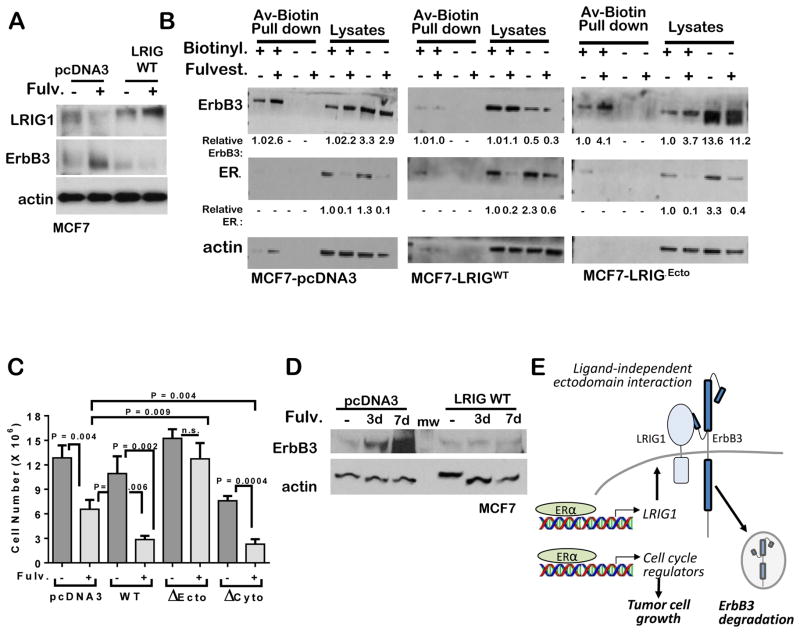
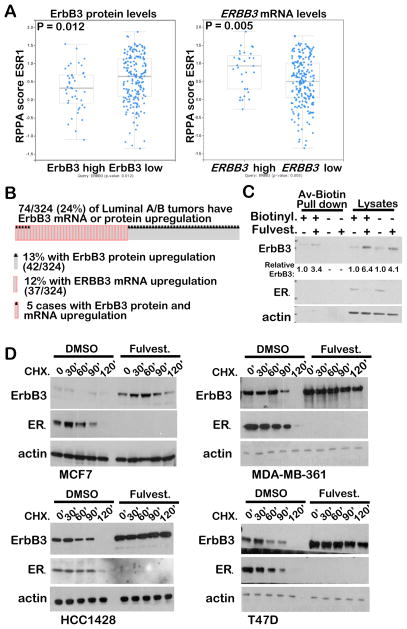
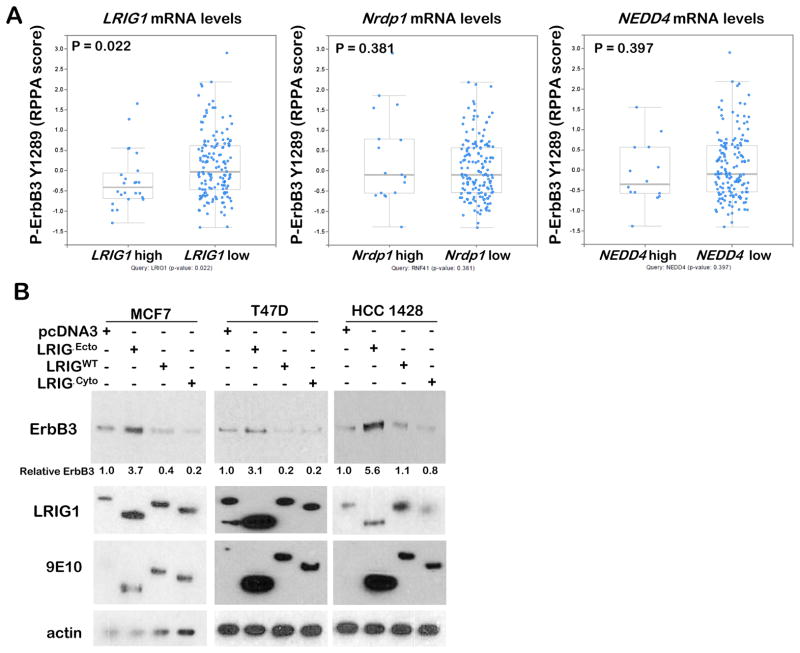
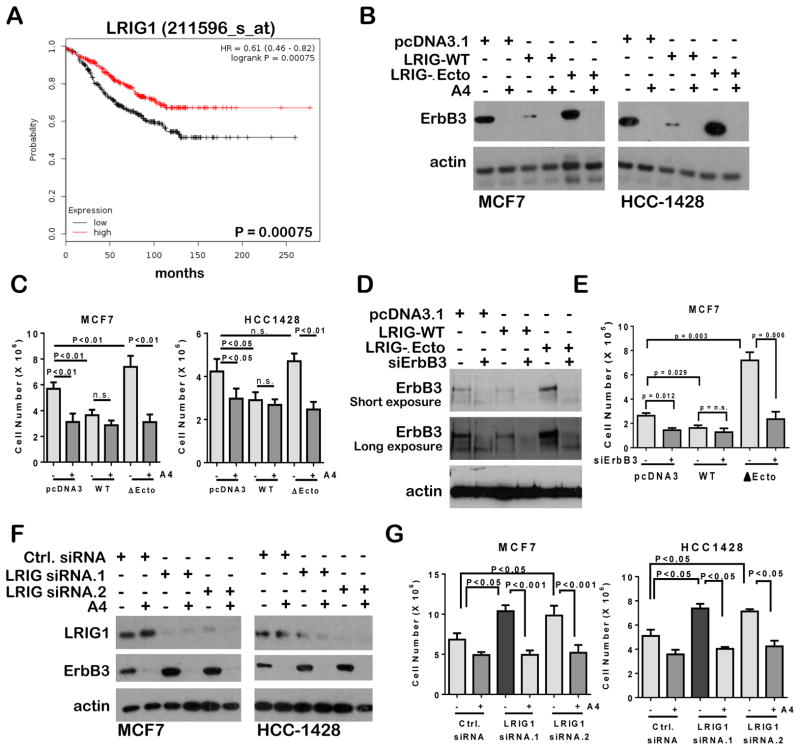
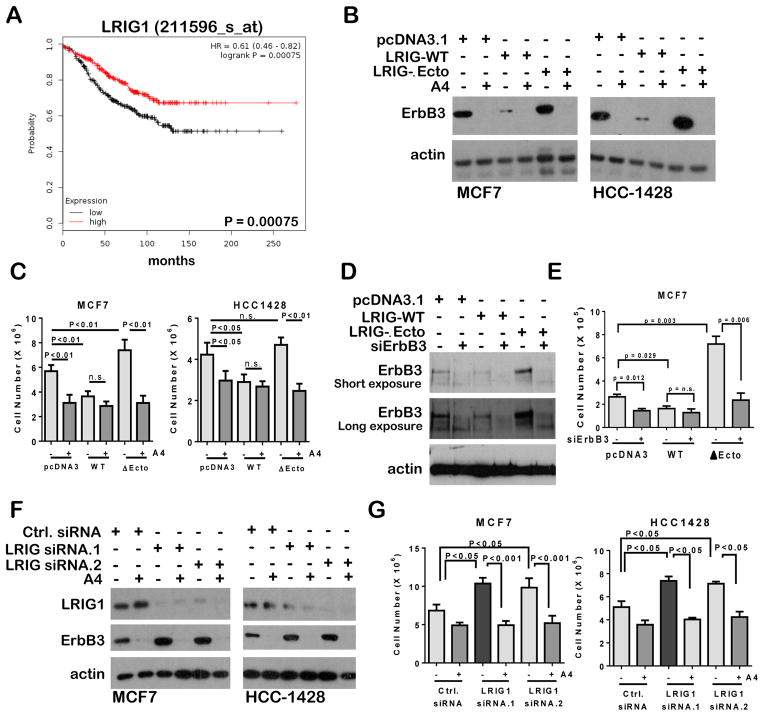
ErbB3, a member of the ErbB family of receptor tyrosine kinases, is a potent activator of phosphatidyl inositol-3 kinase (PI3K) and mammalian target of rapamycin (mTOR) signaling, driving tumor cell survival and therapeutic resistance in breast cancers. In luminal breast cancers, ErbB3 upregulation following treatment with the antiestrogen fulvestrant enhances PI3K/mTOR-mediated cell survival. However, the mechanism by which ErbB3 is upregulated in fulvestrant-treated cells is unknown. We found that ErbB3 protein levels and cell surface presentation were increased following fulvestrant treatment, focusing our attention on proteins that regulate ErbB3 at the cell surface, including Nrdp1, NEDD4 and LRIG1. Among these, only LRIG1 correlated positively with ERα, but inversely with ErbB3 in clinical breast cancer data sets. LRIG1, an estrogen-inducible ErbB downregulator, was decreased in a panel of fulvestrant-treated luminal breast cancer cells. Ectopic LRIG1 expression from an estrogen-independent promoter uncoupled LRIG1 from estrogen regulation, thus sustaining LRIG1 and maintaining low ErbB3 levels in fulvestrant-treated cells. An LRIG1 mutant lacking the ErbB3 interaction motif was insufficient to downregulate ErbB3. Importantly, LRIG1 overexpression improved fulvestrant-mediated growth inhibition, whereas cells expressing the LRIG1 mutant were poorly sensitive to fulvestrant, despite effective ERα downregulation. Consistent with these results, LRIG1 expression correlated positively with increased disease-free survival in antiestrogen-treated breast cancer patients. These data suggest that ERα-dependent expression of LRIG1 dampens ErbB3 signaling in luminal breast cancer cells, and by blocking ERα activity with fulvestrant, LRIG1 is decreased thus permitting ErbB3 accumulation, enhanced ErbB3 signaling to cell survival pathways and blunting therapeutic response to fulvestrant.
表皮生长因子受体3(ErbB3)是受体酪氨酸激酶ErbB家族的成员,是磷脂酰肌醇-3激酶(PI3K)和哺乳动物雷帕霉素靶蛋白(mTOR)信号通路的强效激活剂,可驱动乳腺癌细胞的存活和治疗耐药性。在管腔型乳腺癌中,抗雌激素药物氟维司群治疗后ErbB3上调可增强PI3K/mTOR介导的细胞存活。然而,氟维司群处理的细胞中ErbB3上调的机制尚不清楚。我们发现氟维司群处理后ErbB3蛋白水平和细胞表面表达增加,这使我们将注意力集中在细胞表面调节ErbB3的蛋白质上,包括Nrdp1、NEDD4和LRIG1。其中,在临床乳腺癌数据集中,只有LRIG1与雌激素受体α(ERα)呈正相关,但与ErbB3呈负相关。LRIG1是一种雌激素诱导的ErbB下调因子,在一组氟维司群处理的管腔型乳腺癌细胞中减少。来自雌激素非依赖性启动子的异位LRIG1表达使LRIG1与雌激素调节脱钩,从而在氟维司群处理的细胞中维持LRIG1并保持低水平的ErbB3。缺乏ErbB3相互作用基序的LRIG1突变体不足以下调ErbB3。重要的是,LRIG1过表达改善了氟维司群介导的生长抑制,而表达LRIG1突变体的细胞对氟维司群敏感性较差,尽管ERα有效下调。与这些结果一致,LRIG1表达与抗雌激素治疗的乳腺癌患者无病生存期增加呈正相关。这些数据表明,ERα依赖性的LRIG1表达可抑制管腔型乳腺癌细胞中的ErbB3信号通路,并且通过用氟维司群阻断ERα活性,LRIG1减少,从而使ErbB3积累,增强ErbB3向细胞存活通路的信号传导,并减弱对氟维司群的治疗反应。