Zhang Jingcheng, Gao Yang, Yu Mengying, Wu Haibo, Ai Zhiying, Wu Yongyan, Liu Hongliang, Du Juan, Guo Zekun, Zhang Yong
College of Veterinary Medicine, Northwest A&F University, Yangling, 712100, Shaanxi, China; Key Laboratory of Animal Biotechnology, Ministry of Agriculture, Northwest A&F University, Yangling, 712100, Shaanxi, China; College of Veterinary Medicine, China Agricultural University, Beijing, 100094, China.
College of Veterinary Medicine, Northwest A&F University, Yangling, 712100, Shaanxi, China; Key Laboratory of Animal Biotechnology, Ministry of Agriculture, Northwest A&F University, Yangling, 712100, Shaanxi, China.
PLoS One. 2015 Jul 10;10(7):e0132566. doi: 10.1371/journal.pone.0132566. eCollection 2015.
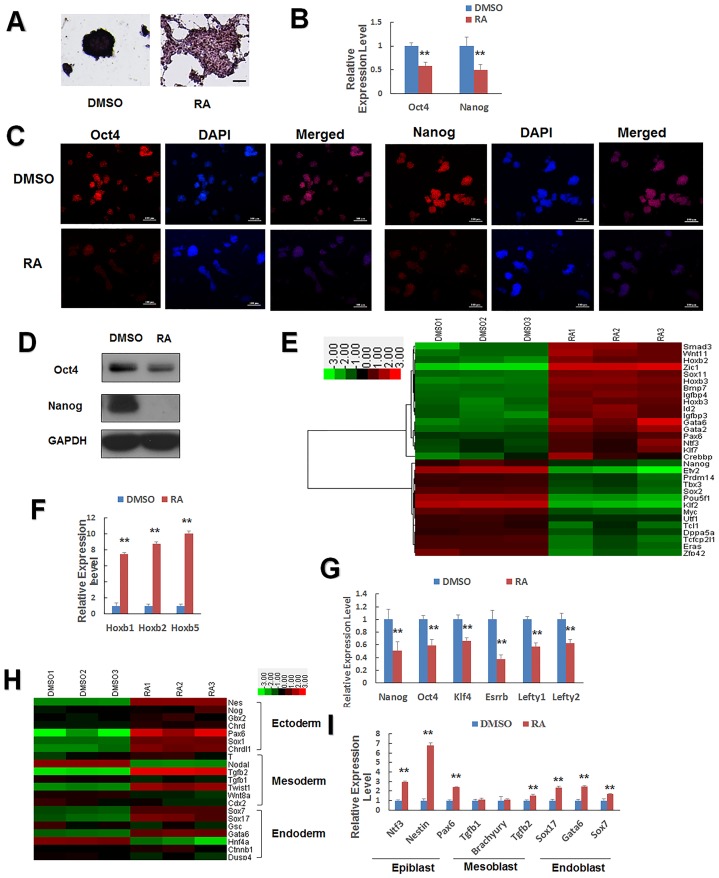
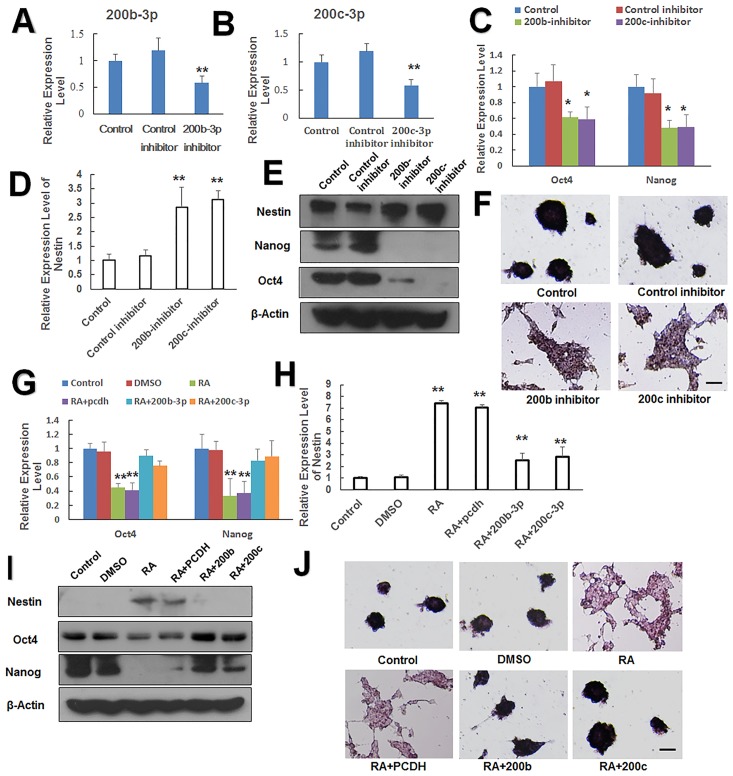
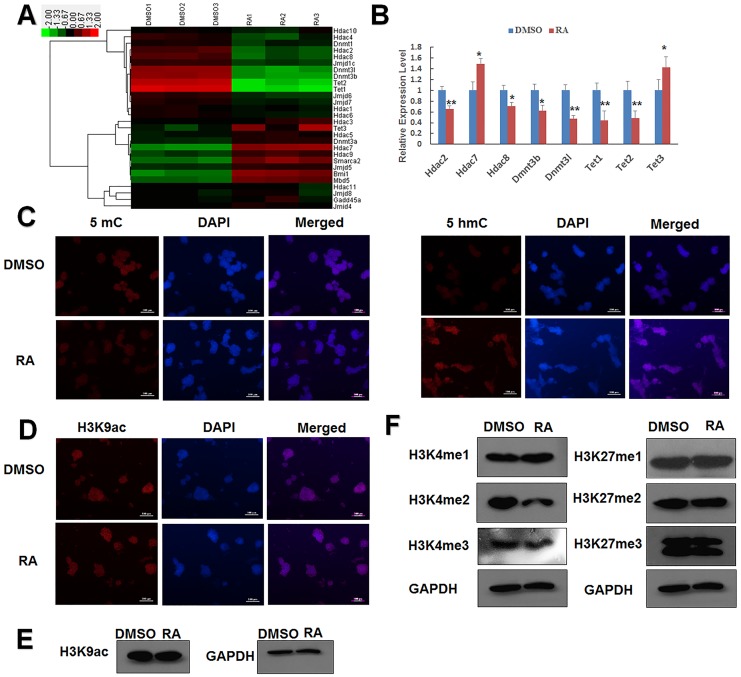
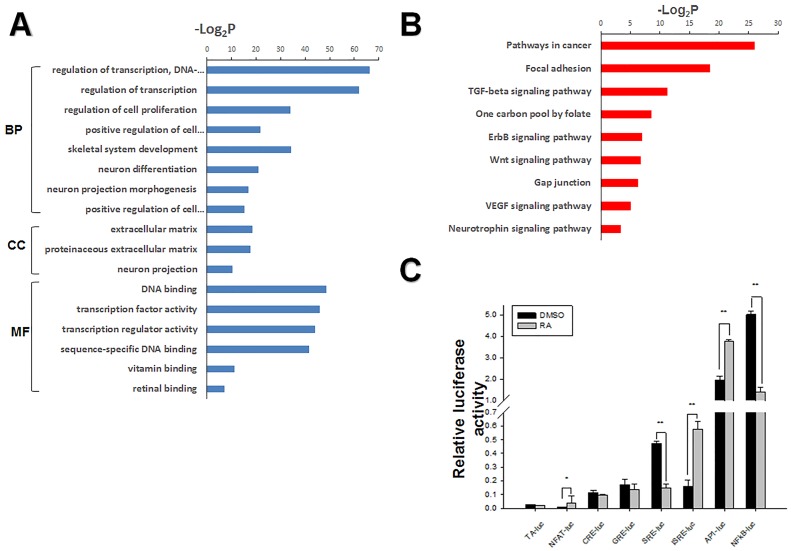
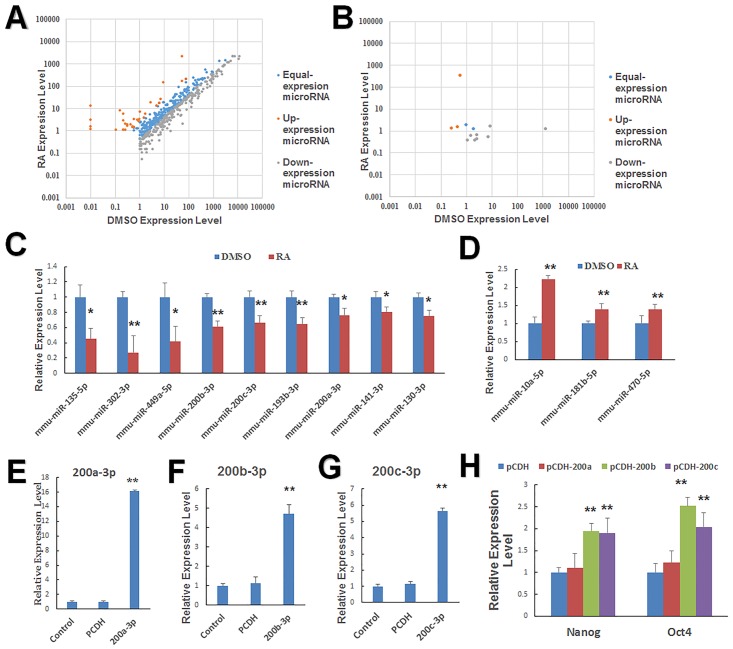
Retinoic acid (RA) is a vitamin A metabolite that is essential for early embryonic development and promotes stem cell neural lineage specification; however, little is known regarding the impact of RA on mRNA transcription and microRNA levels on embryonic stem cell differentiation. Here, we present mRNA microarray and microRNA high-output sequencing to clarify how RA regulates gene expression. Using mRNA microarray analysis, we showed that RA repressed pluripotency-associated genes while activating ectoderm markers in mouse embryonic stem cells (mESCs). Moreover, RA modulated the DNA methylation of mESCs by altering the expression of epigenetic-associated genes such as Dnmt3b and Dnmt3l. Furthermore, H3K4me2, a pluripotent histone modification, was repressed by RA stimulation. From microRNA sequence data, we identified two downregulated microRNAs, namely, miR-200b and miR-200c, which regulated the pluripotency of stem cells. We found that miR-200b or miR-200c deficiency suppressed the expression of pluripotent genes, including Oct4 and Nanog, and activated the expression of the ectodermal marker gene Nestin. These results demonstrate that retinoid induces mESCs to differentiate by regulating miR-200b/200c. Our findings provide the landscapes of mRNA and microRNA gene networks and indicate the crucial role of miR-200b/200c in the RA-induced differentiation of mESCs.
视黄酸(RA)是一种维生素A代谢产物,对早期胚胎发育至关重要,并促进干细胞向神经谱系分化;然而,关于RA对胚胎干细胞分化过程中mRNA转录和微小RNA水平的影响,我们所知甚少。在此,我们展示了mRNA微阵列和微小RNA高通量测序结果,以阐明RA如何调节基因表达。通过mRNA微阵列分析,我们发现RA在小鼠胚胎干细胞(mESC)中抑制多能性相关基因,同时激活外胚层标记物。此外,RA通过改变诸如Dnmt3b和Dnmt3l等表观遗传相关基因的表达来调节mESC的DNA甲基化。此外,RA刺激可抑制多能性组蛋白修饰H3K4me2。从微小RNA序列数据中,我们鉴定出两个下调的微小RNA,即miR-200b和miR-200c,它们调节干细胞的多能性。我们发现miR-200b或miR-200c缺陷会抑制包括Oct4和Nanog在内的多能基因的表达,并激活外胚层标记基因Nestin的表达。这些结果表明,视黄酸通过调节miR-200b/200c诱导mESC分化。我们的研究结果提供了mRNA和微小RNA基因网络的概况,并表明miR-200b/200c在RA诱导的mESC分化中起关键作用。