Vogl Thomas, Ahmad Mudassar, Krainer Florian W, Schwab Helmut, Glieder Anton
Institute of Molecular Biotechnology, Graz University of Technology, Petersgasse 14, 8010, Graz, Austria.
Queensland University of Technology, 2 George St., Brisbane, QLD, 4000, Australia.
Microb Cell Fact. 2015 Jul 14;14:103. doi: 10.1186/s12934-015-0293-6.
Tagging proteins is a standard method facilitating protein detection, purification or targeting. When tagging a certain protein of interest, it is challenging to predict which tag will give optimal results and will not interfere with protein folding, activity or yields. Ideally, multiple tags and positions are tested which however complicates molecular cloning and expression vector generation. In conventional cloning, tags are either added on PCR primers (requiring a distinct primer and PCR product per tag) or provided on the vector (typically leaving a restriction site scar).
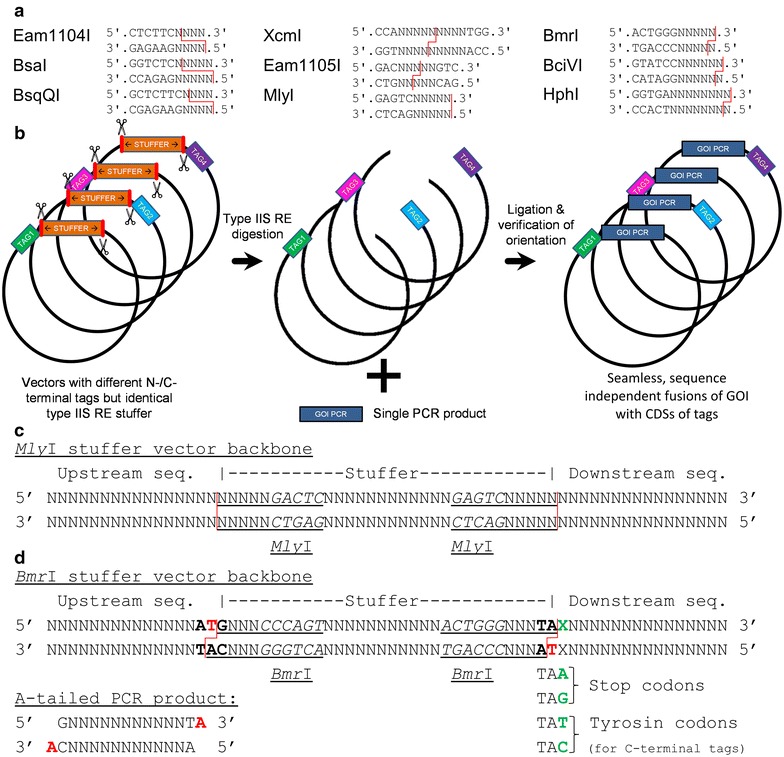
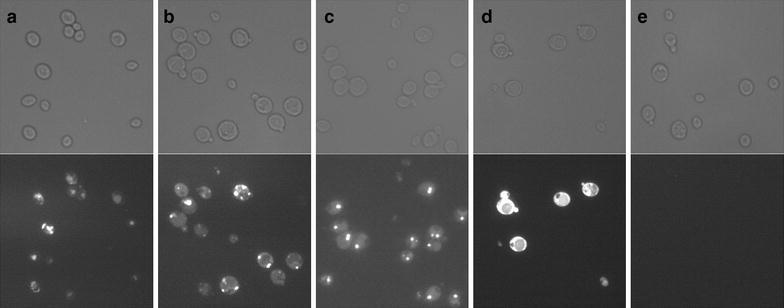
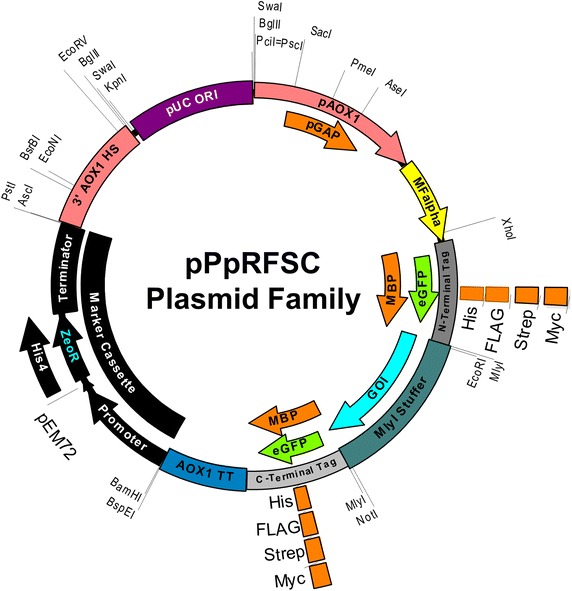
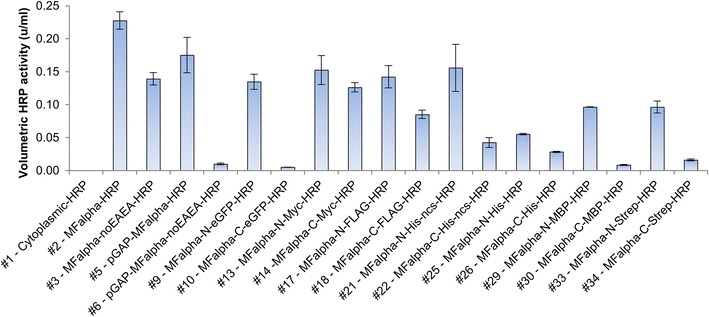
Here we report a vector family of 40 plasmids allowing simple, seamless fusions of a single PCR product with various N- and C-terminal tags, signal sequences and promoters. The restriction site free cloning (RSFC) strategy presented in this paper relies on seamless cloning using type IIS restriction endonucleases. After cutting out a stuffer (placeholder) fragment from the vectors, a single PCR product can be directly inserted in frame into all 40 plasmids using blunt end or TA ligations, requiring only verification of the orientation. We have established a RSFC vector family for the commonly used protein expression host Pichia pastoris and demonstrated the system with the secretory expression of horseradish peroxidase (HRP). HRP fusions to four tags (Myc, FLAG, His, Strep) and two fusion proteins (GFP and MBP) showed a 31-fold difference in volumetric activities. C-terminal tagging caused in some cases almost a complete loss of function, whereas N-terminal tags showed moderate differences.
The RSFC vectors provide an unprecedented toolbox for expression optimization in P. pastoris. The results obtained with HRP underline the importance of comparing different tags to maximize activities of fusion proteins. In a similar fashion the RSFC strategy can be applied in other expression hosts to screen for optimal promoters, signal sequences or to facilitate the evaluation of (iso-) enzyme families.
给蛋白质加上标签是促进蛋白质检测、纯化或靶向定位的一种标准方法。在给特定的目标蛋白质加上标签时,预测哪种标签能产生最佳结果且不会干扰蛋白质折叠、活性或产量具有挑战性。理想情况下,需要测试多个标签和位置,但这会使分子克隆和表达载体构建变得复杂。在传统克隆中,标签要么添加在PCR引物上(每个标签需要一个独特的引物和PCR产物),要么在载体上提供(通常会留下一个限制性酶切位点疤痕)。
在此,我们报告了一个由40个质粒组成的载体家族,该家族允许将单个PCR产物与各种N端和C端标签、信号序列及启动子进行简单、无缝的融合。本文介绍的无限制性酶切位点克隆(RSFC)策略依赖于使用IIS型限制性内切酶进行无缝克隆。从载体中切出一个填充片段后,单个PCR产物可通过平端或TA连接直接框内插入到所有40个质粒中,仅需验证插入方向。我们为常用的蛋白质表达宿主巴斯德毕赤酵母建立了一个RSFC载体家族,并通过辣根过氧化物酶(HRP)的分泌表达展示了该系统。与四种标签(Myc、FLAG、His、Strep)以及两种融合蛋白(GFP和MBP)融合的HRP在体积活性上显示出31倍的差异。在某些情况下,C端加标签几乎导致功能完全丧失,而N端标签显示出适度差异。
RSFC载体为巴斯德毕赤酵母中的表达优化提供了一个前所未有的工具箱。用HRP获得的结果强调了比较不同标签以最大化融合蛋白活性的重要性。以类似的方式,RSFC策略可应用于其他表达宿主,以筛选最佳启动子、信号序列或促进对(同工)酶家族的评估。