Egawa Nagayasu, Egawa Kiyofumi, Griffin Heather, Doorbar John
Division of Virology, Department of Pathology, University of Cambridge, Tennis Court Road, Cambridge CB2 1QP, UK.
The Francis Crick Institute Mill Hill Laboratory, the Ridgeway, Mill Hill, London NW7 1AA, UK.
Viruses. 2015 Jul 16;7(7):3863-90. doi: 10.3390/v7072802.
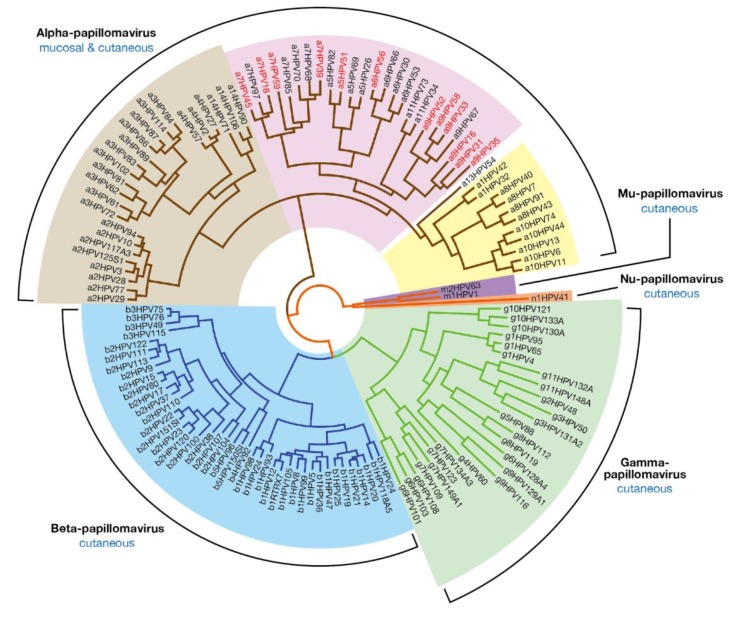
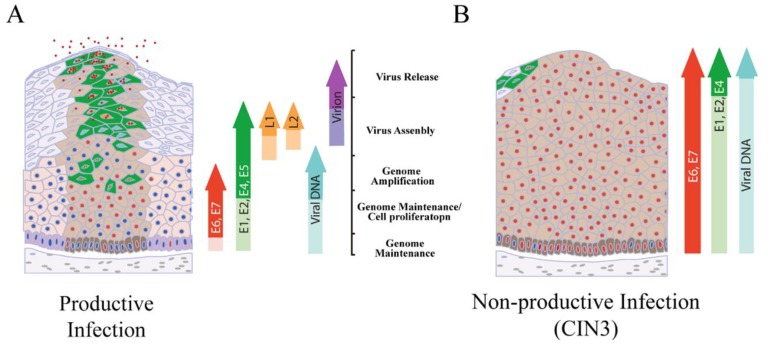
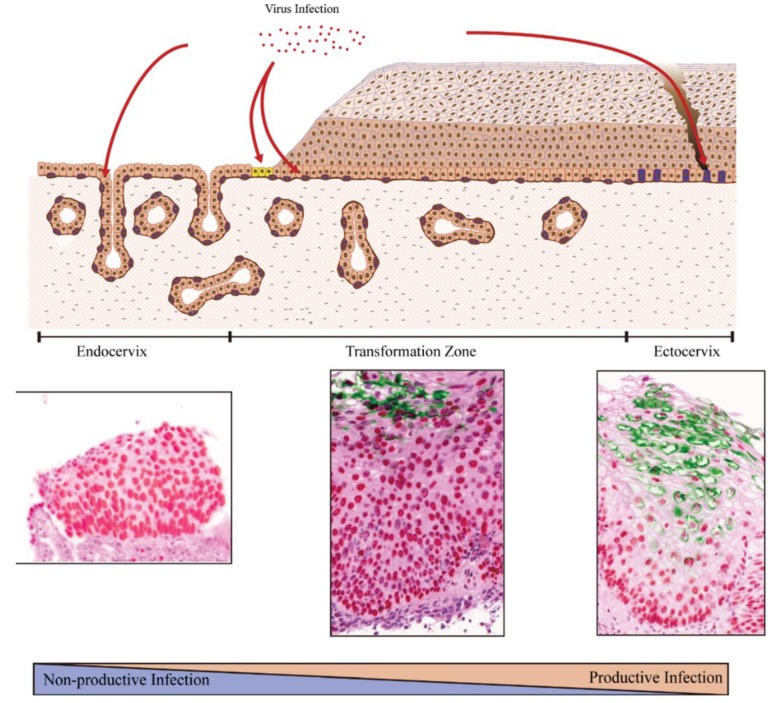
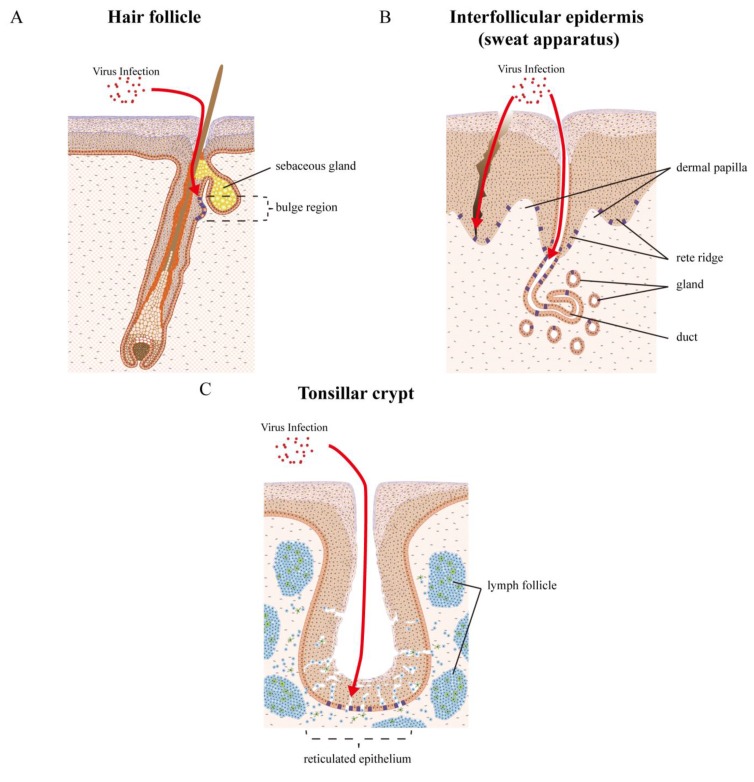
Papillomaviruses have evolved over many millions of years to propagate themselves at specific epithelial niches in a range of different host species. This has led to the great diversity of papillomaviruses that now exist, and to the appearance of distinct strategies for epithelial persistence. Many papillomaviruses minimise the risk of immune clearance by causing chronic asymptomatic infections, accompanied by long-term virion-production with only limited viral gene expression. Such lesions are typical of those caused by Beta HPV types in the general population, with viral activity being suppressed by host immunity. A second strategy requires the evolution of sophisticated immune evasion mechanisms, and allows some HPV types to cause prominent and persistent papillomas, even in immune competent individuals. Some Alphapapillomavirus types have evolved this strategy, including those that cause genital warts in young adults or common warts in children. These strategies reflect broad differences in virus protein function as well as differences in patterns of viral gene expression, with genotype-specific associations underlying the recent introduction of DNA testing, and also the introduction of vaccines to protect against cervical cancer. Interestingly, it appears that cellular environment and the site of infection affect viral pathogenicity by modulating viral gene expression. With the high-risk HPV gene products, changes in E6 and E7 expression are thought to account for the development of neoplasias at the endocervix, the anal and cervical transformation zones, and the tonsilar crypts and other oropharyngeal sites. A detailed analysis of site-specific patterns of gene expression and gene function is now prompted.
乳头瘤病毒已经进化了数百万年,以便在一系列不同宿主物种的特定上皮生态位中自我繁殖。这导致了如今存在的乳头瘤病毒的巨大多样性,以及上皮细胞持续存在的不同策略的出现。许多乳头瘤病毒通过引起慢性无症状感染来将免疫清除的风险降至最低,同时伴随着长期的病毒粒子产生,而病毒基因表达有限。这类病变是普通人群中由β型人乳头瘤病毒引起的典型病变,病毒活性受到宿主免疫的抑制。第二种策略需要进化出复杂的免疫逃避机制,并允许一些人乳头瘤病毒类型即使在免疫功能正常的个体中也能引起明显且持续的乳头瘤。一些α乳头瘤病毒类型已经进化出了这种策略,包括那些在年轻人中引起生殖器疣或在儿童中引起寻常疣的病毒。这些策略反映了病毒蛋白功能的广泛差异以及病毒基因表达模式的差异,基因型特异性关联是最近引入DNA检测以及引入预防宫颈癌疫苗的基础。有趣的是,细胞环境和感染部位似乎通过调节病毒基因表达来影响病毒致病性。对于高危型人乳头瘤病毒基因产物,E6和E7表达的变化被认为是子宫颈管内膜、肛门和宫颈转化区、扁桃体隐窝及其他口咽部位发生肿瘤的原因。现在需要对基因表达和基因功能的位点特异性模式进行详细分析。