Frossard Aline, Ramond Jean-Baptiste, Seely Mary, Cowan Don A
Centre for Microbial Ecology and Genomics (CMEG), Genomic Research Institute, University of Pretoria, Pretoria, South Africa.
1] Gobabeb Research and Training Centre (GTRC), PO Box 953, Walvis Bay, Namibia [2] Animal, Plant and Environmental Sciences, University of the Witwatersrand, Johannesburg, South Africa.
Sci Rep. 2015 Jul 21;5:12263. doi: 10.1038/srep12263.
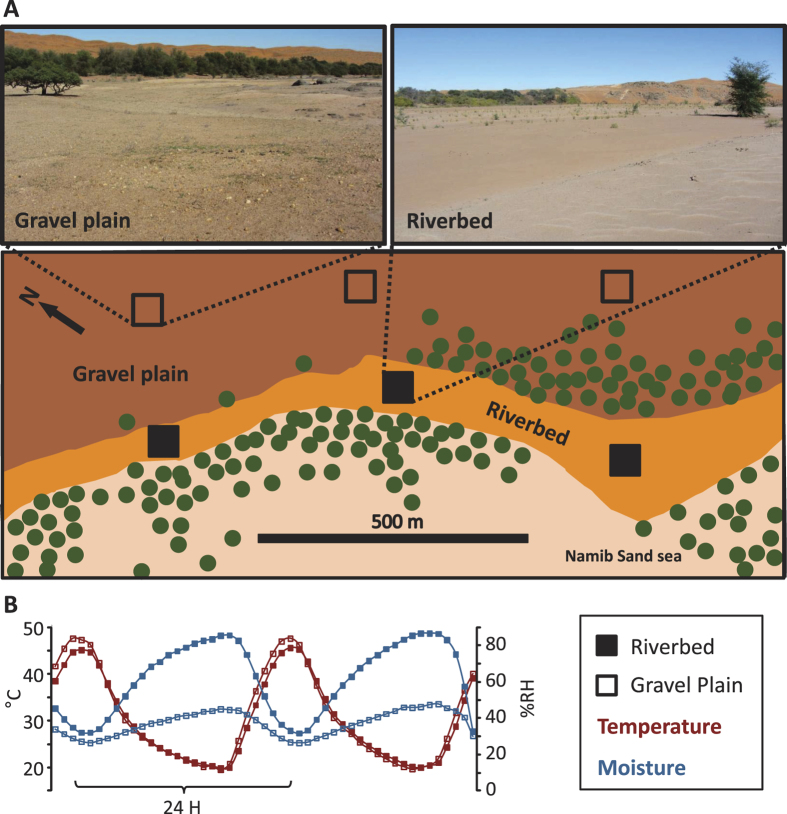
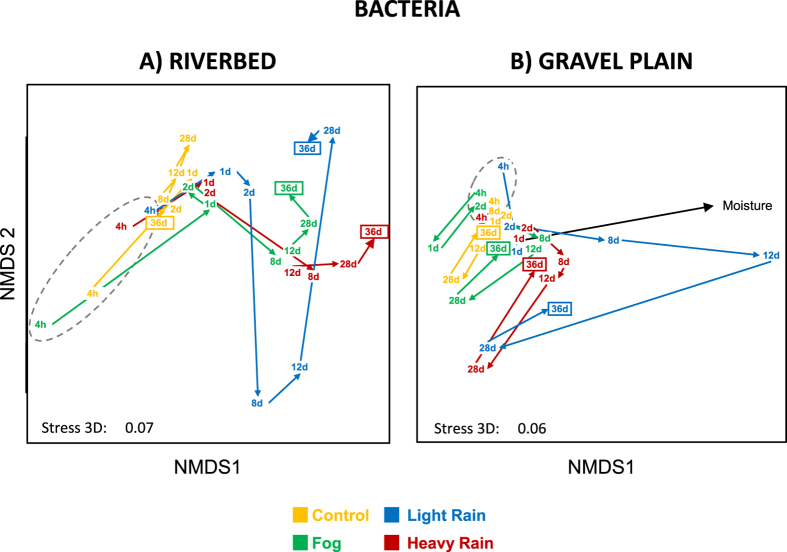
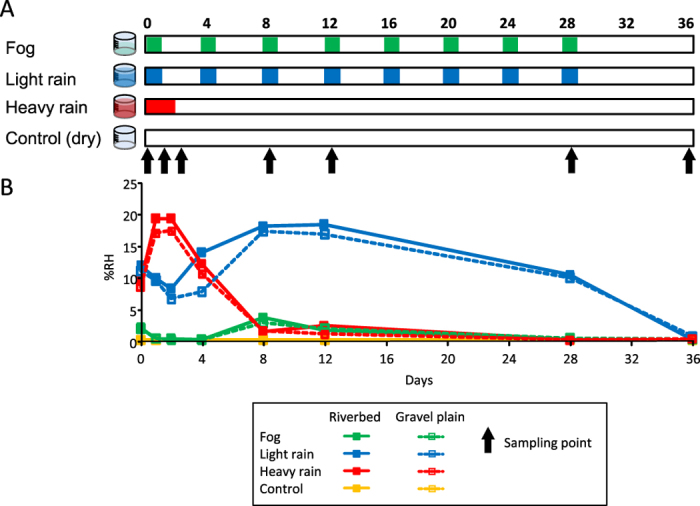
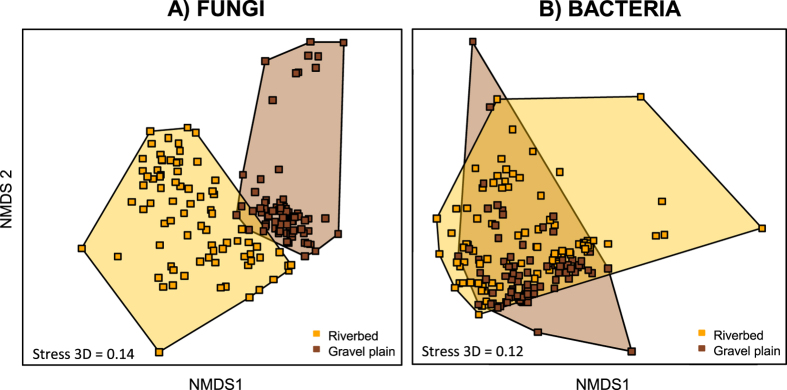
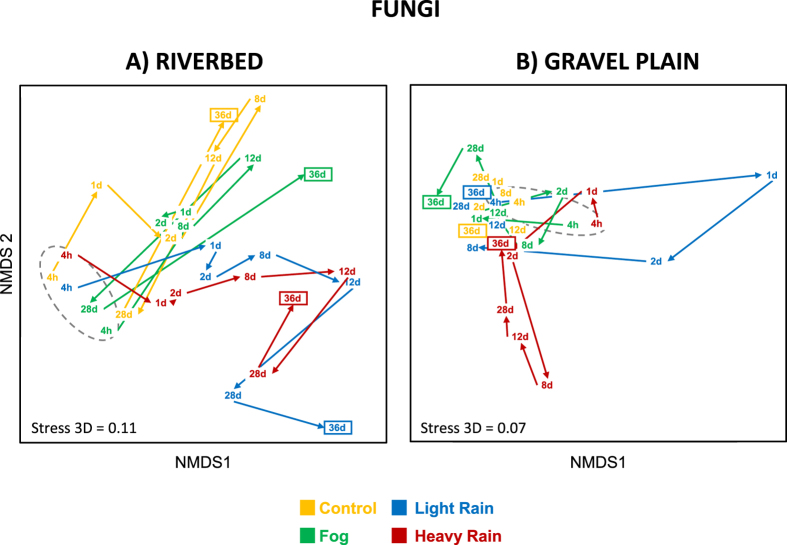
Despite the dominance of microorganisms in arid soils, the structures and functional dynamics of microbial communities in hot deserts remain largely unresolved. The effects of wetting event frequency and intensity on Namib Desert microbial communities from two soils with different water-regime histories were tested over 36 days. A total of 168 soil microcosms received wetting events mimicking fog, light rain and heavy rainfall, with a parallel "dry condition" control. T-RFLP data showed that the different wetting events affected desert microbial community structures, but these effects were attenuated by the effects related to the long-term adaptation of both fungal and bacterial communities to soil origins (i.e. soil water regime histories). The intensity of the water pulses (i.e. the amount of water added) rather than the frequency of wetting events had greatest effect in shaping bacterial and fungal community structures. In contrast to microbial diversity, microbial activities (enzyme activities) showed very little response to the wetting events and were mainly driven by soil origin. This experiment clearly demonstrates the complexity of microbial community responses to wetting events in hyperarid hot desert soil ecosystems and underlines the dynamism of their indigenous microbial communities.
尽管微生物在干旱土壤中占主导地位,但炎热沙漠中微生物群落的结构和功能动态在很大程度上仍未得到解决。在36天的时间里,测试了湿润事件的频率和强度对纳米布沙漠中两种具有不同水分状况历史的土壤中微生物群落的影响。共有168个土壤微观世界接受了模拟雾、小雨和大雨的湿润事件,并设置了一个平行的“干燥条件”对照。末端限制性片段长度多态性(T-RFLP)数据表明,不同的湿润事件影响了沙漠微生物群落结构,但这些影响因真菌和细菌群落对土壤来源(即土壤水分状况历史)的长期适应相关影响而减弱。水脉冲的强度(即添加的水量)而非湿润事件的频率对塑造细菌和真菌群落结构的影响最大。与微生物多样性不同,微生物活性(酶活性)对湿润事件的反应非常小,且主要受土壤来源驱动。该实验清楚地证明了超干旱炎热沙漠土壤生态系统中微生物群落对湿润事件反应的复杂性,并强调了其本土微生物群落的动态性。