Griseri Thibault, Arnold Isabelle C, Pearson Claire, Krausgruber Thomas, Schiering Chris, Franchini Fanny, Schulthess Julie, McKenzie Brent S, Crocker Paul R, Powrie Fiona
Kennedy Institute of Rheumatology, Nuffield Department of Orthopaedics, Rheumatology and Musculoskeletal Sciences, University of Oxford, Roosevelt Drive, Oxford OX3 7FY, UK; Translational Gastroenterology Unit, Experimental Medicine Division Nuffield Department of Clinical Medicine, University of Oxford, John Radcliffe Hospital, Oxford OX3 9DU, UK.
Translational Gastroenterology Unit, Experimental Medicine Division Nuffield Department of Clinical Medicine, University of Oxford, John Radcliffe Hospital, Oxford OX3 9DU, UK.
Immunity. 2015 Jul 21;43(1):187-99. doi: 10.1016/j.immuni.2015.07.008.
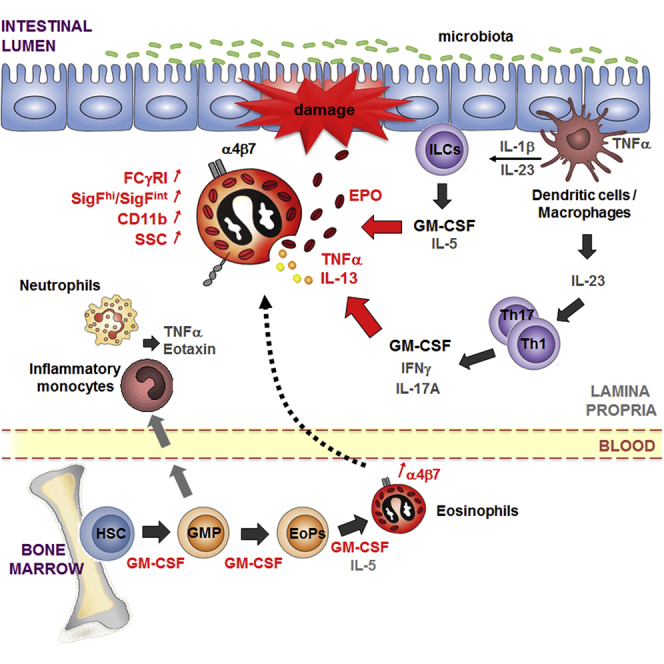
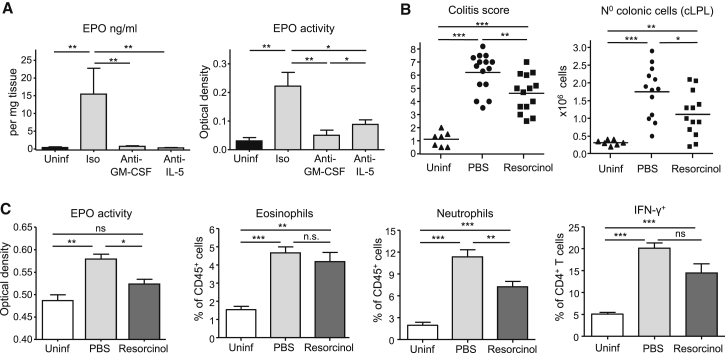
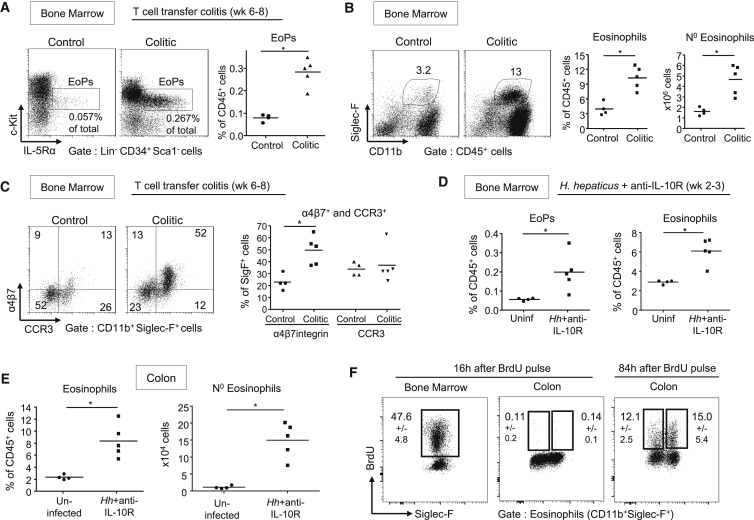
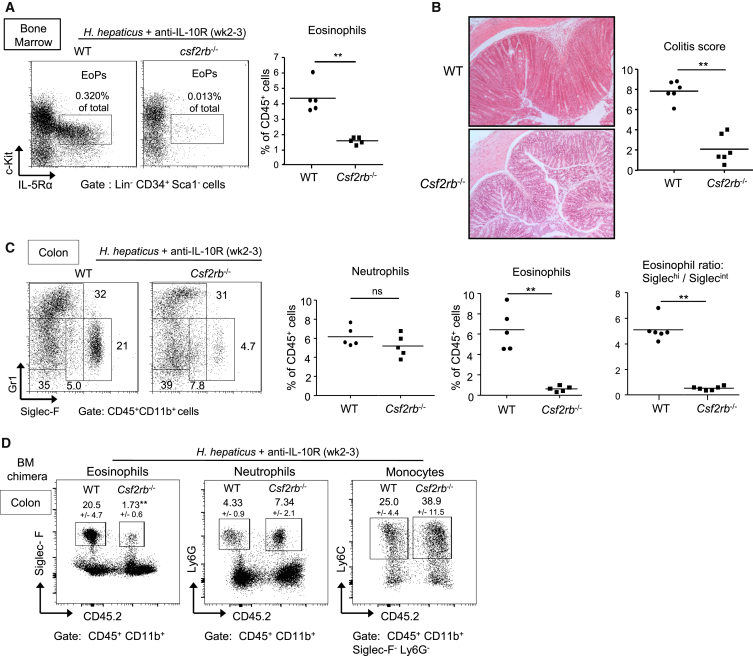
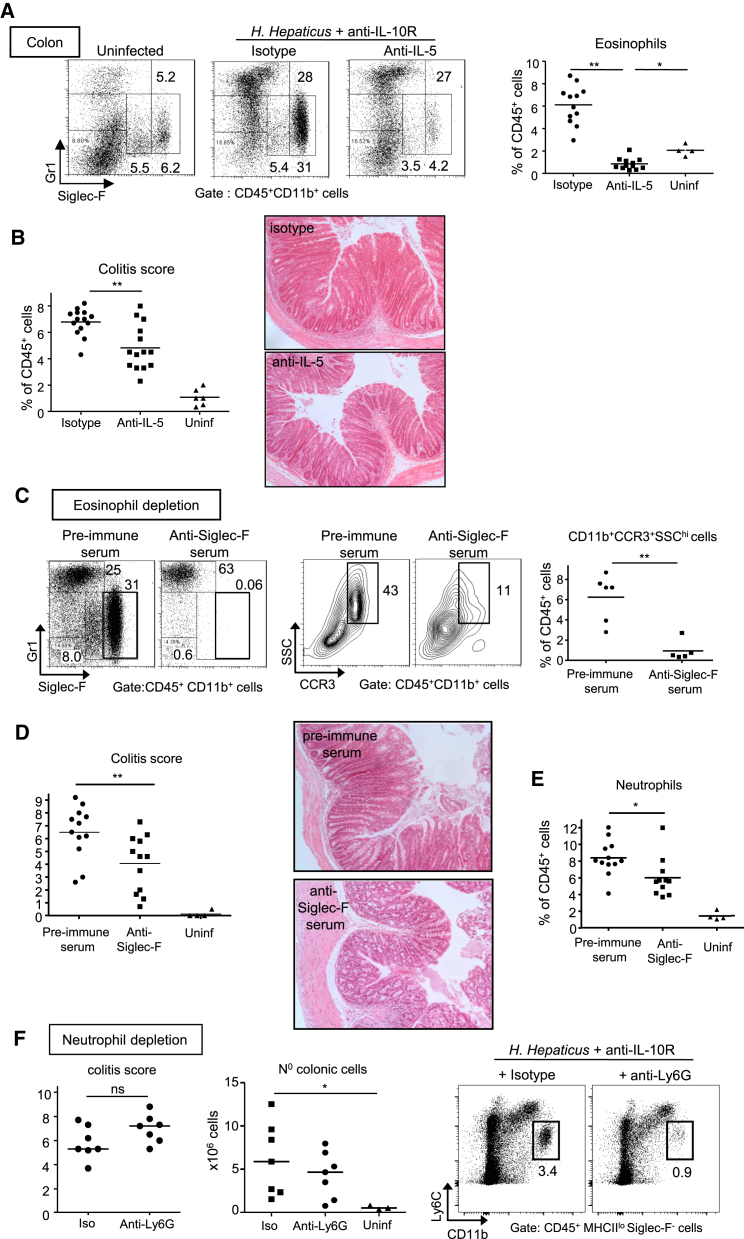
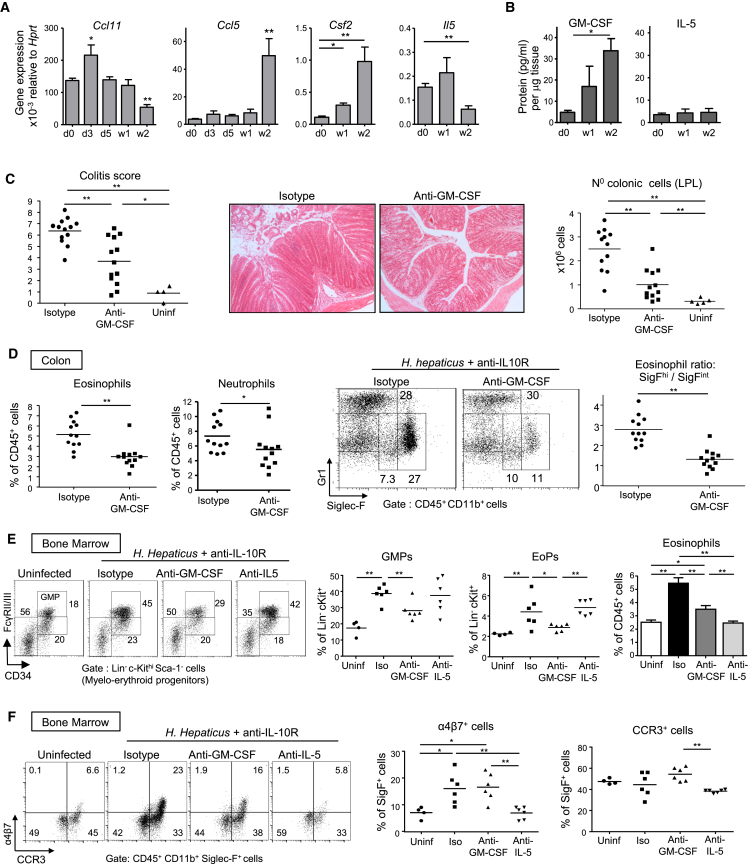
The role of intestinal eosinophils in immune homeostasis is enigmatic and the molecular signals that drive them from protective to tissue damaging are unknown. Most commonly associated with Th2 cell-mediated diseases, we describe a role for eosinophils as crucial effectors of the interleukin-23 (IL-23)-granulocyte macrophage colony-stimulating factor (GM-CSF) axis in colitis. Chronic intestinal inflammation was characterized by increased bone marrow eosinopoiesis and accumulation of activated intestinal eosinophils. IL-5 blockade or eosinophil depletion ameliorated colitis, implicating eosinophils in disease pathogenesis. GM-CSF was a potent activator of eosinophil effector functions and intestinal accumulation, and GM-CSF blockade inhibited chronic colitis. By contrast neutrophil accumulation was GM-CSF independent and dispensable for colitis. In addition to TNF secretion, release of eosinophil peroxidase promoted colitis identifying direct tissue-toxic mechanisms. Thus, eosinophils are key perpetrators of chronic inflammation and tissue damage in IL-23-mediated immune diseases and it suggests the GM-CSF-eosinophil axis as an attractive therapeutic target.
肠道嗜酸性粒细胞在免疫稳态中的作用尚不明确,驱动它们从具有保护作用转变为造成组织损伤的分子信号也不清楚。嗜酸性粒细胞最常与Th2细胞介导的疾病相关,我们描述了嗜酸性粒细胞在结肠炎中作为白细胞介素-23(IL-23)-粒细胞巨噬细胞集落刺激因子(GM-CSF)轴的关键效应细胞的作用。慢性肠道炎症的特征是骨髓嗜酸性粒细胞生成增加以及活化的肠道嗜酸性粒细胞积聚。IL-5阻断或嗜酸性粒细胞耗竭可改善结肠炎,这表明嗜酸性粒细胞参与了疾病的发病机制。GM-CSF是嗜酸性粒细胞效应功能和肠道积聚的有效激活剂,GM-CSF阻断可抑制慢性结肠炎。相比之下,中性粒细胞的积聚不依赖GM-CSF,对结肠炎来说并非必需。除了分泌肿瘤坏死因子(TNF)外,嗜酸性粒细胞过氧化物酶的释放也促进了结肠炎,这确定了直接的组织毒性机制。因此,嗜酸性粒细胞是IL-23介导的免疫疾病中慢性炎症和组织损伤的关键肇事者,这表明GM-CSF-嗜酸性粒细胞轴是一个有吸引力的治疗靶点。