Matyjaszkiewicz Antoni, Venturi Elisa, O'Brien Fiona, Iida Tsunaki, Nishi Miyuki, Takeshima Hiroshi, Tsaneva-Atanasova Krasimira, Sitsapesan Rebecca
Bristol Centre for Complexity Sciences, University of Bristol, Bristol, United Kingdom; Department of Engineering Mathematics, University of Bristol, Bristol, United Kingdom.
Department of Pharmacology, University of Oxford, Oxford, United Kingdom.
Biophys J. 2015 Jul 21;109(2):265-76. doi: 10.1016/j.bpj.2015.06.020.
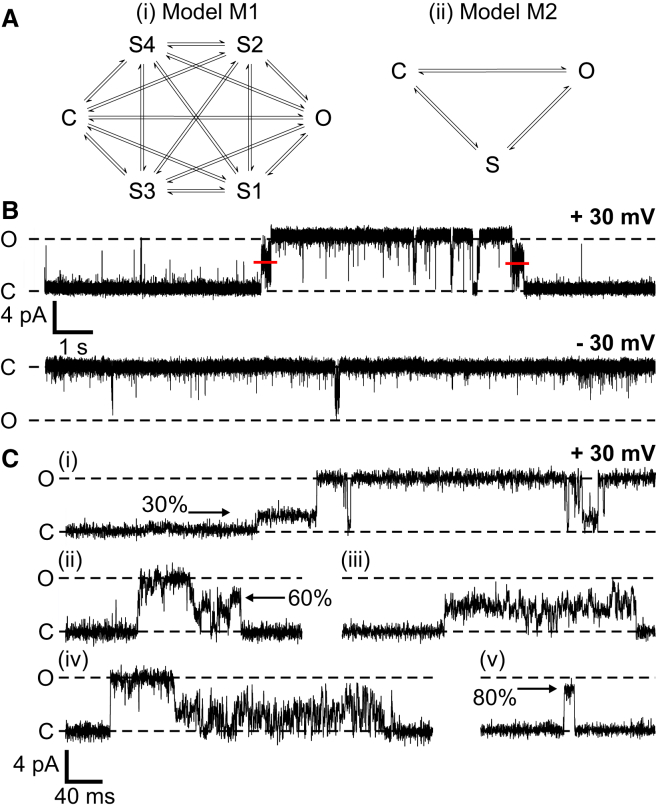
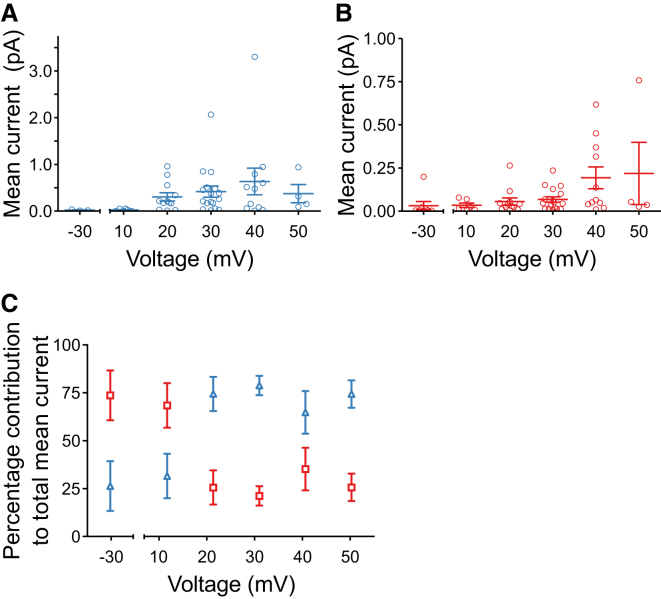
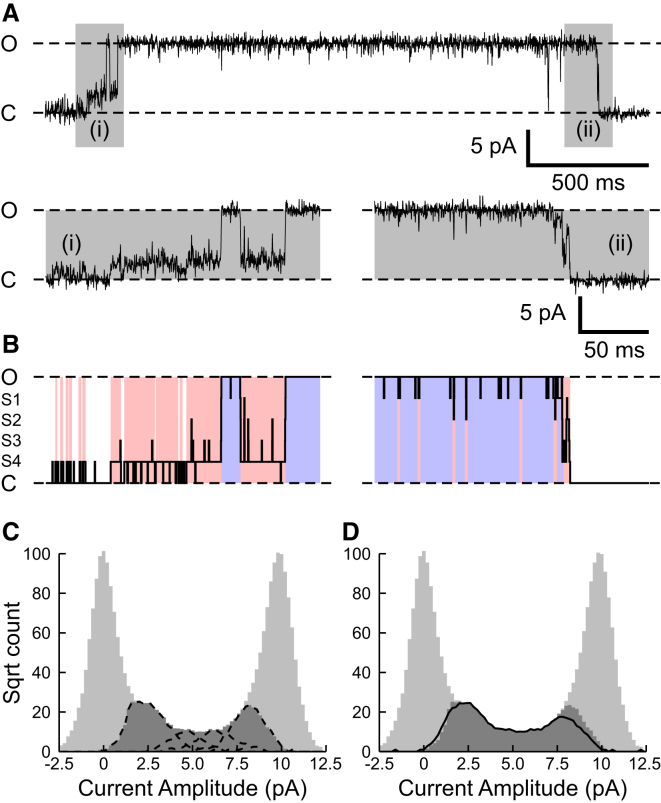
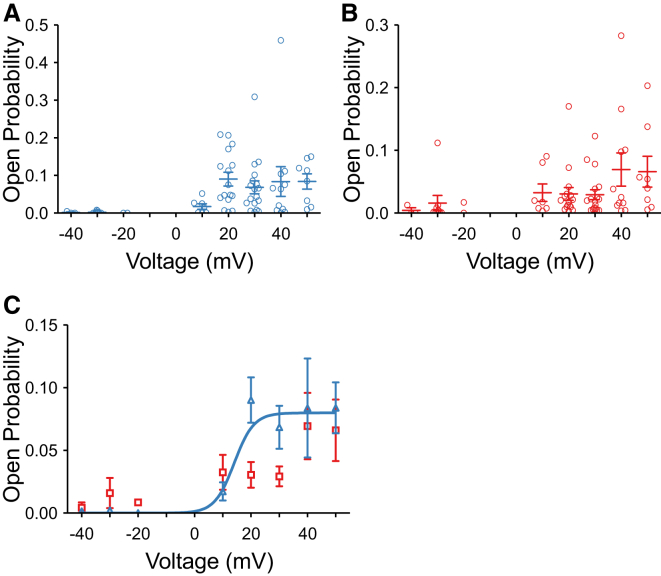
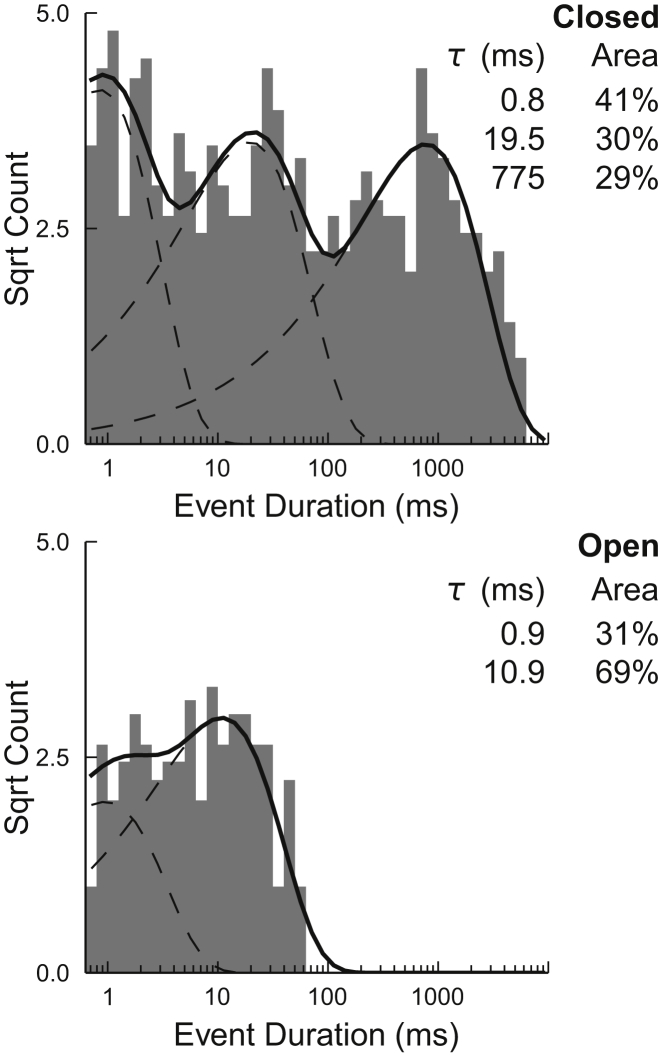
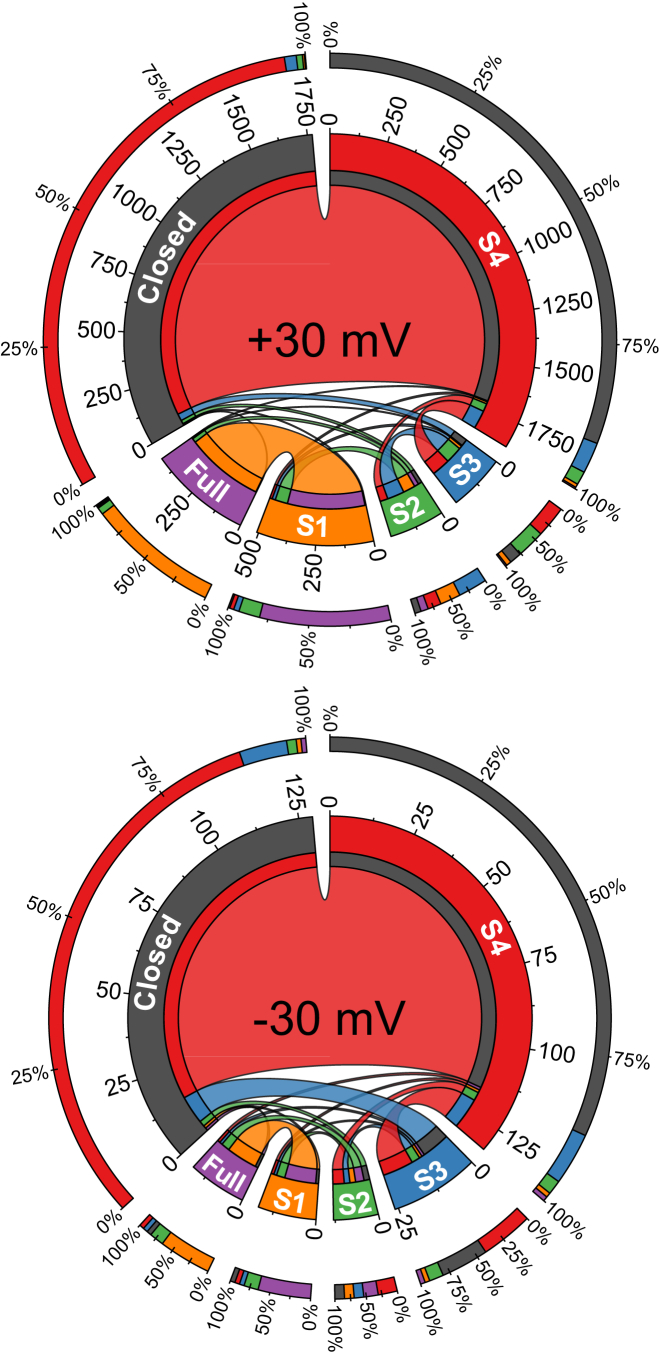
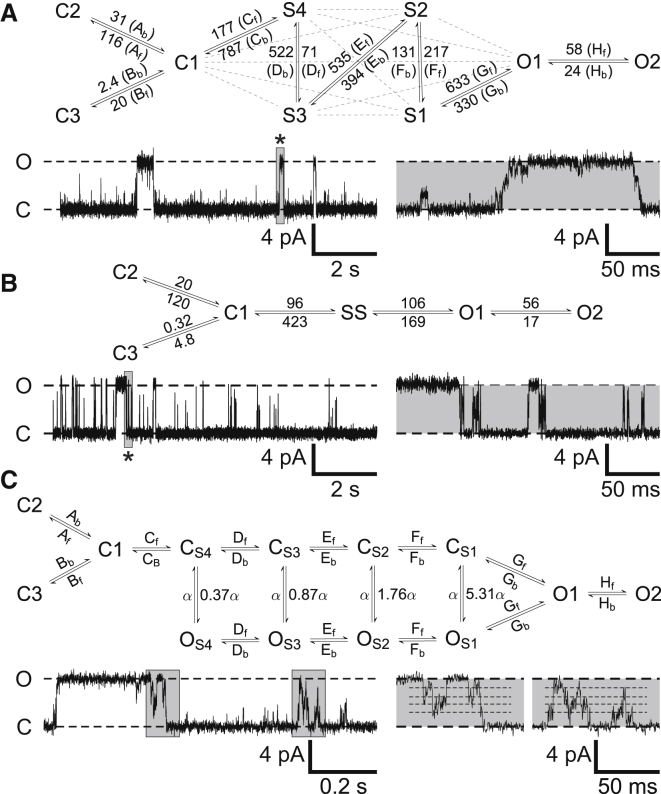
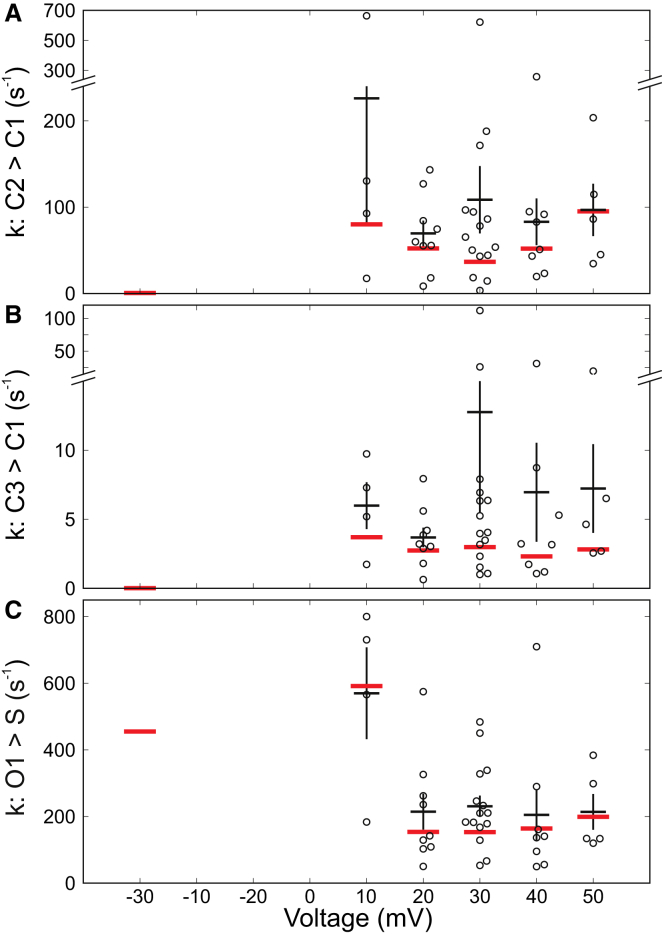
Sarcoplasmic reticulum (SR) K(+) channels are voltage-regulated channels that are thought to be actively gating when the membrane potential across the SR is close to zero as is expected physiologically. A characteristic of SR K(+) channels is that they gate to subconductance open states but the relevance of the subconductance events and their contribution to the overall current flowing through the channels at physiological membrane potentials is not known. We have investigated the relationship between subconductance and full conductance openings and developed kinetic models to describe the voltage sensitivity of channel gating. Because there may be two subtypes of SR K(+) channels (TRIC-A and TRIC-B) present in most tissues, to conduct our study on a homogeneous population of SR K(+) channels, we incorporated SR vesicles derived from Tric-a knockout mice into artificial membranes to examine the remaining SR K(+) channel (TRIC-B) function. The channels displayed very low open probability (Po) at negative potentials (≤0 mV) and opened predominantly to subconductance open states. Positive holding potentials primarily increased the frequency of subconductance state openings and thereby increased the number of subsequent transitions into the full open state, although a slowing of transitions back to the sublevels was also important. We investigated whether the subconductance gating could arise as an artifact of incomplete resolution of rapid transitions between full open and closed states; however, we were not able to produce a model that could fit the data as well as one that included multiple distinct current amplitudes. Our results suggest that the apparent subconductance openings will provide most of the K(+) flux when the SR membrane potential is close to zero. The relative contribution played by openings to the full open state would increase if negative charge developed within the SR thus increasing the capacity of the channel to compensate for ionic imbalances.
肌浆网(SR)钾通道是电压调节通道,据认为当跨SR的膜电位接近生理预期的零时会积极开启。SR钾通道的一个特点是它们会开启到亚电导开放状态,但亚电导事件的相关性及其对生理膜电位下流经通道的总电流的贡献尚不清楚。我们研究了亚电导与全电导开放之间的关系,并建立了动力学模型来描述通道门控的电压敏感性。由于大多数组织中可能存在两种SR钾通道亚型(TRIC - A和TRIC - B),为了在同质的SR钾通道群体上进行我们的研究,我们将来自Tric - a基因敲除小鼠的SR囊泡整合到人工膜中,以检查剩余的SR钾通道(TRIC - B)功能。这些通道在负电位(≤0 mV)时显示出非常低的开放概率(Po),并且主要开启到亚电导开放状态。正的钳制电位主要增加了亚电导状态开放的频率,从而增加了随后转变为完全开放状态的次数,尽管回到亚水平的转变减慢也很重要。我们研究了亚电导门控是否可能是完全开放和关闭状态之间快速转变的不完全分辨的假象;然而,我们无法构建一个能像包含多个不同电流幅度的模型那样拟合数据的模型。我们的结果表明,当SR膜电位接近零时,明显的亚电导开放将提供大部分的钾离子通量。如果SR内产生负电荷,从而增加通道补偿离子失衡的能力,那么开启到完全开放状态所起的相对作用将会增加。