Van den Berge H, Wirtz P
Department of Otorhinolaryngology, University of Maastricht, The Netherlands.
J Anat. 1989 Oct;166:157-69.
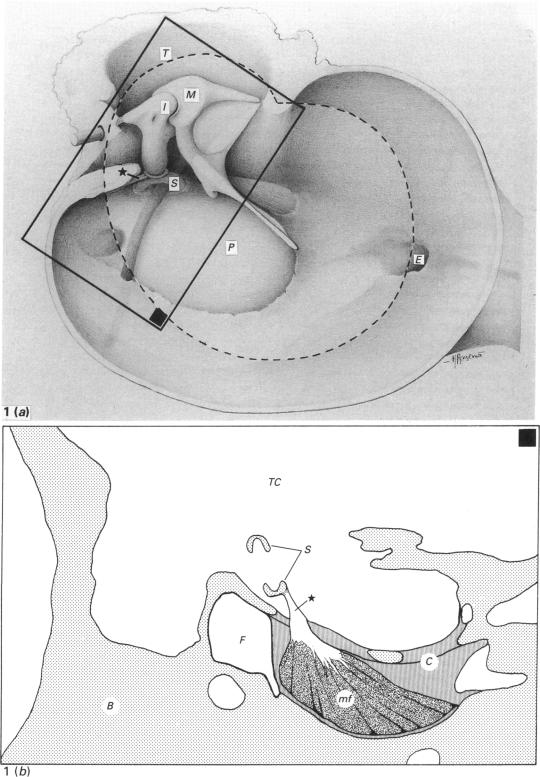
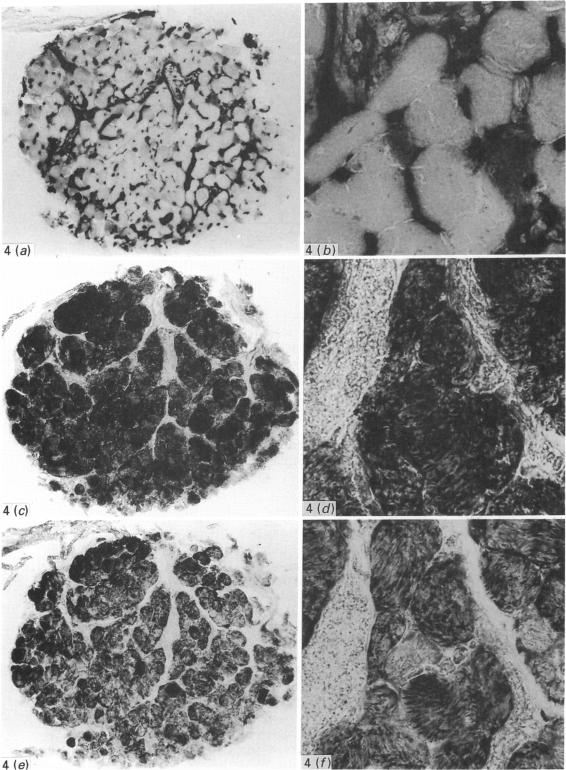
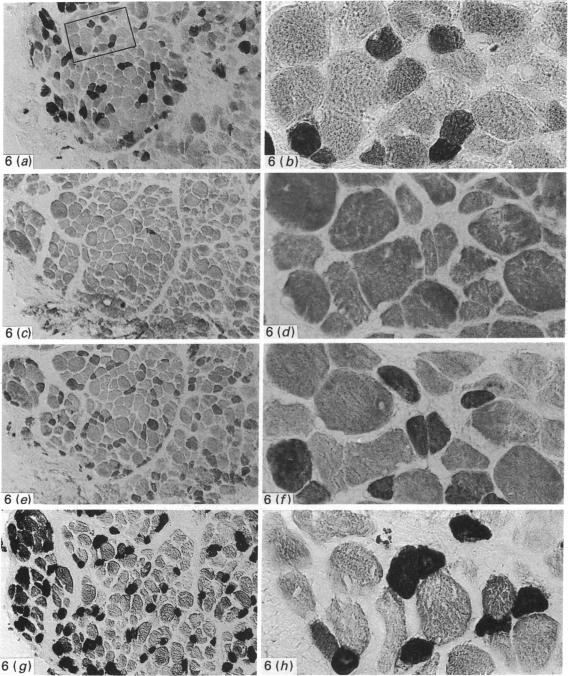
The stapedius muscle of the rat, a very small muscle, appeared to have several atypical morphological characteristics. The muscle fibres were found to be irregularly shaped and composed of relatively small bundles of myofibrils. Mitochondria were distributed irregularly, i.e. in long strands, between the bundles of myofibrils. Enzyme histochemically, most fibres could be classified as fast oxidative glycolytic fibres (IIA). Only 5% of the fibres appeared to be slow twitch fibres; however, these fibres also had a high glycolytic capacity and therefore could not be classified as the classical slow twitch fibres. The immunohistochemical staining with monoclonal anti-heavy chain myosin isotypes showed discrepancies when compared to the enzyme histochemical results. Moreover, different adult heavy chain myosin isotypes appeared to coexist in one single muscle fibre. The results suggest that the muscle has an isometric contraction pattern and that it can contract rapidly with great endurance. This endows the muscle with properties suitable for a function in the prevention of noise-induced hearing loss and also in impact noise over longer periods of time.
大鼠的镫骨肌是一块非常小的肌肉,似乎具有一些非典型的形态学特征。发现肌纤维形状不规则,由相对较小的肌原纤维束组成。线粒体不规则分布,即在肌原纤维束之间呈长链状分布。酶组织化学分析表明,大多数纤维可归类为快速氧化糖酵解纤维(IIA 型)。只有5%的纤维似乎是慢肌纤维;然而,这些纤维也具有较高的糖酵解能力,因此不能归类为典型的慢肌纤维。与酶组织化学结果相比,单克隆抗肌球蛋白重链同型抗体的免疫组织化学染色结果存在差异。此外,不同的成年肌球蛋白重链同型似乎共存于单个肌纤维中。结果表明,该肌肉具有等长收缩模式,并且能够快速收缩且耐力强。这赋予了该肌肉适合预防噪声性听力损失以及长时间抵抗冲击噪声功能的特性。