Parker Richard M, Zhang Jing, Zheng Yu, Coulston Roger J, Smith Clive A, Salmon Andrew R, Yu Ziyi, Scherman Oren A, Abell Chris
Department of Chemistry, University of Cambridge Lensfield Road, Cambridge, CB2 1EW, UK E-mail:
Melville Laboratory for Polymer Synthesis, Department of Chemistry, University of Cambridge Lensfield Road, Cambridge, CB2 1EW, UK.
Adv Funct Mater. 2015 Jul;25(26):4091-4100. doi: 10.1002/adfm.201501079. Epub 2015 May 26.
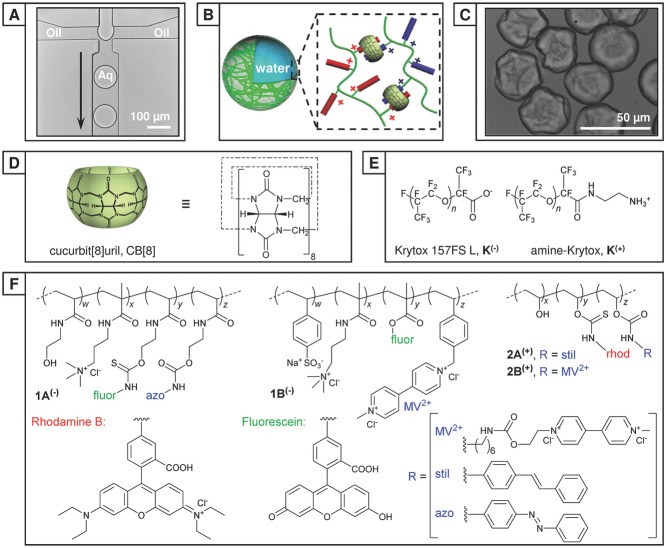
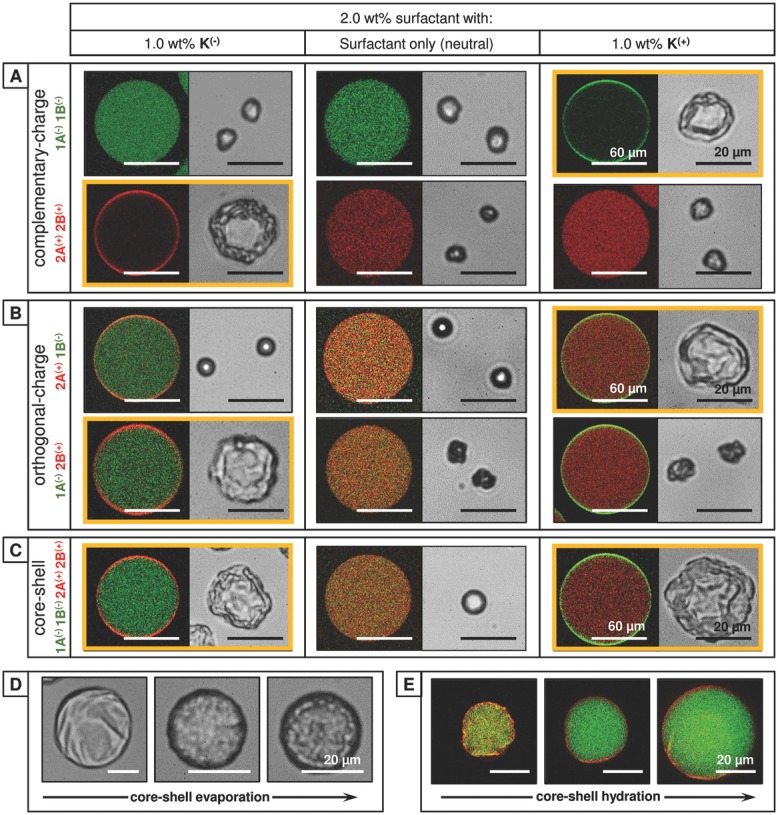
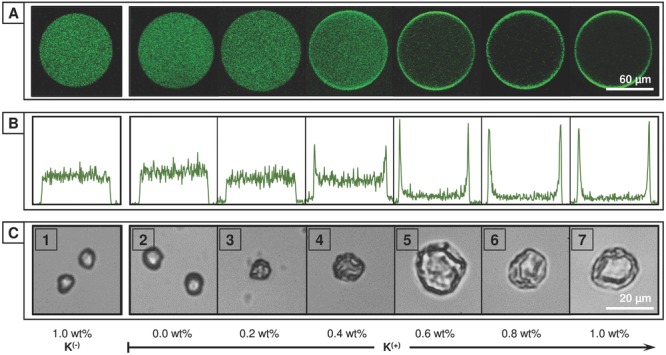
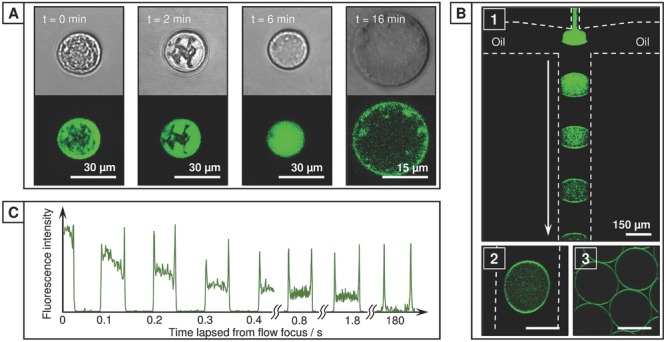
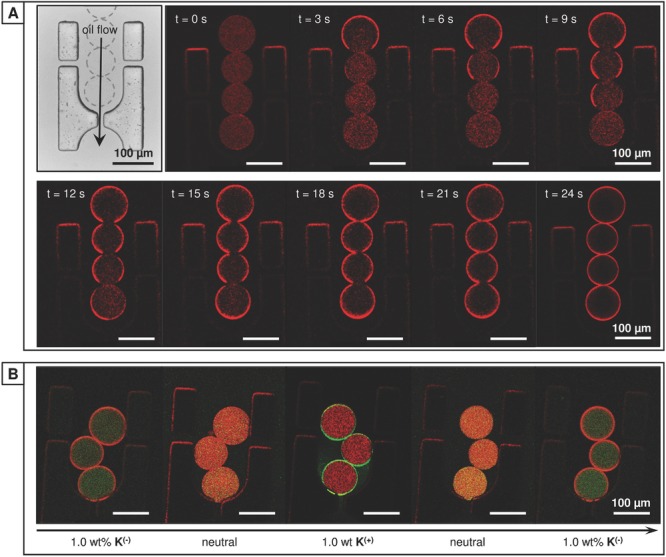
Supramolecular self-assembly offers routes to challenging architectures on the molecular and macroscopic scale. Coupled with microfluidics it has been used to make microcapsules-where a 2D sheet is shaped in 3D, encapsulating the volume within. In this paper, a versatile methodology to direct the accumulation of capsule-forming components to the droplet interface using electrostatic interactions is described. In this approach, charged copolymers are selectively partitioned to the microdroplet interface by a complementary charged surfactant for subsequent supramolecular cross-linking via cucurbit[8]uril. This dynamic assembly process is employed to selectively form both hollow, ultrathin microcapsules and solid microparticles from a single solution. The ability to dictate the distribution of a mixture of charged copolymers within the microdroplet, as demonstrated by the single-step fabrication of distinct core-shell microcapsules, gives access to a new generation of innovative self-assembled constructs.
超分子自组装为在分子和宏观尺度上构建具有挑战性的结构提供了途径。与微流控技术相结合,它已被用于制造微胶囊——其中二维薄片被塑造成三维形状,将内部体积封装起来。本文描述了一种通用方法,该方法利用静电相互作用将形成胶囊的组分积累到液滴界面。在这种方法中,带电共聚物通过互补带电表面活性剂选择性地分配到微滴界面,随后通过葫芦[8]脲进行超分子交联。这种动态组装过程用于从单一溶液中选择性地形成空心、超薄微胶囊和固体微粒。如通过一步法制造独特的核壳微胶囊所证明的那样,能够控制带电共聚物混合物在微滴内的分布,从而获得新一代创新的自组装结构。