Do Van, Young Lufei, Barnason Sue, Tran Hoang
Department of Health Services Research and Administration, College of Public Health, University of Nebraska Medical Center, Omaha, NE, 68198, USA.
College of Nursing-Lincoln Division, University of Nebraska Medical Center, Omaha, NE, 68198, USA.
F1000Res. 2015 Jun 11;4:150. doi: 10.12688/f1000research.6557.1. eCollection 2015.
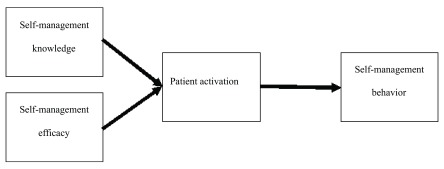
Non-adherence to self-management guidelines accounted for 50% of hospital readmissions in heart failure patients. Evidence showed that patient activation affects self-management behaviors in populations living with chronic conditions. The purpose of this study was to describe patient activation level and its relationship with knowledge, self-efficacy and self-management behaviors in heart failure patients discharged from rural hospitals. Our study populations were recruited from two hospitals in rural areas of Nebraska. We found that two-thirds of the participants reported low activation levels (e.g., taking no action to manage their heart failure condition). In addition, low patient activation levels were associated with inadequate heart failure knowledge (p=.005), low self-efficacy (p<.001) and low engagement in heart failure self-management behaviors (p<.001) after discharge from hospital.
未遵守自我管理指南占心力衰竭患者再次入院的50%。有证据表明,患者激活会影响慢性病患者群体的自我管理行为。本研究的目的是描述从农村医院出院的心力衰竭患者的患者激活水平及其与知识、自我效能和自我管理行为的关系。我们的研究对象是从内布拉斯加州农村地区的两家医院招募的。我们发现,三分之二的参与者报告激活水平较低(例如,未采取任何行动来管理自己的心力衰竭病情)。此外,患者激活水平较低与出院后心力衰竭知识不足(p=0.005)、自我效能较低(p<0.001)以及心力衰竭自我管理行为参与度较低(p<0.001)相关。