Scronce Gabrielle, Ramakrishnan Viswanathan, Vatinno Amanda A, Seo Na Jin
Department of Health Sciences and Research, College of Health Professions, Medical University of South Carolina, Charleston, SC, USA.
Ralph H. Johnson VA Health Care System, Charleston, SC, USA.
Stroke Res Treat. 2023 Mar 8;2023:3682898. doi: 10.1155/2023/3682898. eCollection 2023.
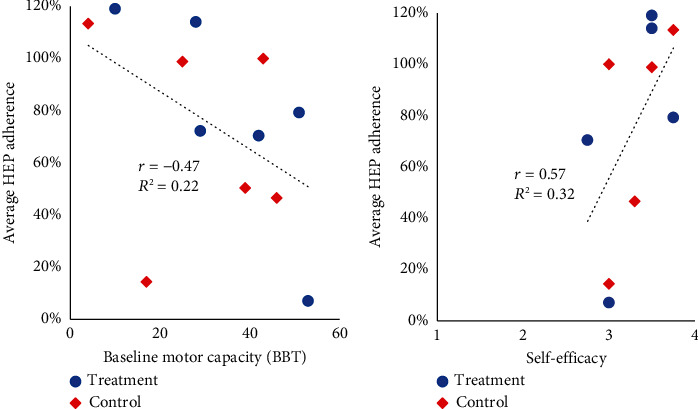
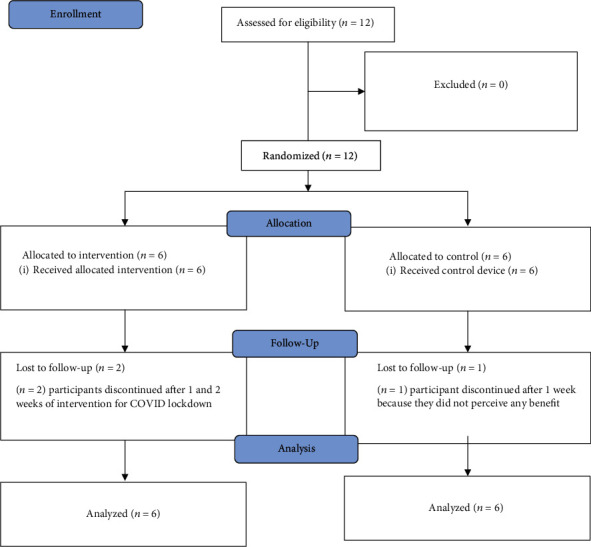
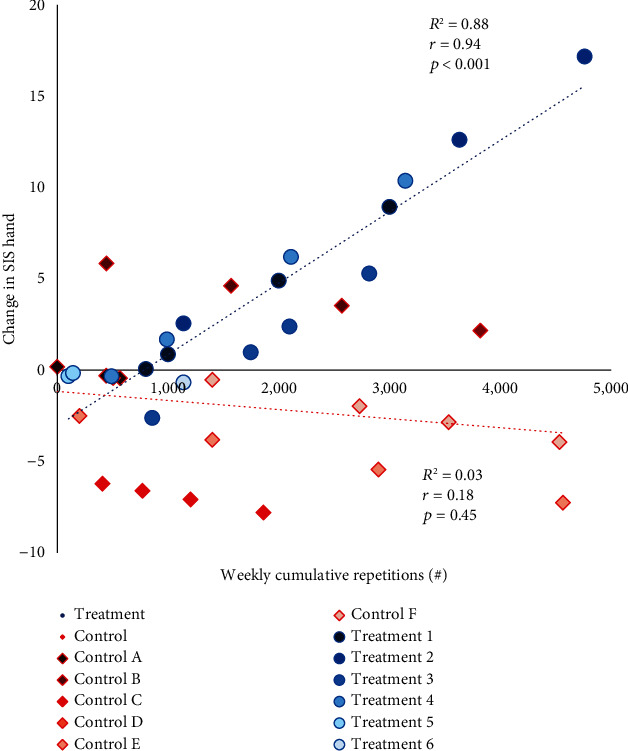
Hand impairment is a common consequence of stroke, resulting in long-term disability and reduced quality of life. Recovery may be augmented through self-directed therapy activities at home, complemented by the use of rehabilitation devices such as peripheral sensory stimulation. The objective of this study was to determine the effect of adherence to self-directed therapy and the use of TheraBracelet (subsensory random-frequency vibratory stimulation) on hand function for stroke survivors. In a double-blind, randomized controlled pilot trial, 12 chronic stroke survivors were assigned to a treatment or control group ( = 6/group). All participants were instructed to perform 200 repetitions of therapeutic hand tasks 5 days/week while wearing a wrist-worn device 8 hours/day for 4 weeks. The treatment group received TheraBracelet vibration from the device, while the control group received no vibration. Home task repetition adherence and device wear logs, as well as hand function assessment (Stroke Impact Scale Hand domain), were obtained weekly. Repetition adherence was comparable between groups but varied among participants. Participants wore the device to a greater extent than adhering to completing repetitions. A linear mixed model analysis showed a significant interaction between repetition and group ( = 0.01), with greater adherence resulting in greater hand function change for the treatment group ( = 0.94; = 0.88), but not for the control group. Secondary analysis revealed that repetition adherence was greater for those with lower motor capacity and greater self-efficacy at baseline. This pilot study suggests that adherence to self-directed therapy at home combined with subsensory stimulation may affect recovery outcomes in stroke survivors. This trial is registered with NCT04026399.
手部功能障碍是中风的常见后果,会导致长期残疾并降低生活质量。在家中通过自我指导的治疗活动,并辅以使用外周感觉刺激等康复设备,可能会增强恢复效果。本研究的目的是确定坚持自我指导治疗以及使用TheraBracelet(亚感觉随机频率振动刺激)对中风幸存者手部功能的影响。在一项双盲、随机对照的试点试验中,12名慢性中风幸存者被分配到治疗组或对照组(每组6人)。所有参与者都被要求每周5天,每天佩戴腕部设备8小时,进行200次手部治疗任务重复动作,持续4周。治疗组从设备中接受TheraBracelet振动,而对照组不接受振动。每周获取家庭任务重复动作的依从性和设备佩戴记录,以及手部功能评估(中风影响量表手部领域)。两组之间的重复动作依从性相当,但参与者之间存在差异。参与者佩戴设备的程度高于坚持完成重复动作的程度。线性混合模型分析显示重复动作和组之间存在显著交互作用(P = 0.01),对于治疗组,更高的依从性导致更大的手部功能变化(r = 0.94;P = 0.88),但对照组并非如此。二次分析显示,基线时运动能力较低且自我效能较高的参与者重复动作依从性更高。这项试点研究表明,在家中坚持自我指导治疗并结合亚感觉刺激可能会影响中风幸存者的恢复结果。该试验已在NCT04026399注册。