Kim Young Ae, Kim Eun Su, Hwang Ho Kyeong, Lee Kyung Bok, Lee Sol, Jung Ji Woong, Kwon Yu Jin, Cho Dong Hui, Park Sang Su, Yoon Jin, Jang Yong-Seog
Departments of Surgery, Seoul Medical Center, Seoul, Korea.
Rehabilitation Medicine, Seoul Medical Center, Seoul, Korea.
Vasc Specialist Int. 2014 Dec;30(4):125-32. doi: 10.5758/vsi.2014.30.4.125. Epub 2014 Dec 31.
Peripheral neuropathy (PN) is known as a major contributor of the worsening of ischemic symptoms and the foot ulceration in patients with peripheral arterial occlusive disease (PAOD). However, there are few studies reporting the prevalence and risk factors for PN in PAOD. This study aimed to evaluate these issues for PN and to establish the importance of screening as additional treatment target for PN in PAOD.
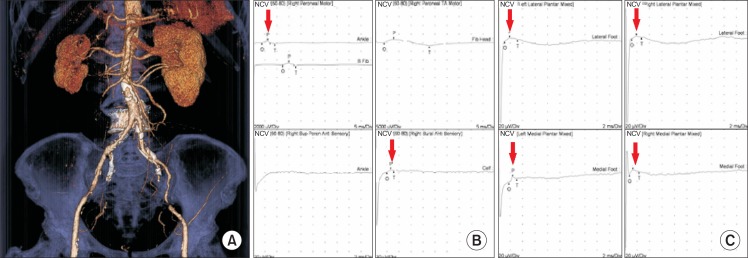
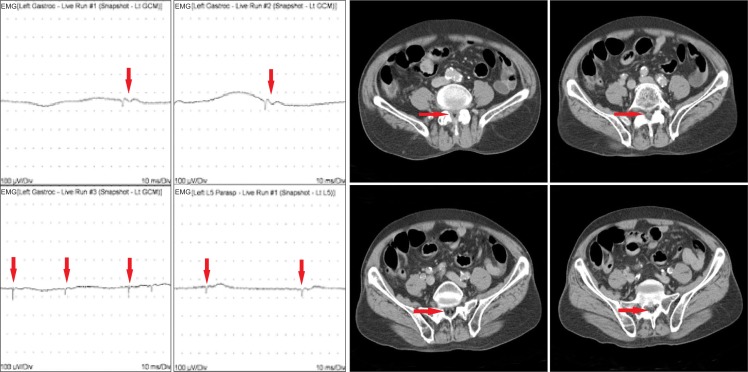
A total of 52 limbs with PAOD were enrolled from January 2011 to December 2012. PN was divided into radiculopathy, ischemic PN (IPN), and diabetic PN (DPN), based on electromyographic findings. We investigated the prevalence of overall PN and subtypes of PN and then analyzed the risk factors.
The prevalence of overall PN in PAOD was 43 of 52 limbs (82.7%). In terms of subtypes of PN, the prevalence rate of radiculopathy and IPN was 30.8% and 23.1%, respectively. DPN showed in 22 limbs (73.3%) among 30 diabetic limbs. There was no significant correlation between each type of PN and ischemic symptoms. Our analysis showed that coronary artery disease (CAD) was a significant risk factor (P=0.01) for IPN, however, did not identify any significant risk factors for DPN.
This present study indicated that most patients with PAOD had PN and CAD was a risk factor for IPN. In particular, PAOD with diabetes represented a higher prevalence for DPN. Our study suggests that PN should be evaluated and considered as another treatment target in patients with PAOD.
周围神经病变(PN)是外周动脉闭塞性疾病(PAOD)患者缺血症状加重和足部溃疡的主要促成因素。然而,关于PAOD患者PN的患病率和危险因素的研究较少。本研究旨在评估PN的这些问题,并确立将筛查作为PAOD中PN的额外治疗靶点的重要性。
2011年1月至2012年12月共纳入52例PAOD患者的肢体。根据肌电图检查结果,PN分为神经根病、缺血性PN(IPN)和糖尿病性PN(DPN)。我们调查了总体PN及PN各亚型的患病率,然后分析了危险因素。
52例PAOD患者肢体中,总体PN的患病率为43例(82.7%)。就PN亚型而言,神经根病和IPN的患病率分别为30.8%和23.1%。30例糖尿病肢体中有22例(73.3%)出现DPN。各类型PN与缺血症状之间无显著相关性。我们的分析表明,冠状动脉疾病(CAD)是IPN的显著危险因素(P = 0.01),然而,未发现DPN的任何显著危险因素。
本研究表明,大多数PAOD患者患有PN,CAD是IPN的危险因素。特别是,合并糖尿病的PAOD患者DPN的患病率更高。我们的研究表明,PAOD患者应评估PN并将其视为另一个治疗靶点。