Niewold Timothy B
Division of Rheumatology, Department of Immunology, Mayo Clinic, Rochester, Minnesota, USA.
Curr Opin Rheumatol. 2015 Sep;27(5):440-7. doi: 10.1097/BOR.0000000000000205.
The field of systemic lupus erythematosus (SLE) genetics has been advancing rapidly in recent years. This review will summarize recent advances in SLE genetics.
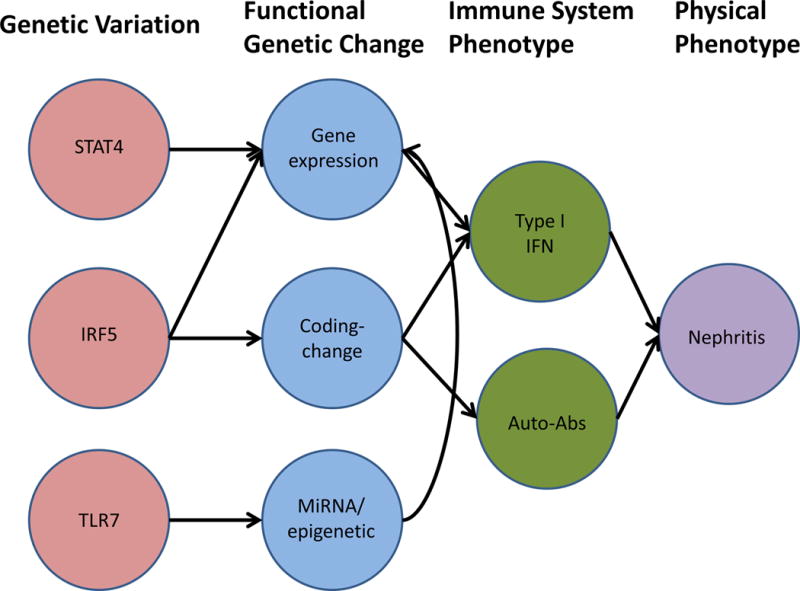
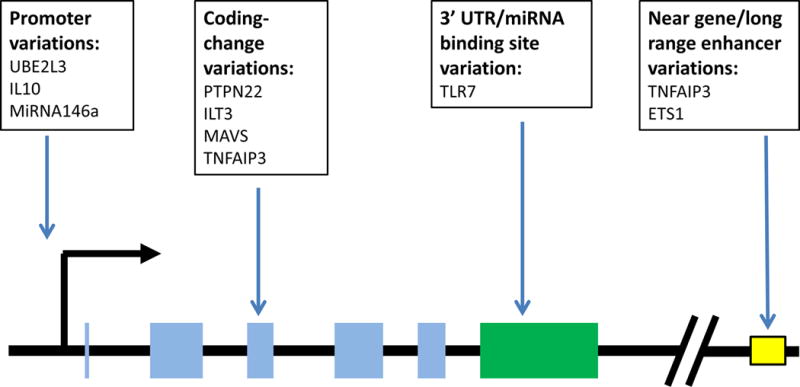
Genome-wide-association and follow-up studies have greatly expanded the list of associated polymorphisms, and much current work strives to integrate these polymorphisms into immune system biology and the pathogenic mediators involved in the disease. This review covers some current areas of interest, including genetic studies in non-European SLE patient populations, studies of pathogenic immune system subphenotypes such as type I interferon and autoantibodies, and a rapidly growing body of work investigating the functional consequences of the genetic polymorphisms associated with SLE.
These studies provide a fascinating window into human SLE disease biology. As the work proceeds from genetic association signal to altered human biology, we move closer to tailoring interventions based upon an individual's genetic substrate.
近年来,系统性红斑狼疮(SLE)遗传学领域发展迅速。本综述将总结SLE遗传学的最新进展。
全基因组关联研究及后续研究极大地扩充了相关多态性的列表,目前许多工作致力于将这些多态性整合到免疫系统生物学及该疾病涉及的致病介质中。本综述涵盖了当前一些热门领域,包括对非欧洲SLE患者群体的遗传学研究、对I型干扰素和自身抗体等致病性免疫系统亚表型的研究,以及大量迅速增加的关于与SLE相关的基因多态性的功能后果的研究。
这些研究为了解人类SLE疾病生物学提供了一扇引人入胜的窗口。随着研究从基因关联信号深入到人类生物学改变,我们正朝着基于个体遗传基础制定干预措施的方向迈进。