Lewis Myles J, Vyse Simon, Shields Adrian M, Boeltz Sebastian, Gordon Patrick A, Spector Timothy D, Lehner Paul J, Walczak Henning, Vyse Timothy J
Department of Medical and Molecular Genetics, King's College London, London SE1 9RT, UK.
Department of Medical and Molecular Genetics, King's College London, London SE1 9RT, UK.
Am J Hum Genet. 2015 Feb 5;96(2):221-34. doi: 10.1016/j.ajhg.2014.12.024. Epub 2015 Jan 29.
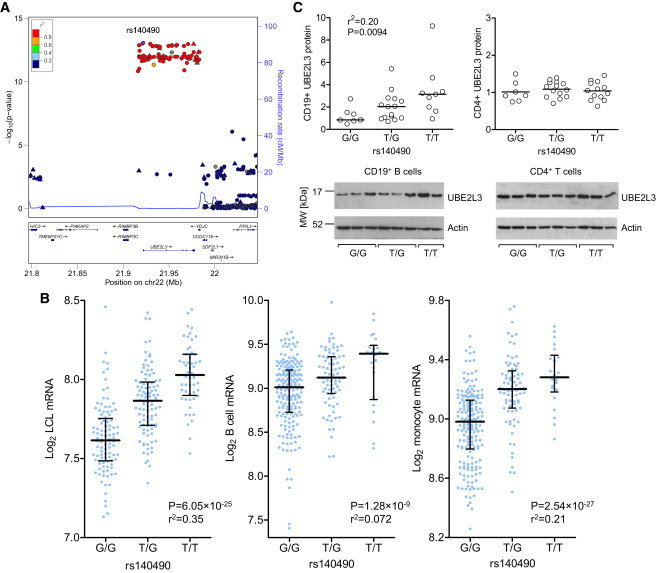
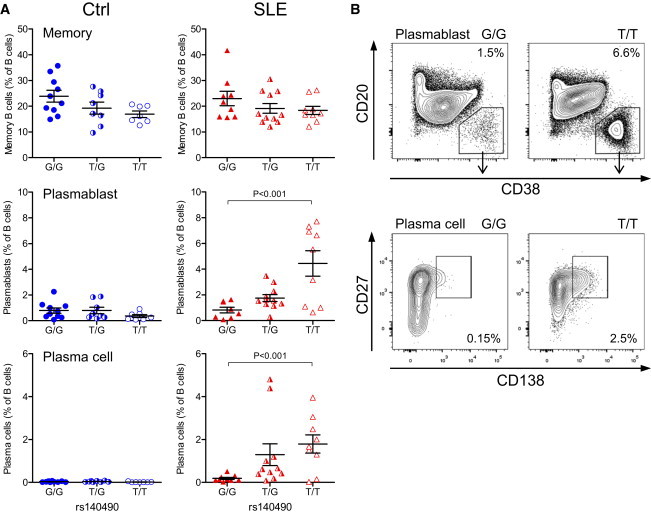
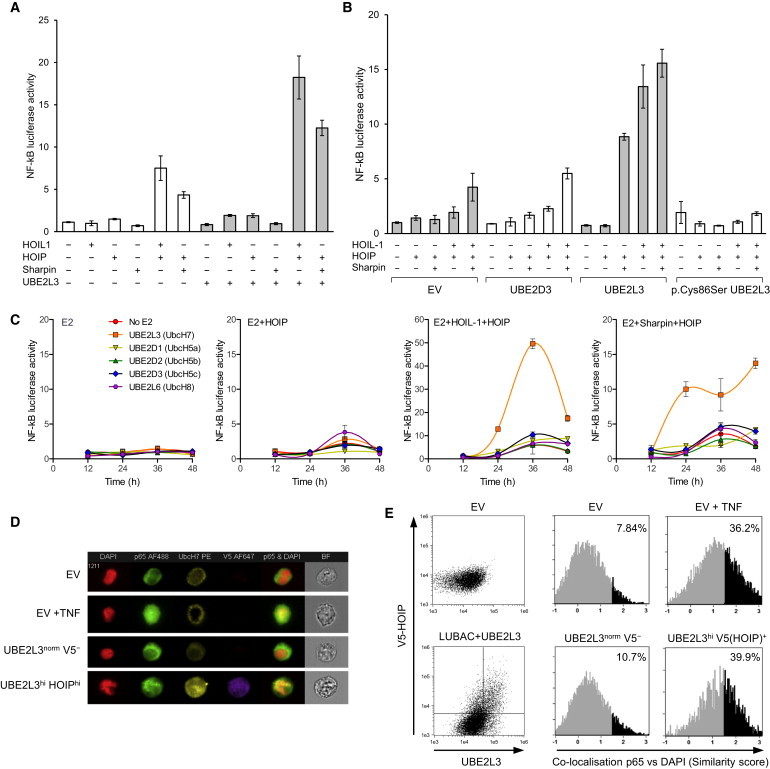
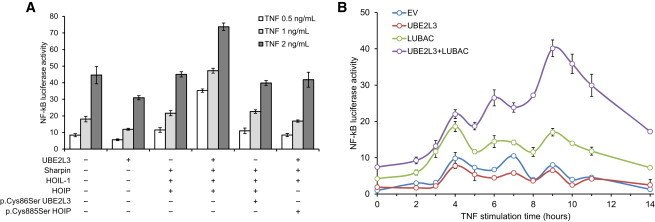
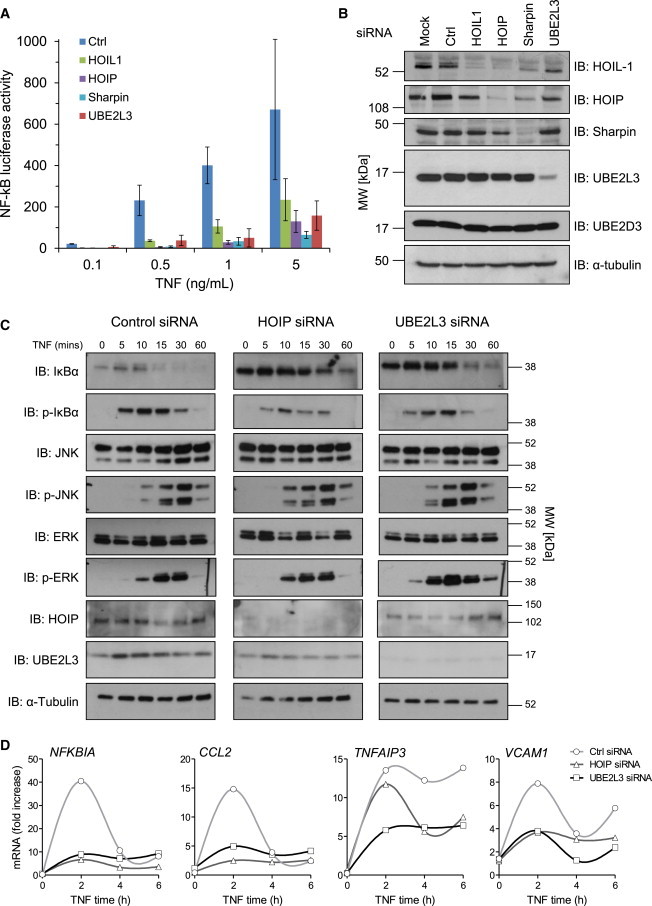
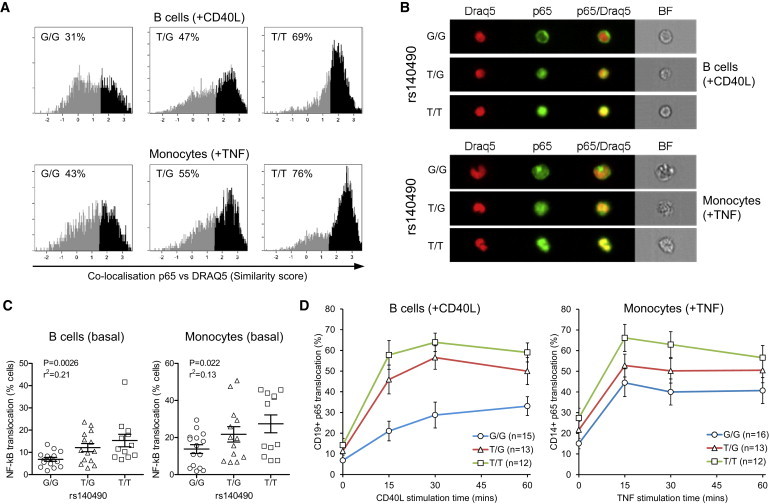
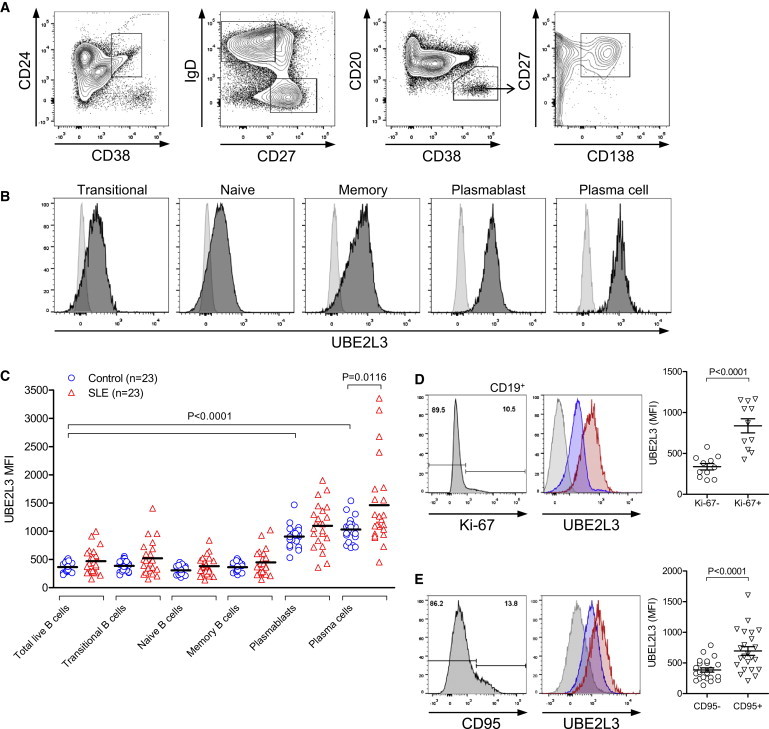
UBE2L3 is associated with increased susceptibility to numerous autoimmune diseases, but the underlying mechanism is unexplained. By using data from a genome-wide association study of systemic lupus erythematosus (SLE), we observed a single risk haplotype spanning UBE2L3, consistently aligned across multiple autoimmune diseases, associated with increased UBE2L3 expression in B cells and monocytes. rs140490 in the UBE2L3 promoter region showed the strongest association. UBE2L3 is an E2 ubiquitin-conjugating enzyme, specially adapted to function with HECT and RING-in-between-RING (RBR) E3 ligases, including HOIL-1 and HOIP, components of the linear ubiquitin chain assembly complex (LUBAC). Our data demonstrate that UBE2L3 is the preferred E2 conjugating enzyme for LUBAC in vivo, and UBE2L3 is essential for LUBAC-mediated activation of NF-κB. By accurately quantifying NF-κB translocation in primary human cells from healthy individuals stratified by rs140490 genotype, we observed that the autoimmune disease risk UBE2L3 genotype was correlated with basal NF-κB activation in unstimulated B cells and monocytes and regulated the sensitivity of NF-κB to CD40 stimulation in B cells and TNF stimulation in monocytes. The UBE2L3 risk allele correlated with increased circulating plasmablast and plasma cell numbers in SLE individuals, consistent with substantially elevated UBE2L3 protein levels in plasmablasts and plasma cells. These results identify key immunological consequences of the UBE2L3 autoimmune risk haplotype and highlight an important role for UBE2L3 in plasmablast and plasma cell development.
UBE2L3与多种自身免疫性疾病易感性增加相关,但其潜在机制尚不清楚。通过使用系统性红斑狼疮(SLE)全基因组关联研究的数据,我们观察到一个跨越UBE2L3的单一风险单倍型,在多种自身免疫性疾病中一致排列,与B细胞和单核细胞中UBE2L3表达增加相关。UBE2L3启动子区域的rs140490显示出最强的关联。UBE2L3是一种E2泛素结合酶,特别适合与HECT和RING-in-between-RING(RBR)E3连接酶一起发挥作用,包括线性泛素链组装复合物(LUBAC)的组分HOIL-1和HOIP。我们的数据表明,UBE2L3是体内LUBAC的首选E2结合酶,并且UBE2L3对于LUBAC介导的NF-κB激活至关重要。通过准确量化来自按rs140490基因型分层的健康个体的原代人类细胞中的NF-κB易位,我们观察到自身免疫性疾病风险UBE2L3基因型与未刺激的B细胞和单核细胞中的基础NF-κB激活相关,并调节B细胞中NF-κB对CD40刺激的敏感性以及单核细胞中NF-κB对TNF刺激的敏感性。UBE2L3风险等位基因与SLE个体中循环浆母细胞和浆细胞数量增加相关,这与浆母细胞和浆细胞中UBE2L3蛋白水平大幅升高一致。这些结果确定了UBE2L3自身免疫风险单倍型的关键免疫后果,并突出了UBE2L3在浆母细胞和浆细胞发育中的重要作用。