Jovicic Nemanja, Jeftic Ilija, Jovanovic Ivan, Radosavljevic Gordana, Arsenijevic Nebojsa, Lukic Miodrag L, Pejnovic Nada
Center for Molecular Medicine, Faculty of Medical Sciences, University of Kragujevac, Kragujevac, Serbia; Institute of Histology, Faculty of Medical Sciences, University of Kragujevac, Kragujevac, Serbia.
Center for Molecular Medicine, Faculty of Medical Sciences, University of Kragujevac, Kragujevac, Serbia; Institute of Pathophysiology, Faculty of Medical Sciences, University of Kragujevac, Kragujevac, Serbia.
PLoS One. 2015 Jul 28;10(7):e0134089. doi: 10.1371/journal.pone.0134089. eCollection 2015.
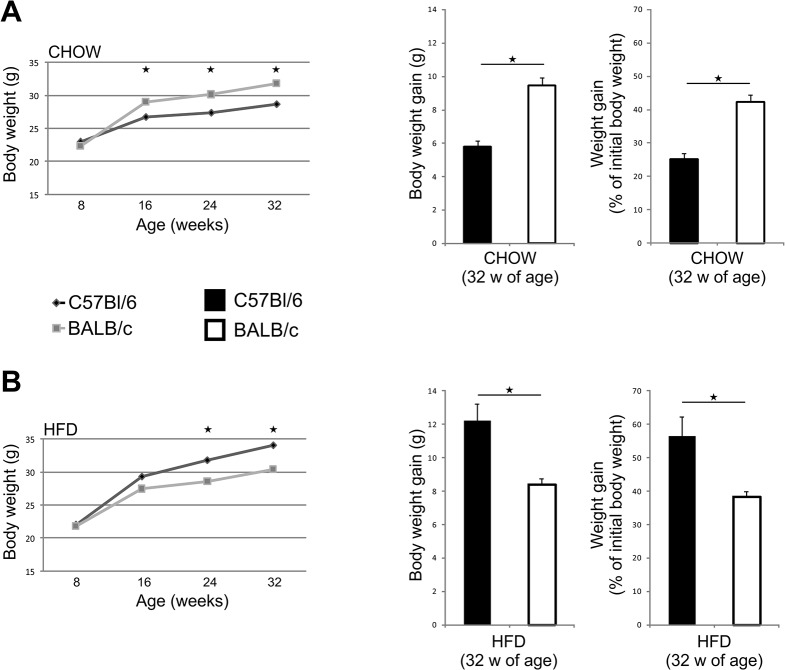
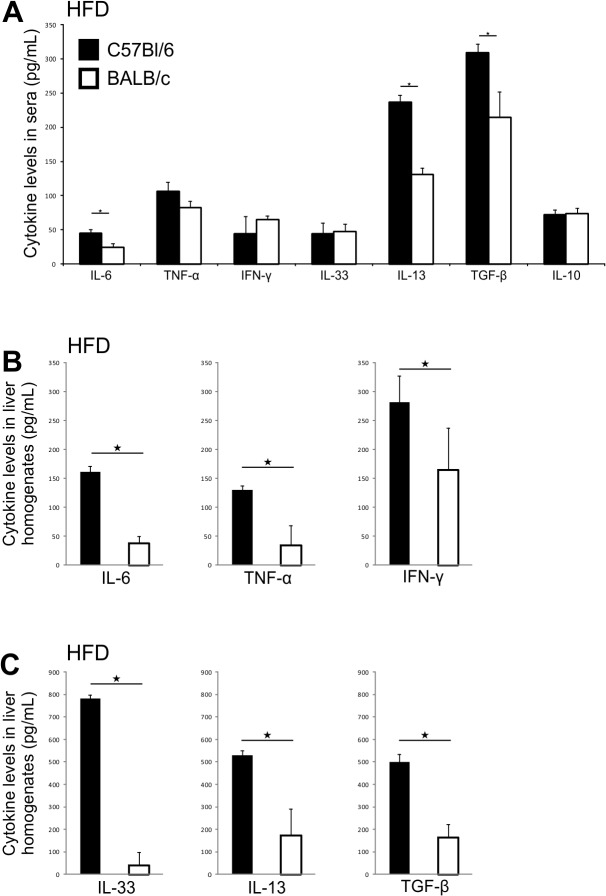
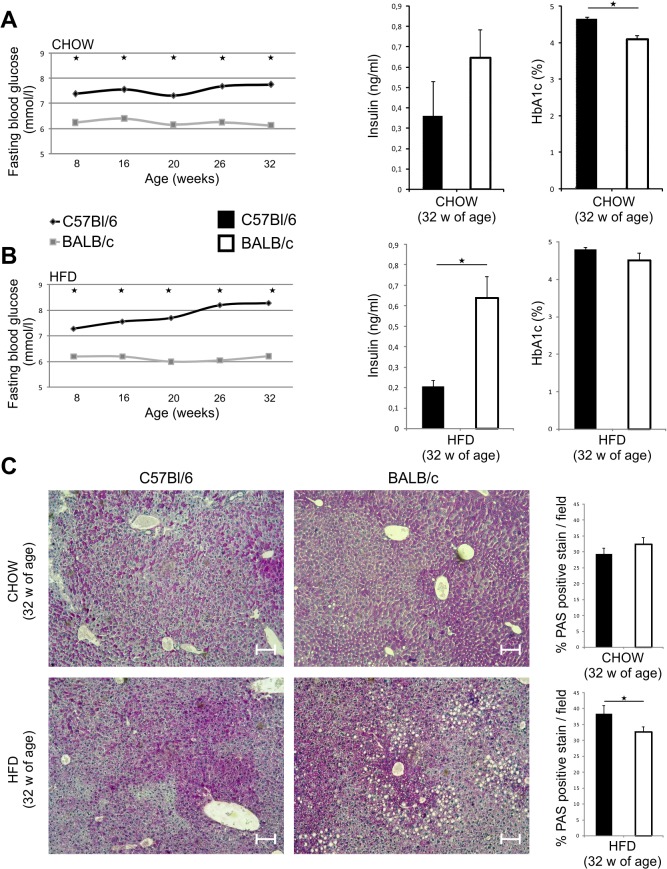
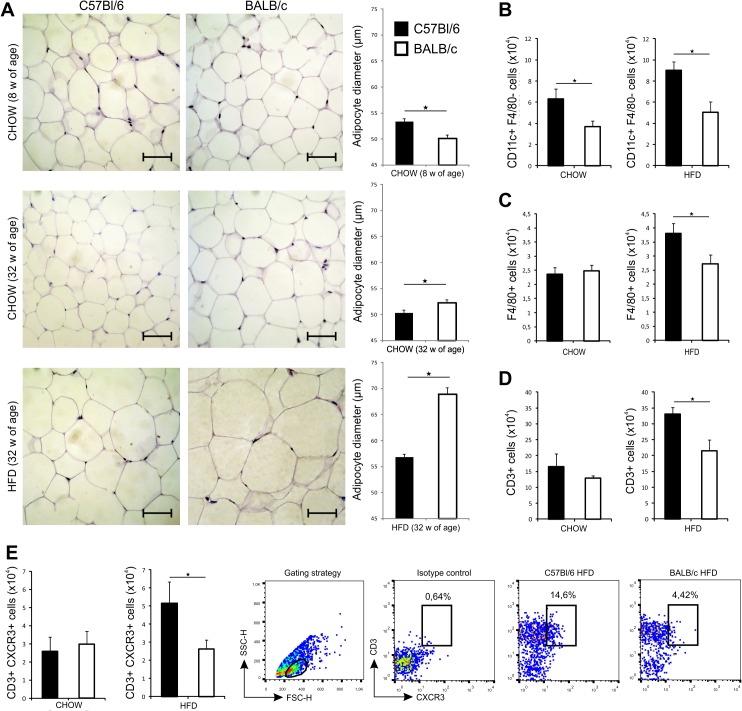
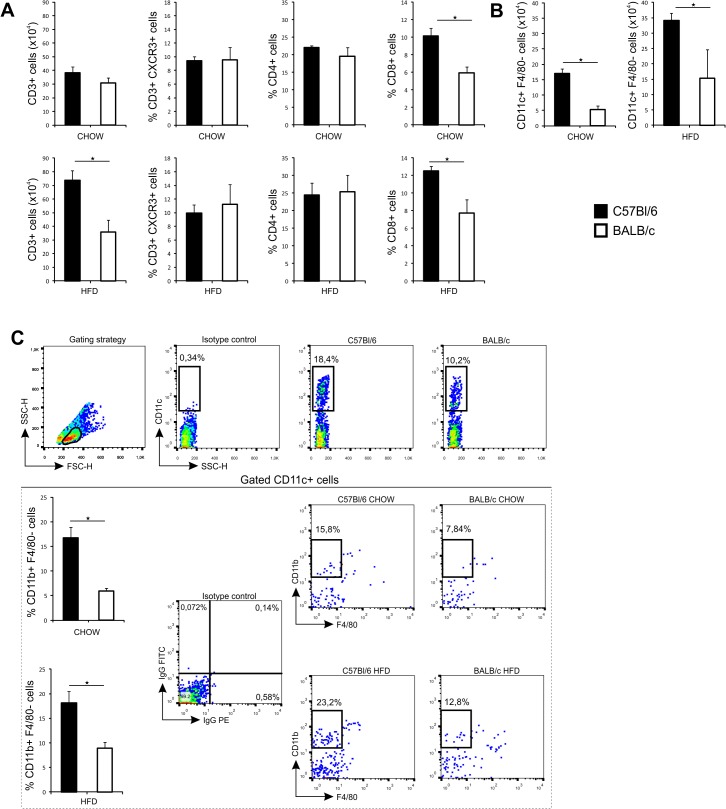
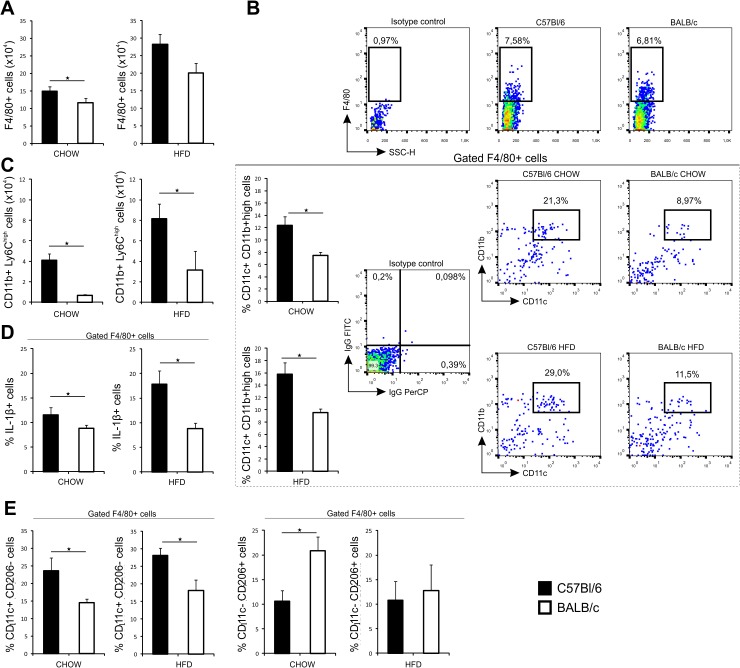
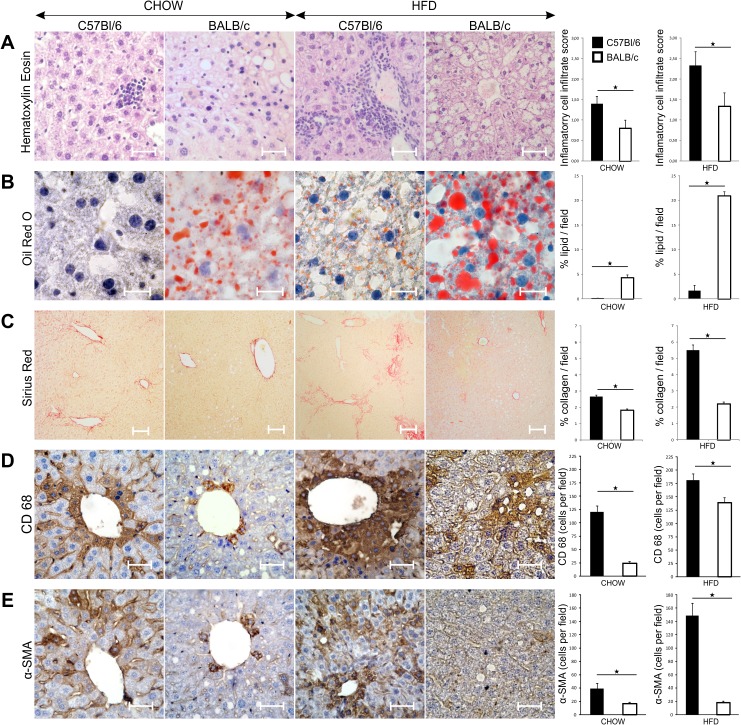
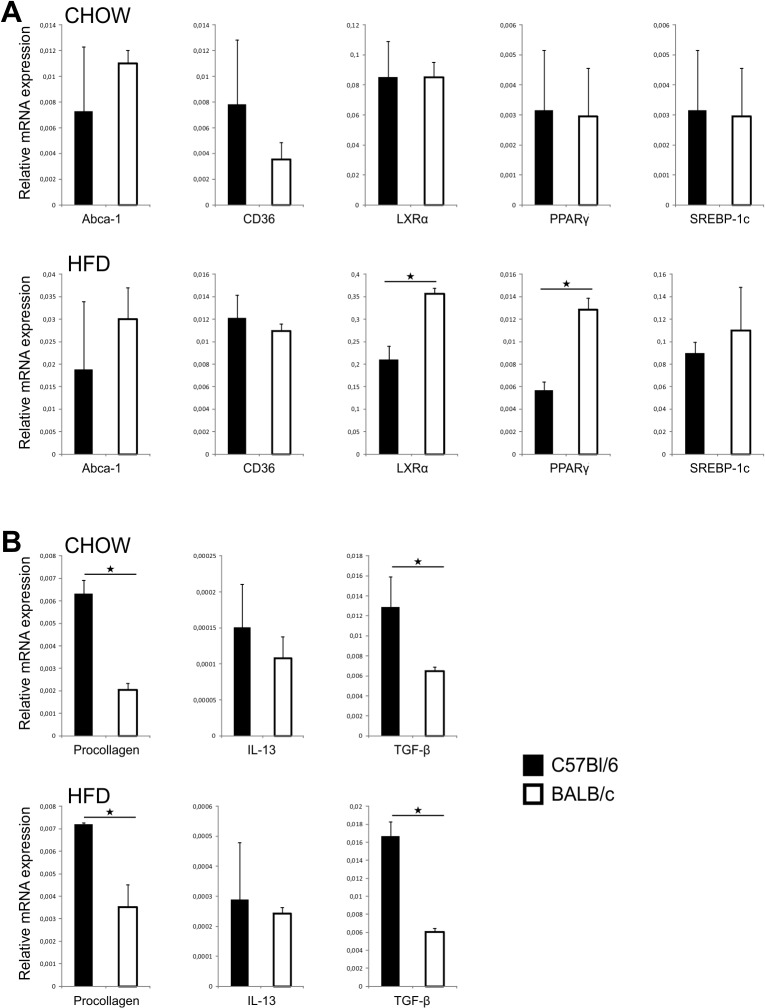
Immune reactivity plays an important role in obesity-associated metabolic disorders. We investigated immunometabolic phenotype of C57Bl/6 and BALB/c mice, prototypical Th1 and Th2-type strains, fed chow or high-fat diet (HFD) for 24 weeks. In comparison to C57Bl/6 mice, chow-fed BALB/c mice had higher body weight and weight gain, lower glycemia, more pronounced liver steatosis, but less inflammation and collagen deposition in liver. In response to HFD C57Bl/6 mice exhibited higher weight gain, higher glycemia, HbA1c and liver glycogen content, increased amount of visceral adipose tissue (VAT) and number of VAT associated CD3+CXCR3+ T cells, CD11c+ dendritic cells (DCs) and F4/80+ macrophages than BALB/c mice. More numerous CD3+ and CD8+ T lymphocytes, myeloid DCs, proinflammatory macrophages (F4/80+CD11b+CD11+ and F4/80+IL-1β+) and CD11b+Ly6Chigh monocytes and higher levels of proinflammatory IL-6, TNF-α and IFN-γ were present in liver in HFD-fed C57Bl/6 mice compared with diet-matched BALB/c mice. As opposed to C57Bl/6 mice, HFD induced marked liver steatosis and upregulated the hepatic LXRα and PPARγ genes in BALB/c mice. C57Bl/6 mice fed HFD developed liver fibrosis and increased hepatic procollagen and TGF-β mRNA expression, and IL-33, IL-13 and TGF-β levels in liver homogenates, while BALB/c mice fed HFD had scarce collagen deposition in liver. The obtained results suggest inherent immunometabolic differences in C57Bl/6 and BALB/c mice. Moreover, HFD Th1-type mice on high fat diet regimen are more susceptible to adiposity, liver inflammation and fibrosis, while Th2-type mice to liver steatosis, which is associated with differential immune cell composition in metabolic tissues. Strain-dependent differences in immunometabolic phenotype may be relevant for studies of obesity-associated metabolic diseases in humans.
免疫反应性在肥胖相关的代谢紊乱中起重要作用。我们研究了C57Bl/6和BALB/c小鼠(典型的Th1和Th2型品系)在喂食普通饲料或高脂饮食(HFD)24周后的免疫代谢表型。与C57Bl/6小鼠相比,喂食普通饲料的BALB/c小鼠体重更高且体重增加更多,血糖更低,肝脂肪变性更明显,但肝脏中的炎症和胶原沉积更少。在高脂饮食的情况下,C57Bl/6小鼠比BALB/c小鼠表现出更高的体重增加、更高的血糖、糖化血红蛋白(HbA1c)和肝糖原含量,内脏脂肪组织(VAT)数量增加以及VAT相关的CD3⁺CXCR3⁺ T细胞、CD11c⁺树突状细胞(DCs)和F4/80⁺巨噬细胞数量增加。与饮食匹配的BALB/c小鼠相比,高脂饮食喂养的C57Bl/6小鼠肝脏中CD3⁺和CD8⁺ T淋巴细胞、髓样DCs、促炎巨噬细胞(F4/80⁺CD11b⁺CD11⁺和F4/80⁺IL - 1β⁺)以及CD11b⁺Ly6Chigh单核细胞数量更多,促炎细胞因子IL - 6、TNF - α和IFN - γ水平更高。与C57Bl/6小鼠不同,高脂饮食在BALB/c小鼠中诱导了明显的肝脂肪变性并上调了肝脏LXRα和PPARγ基因。高脂饮食喂养的C57Bl/6小鼠出现肝纤维化,肝脏中前胶原和TGF - β mRNA表达增加,肝脏匀浆中IL - 33、IL - 13和TGF - β水平升高,而高脂饮食喂养的BALB/c小鼠肝脏中胶原沉积很少。所获得的结果表明C57Bl/6和BALB/c小鼠存在内在的免疫代谢差异。此外,高脂饮食方案下的Th1型小鼠更容易出现肥胖、肝脏炎症和纤维化,而Th2型小鼠更容易出现肝脂肪变性,这与代谢组织中免疫细胞组成的差异有关。免疫代谢表型的品系依赖性差异可能与人类肥胖相关代谢疾病的研究相关。