Ishikawa San-E
Department of Medicine, Saitama Medical Center, Jichi Medical University, 1-847 Amanuma Omiya, Saitama 330-8503, Japan.
J Clin Med. 2015 May 8;4(5):933-47. doi: 10.3390/jcm4050933.
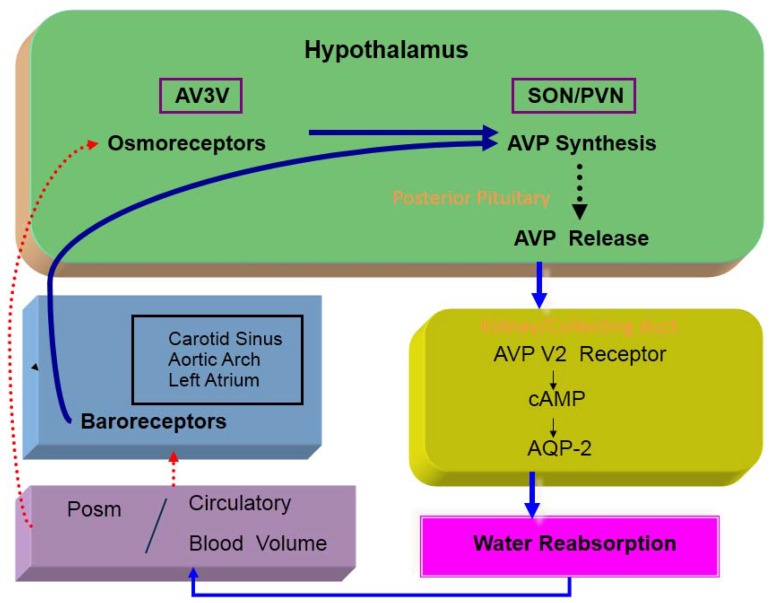
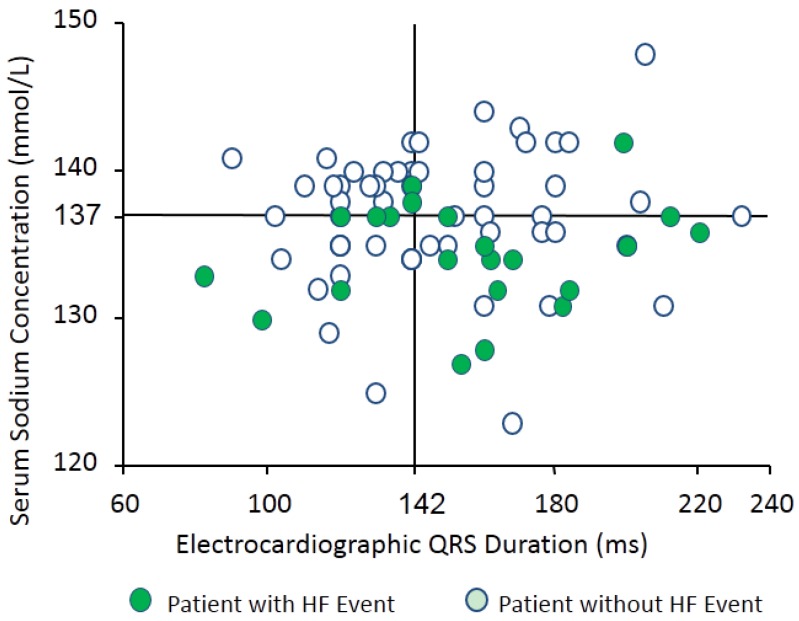
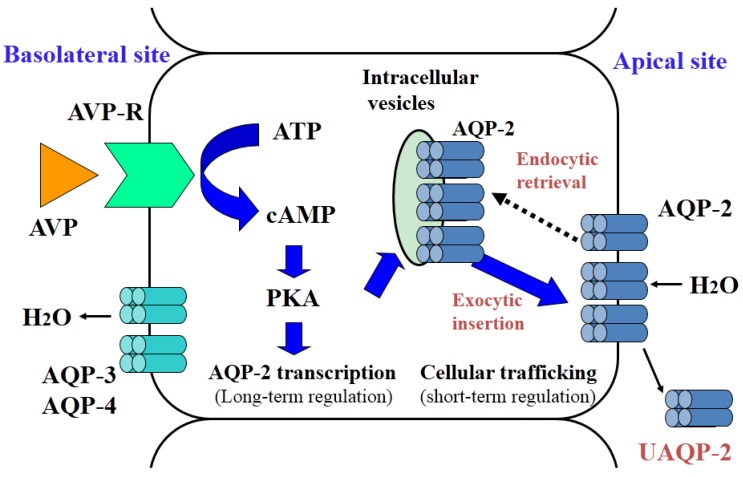
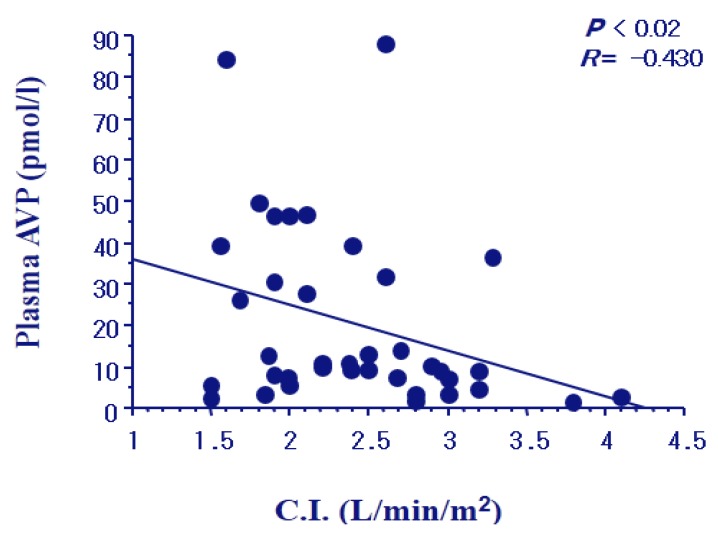
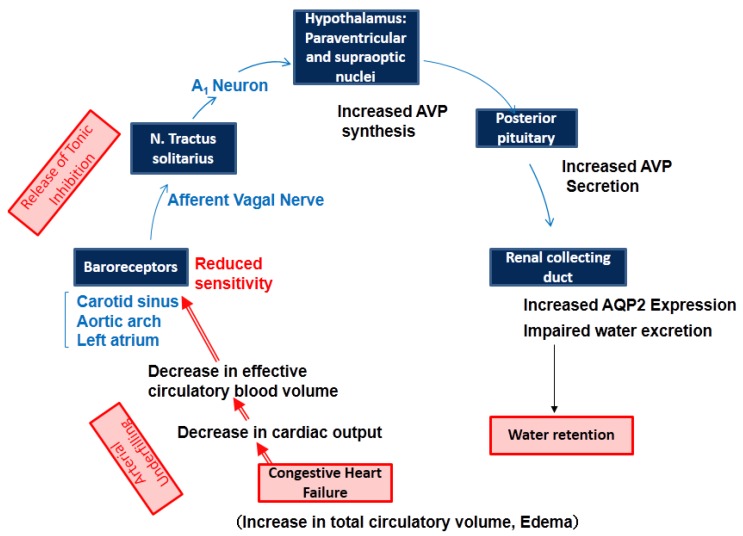
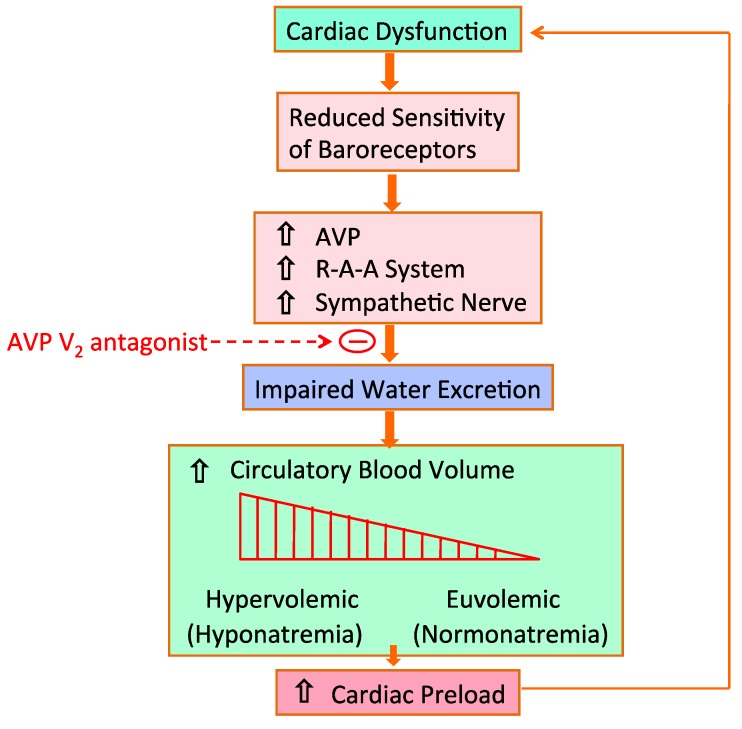
An exaggerated increase in circulatory blood volume is linked to congestive heart failure. Despite this increase, reduction of the "effective circulatory blood volume" in congestive heart failure is associated with decreased cardiac output, and can weaken the sensitivity of baroreceptors. Thereafter, tonic inhibition of the baroreceptor-mediated afferent pathway of vagal nerves is removed, providing an increase in non-osmotic release of arginine vasopressin (AVP). In the renal collecting duct, the aquaporin-2 (AQP2) water channel is regulated by sustained elevation of AVP release, and this leads to augmented hydroosmotic action of AVP, that results in exaggerated water retention and dilutional hyponatremia. Hyponatremia is also a predictor for worsening heart failure in patients with known/new onset heart failure. Therefore, such a dilutional hyponatremia associated with organ damage is predictive of the short- and long-term outcome of heart failure.
循环血容量的过度增加与充血性心力衰竭有关。尽管有这种增加,但充血性心力衰竭时“有效循环血容量”的减少与心输出量降低相关,并可削弱压力感受器的敏感性。此后,压力感受器介导的迷走神经传入通路的紧张性抑制被解除,导致精氨酸加压素(AVP)的非渗透性释放增加。在肾集合管中,水通道蛋白2(AQP2)水通道受AVP释放持续升高的调节,这导致AVP的水渗透作用增强,进而导致水潴留加剧和稀释性低钠血症。低钠血症也是已知/新发心力衰竭患者心力衰竭恶化的预测指标。因此,这种与器官损伤相关的稀释性低钠血症可预测心力衰竭的短期和长期预后。