Norkiene Milda, Stonyte Jomante, Ziogiene Danguole, Mazeike Egle, Sasnauskas Kestutis, Gedvilaite Alma
Institute of Biotechnology, Vilnius University, Graiciuno 8, LT-02241, Vilnius, Lithuania.
BMC Biotechnol. 2015 Aug 4;15:68. doi: 10.1186/s12896-015-0187-z.
Eleven new human polyomaviruses (HPyVs) have been identified in the last decade. Serological studies show that these novel HPyVs sub-clinically infect humans at an early age. The routes of infection, entry pathways, and cell tropism of new HPyVs remain unknown. VP1 proteins of polyomaviruses can assembly into virus-like particles (VLPs). As cell culturing systems for HPyV are currently not available, VP1-derived VLPs may be useful tools in basic research and biotechnological applications.
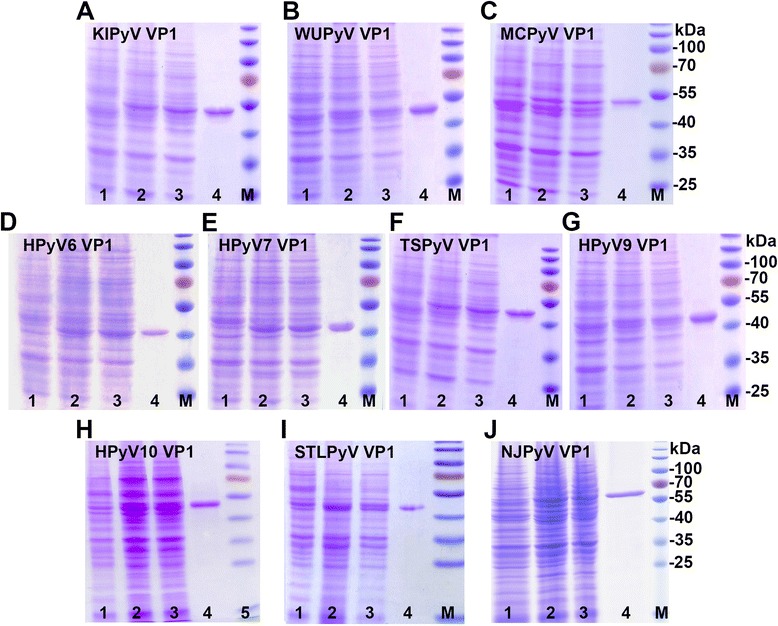
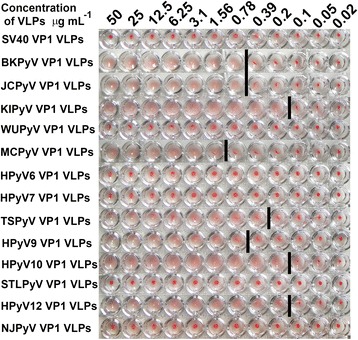
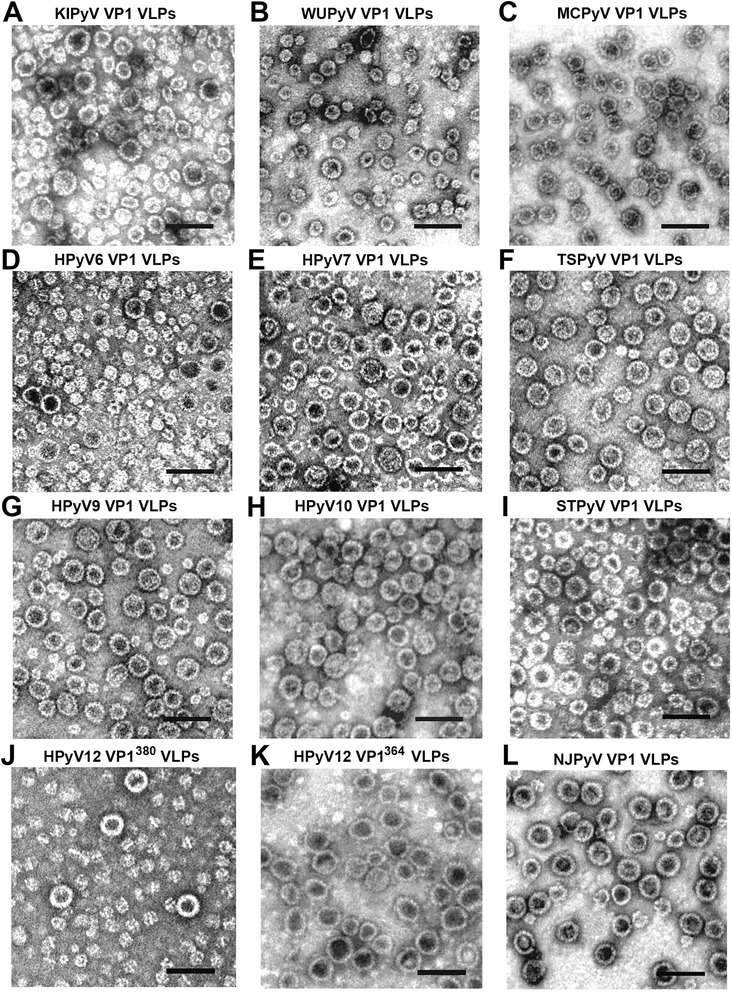
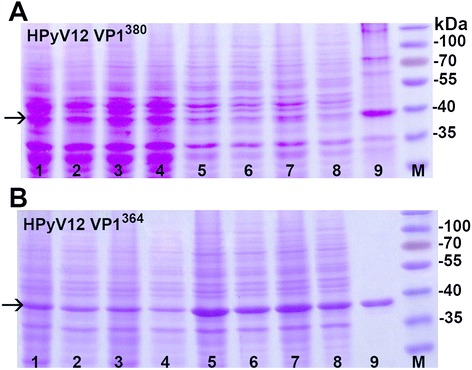
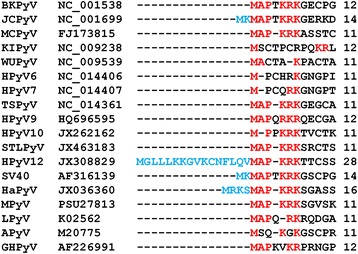
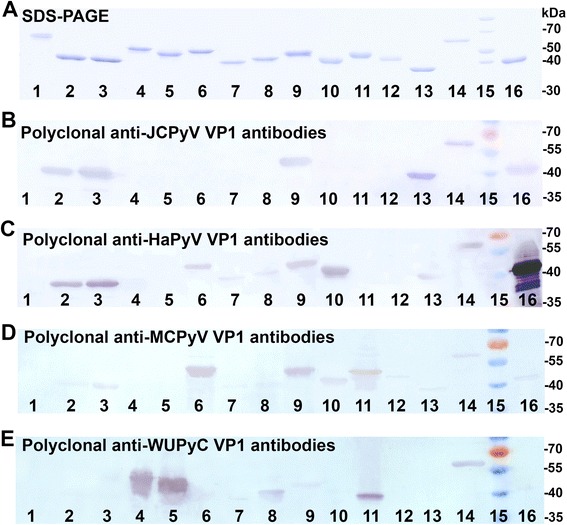
Recombinant VP1-derived VLPs from 11 newly identified HPyVs were efficiently expressed in yeast. VP1 proteins derived from Merkel cell polyomavirus (MCPyV), trichodysplasia spinulosa-associated polyomavirus (TSPyV), and New Jersey polyomavirus (NJPyV) self-assembled into homogeneous similarly-sized VLPs. Karolinska Institutet polyomavirus (KIPyV), HPyV7, HPyV9, HPyV10, and St. Louis polyomavirus (STLPyV) VP1 proteins formed VLPs that varied in size with diameters ranging from 20 to 60 nm. Smaller-sized VLPs (25-35 nm in diameter) predominated in preparations from Washington University polyomavirus (WUPyV) and HPyV6. Attempts to express recombinant HPyV12 VP1-derived VLPs in yeast indicate that translation of VP1 might start at the second of two potential translation initiation sites in the VP1-encoding open reading frame (ORF). This translation resulted in a 364-amino acid-long VP1 protein, which efficiently self-assembled into typical PyV VLPs. MCPyV-, KIPyV-, TSPyV-, HPyV9-, HPyV10-, and HPyV12-derived VLPs showed hemagglutination (HA) assay activity in guinea pig erythrocytes, whereas WUPyV-, HPyV6-, HPyV7-, STLPyV- and NJPyV-derived VP1 VLPs did not.
The yeast expression system was successfully utilized for high-throughput production of recombinant VP1-derived VLPs from 11 newly identified HPyVs. HPyV12 VP1-derived VLPs were generated from the second of two potential translation initiation sites in the VP1-encoding ORF. Recombinant VLPs produced in yeast originated from different HPyVs demonstrated distinct HA activities and may be useful in virus diagnostics, capsid structure studies, or investigation of entry pathways and cell tropism of HPyVs until cell culture systems for new HPyVs are developed.
在过去十年中已鉴定出11种新型人类多瘤病毒(HPyV)。血清学研究表明,这些新型HPyV在人类幼年时发生亚临床感染。新型HPyV的感染途径、进入途径和细胞嗜性仍然未知。多瘤病毒的VP1蛋白可以组装成病毒样颗粒(VLP)。由于目前尚无用于HPyV的细胞培养系统,VP1衍生的VLP可能是基础研究和生物技术应用中的有用工具。
来自11种新鉴定的HPyV的重组VP1衍生VLP在酵母中高效表达。源自默克尔细胞多瘤病毒(MCPyV)、棘状毛发发育异常相关多瘤病毒(TSPyV)和新泽西多瘤病毒(NJPyV)的VP1蛋白自组装成大小相似的均匀VLP。卡罗林斯卡学院多瘤病毒(KIPyV)、HPyV7、HPyV9、HPyV10和圣路易斯多瘤病毒(STLPyV)的VP1蛋白形成大小各异的VLP,直径范围为20至60纳米。在华盛顿大学多瘤病毒(WUPyV)和HPyV6的制剂中,较小尺寸的VLP(直径25 - 35纳米)占主导。尝试在酵母中表达重组HPyV12 VP1衍生的VLP表明,VP1的翻译可能始于VP1编码开放阅读框(ORF)中两个潜在翻译起始位点的第二个。这种翻译产生了一个364个氨基酸长的VP1蛋白,它有效地自组装成典型的PyV VLP。源自MCPyV、KIPyV、TSPyV、HPyV9、HPyV10和HPyV12的VLP在豚鼠红细胞中显示出血凝(HA)测定活性,而源自WUPyV、HPyV6、HPyV7、STLPyV和NJPyV的VP1 VLP则没有。
酵母表达系统成功用于高通量生产来自11种新鉴定的HPyV的重组VP1衍生VLP。HPyV12 VP1衍生的VLP由VP1编码ORF中两个潜在翻译起始位点的第二个产生。在酵母中产生的源自不同HPyV的重组VLP表现出不同的HA活性,并且在开发新型HPyV的细胞培养系统之前,可能在病毒诊断、衣壳结构研究或HPyV的进入途径和细胞嗜性研究中有用。