Khamis Sam, Dar Gali, Peretz Chava, Yizhar Ziva
Gait and Motion Analysis Laboratory, Dana Children's Hospital, Tel-Aviv Medical Center, Tel-Aviv, Israel.
Department of Physical Therapy, Faculty of Social Welfare & Health studies, Haifa University, Mount Carmel, Haifa, Israel.
J Hum Kinet. 2015 Jul 10;46:85-97. doi: 10.1515/hukin-2015-0037. eCollection 2015 Jun 27.
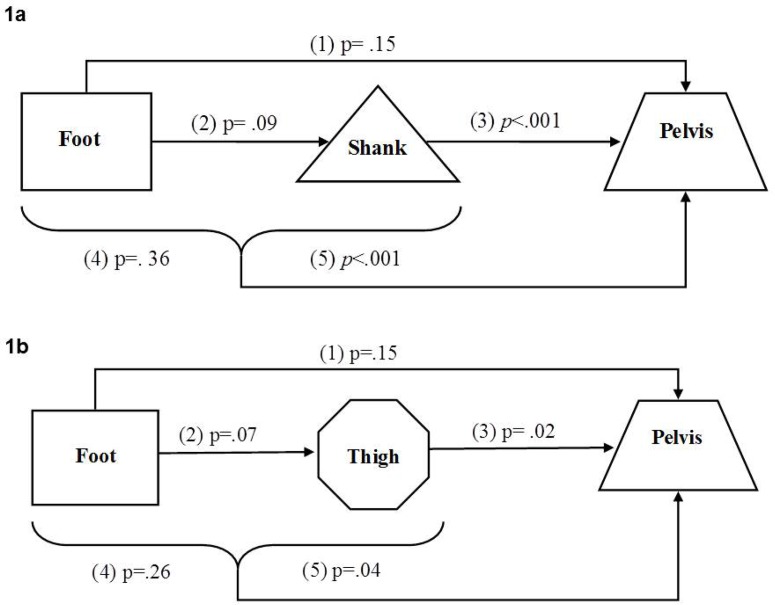
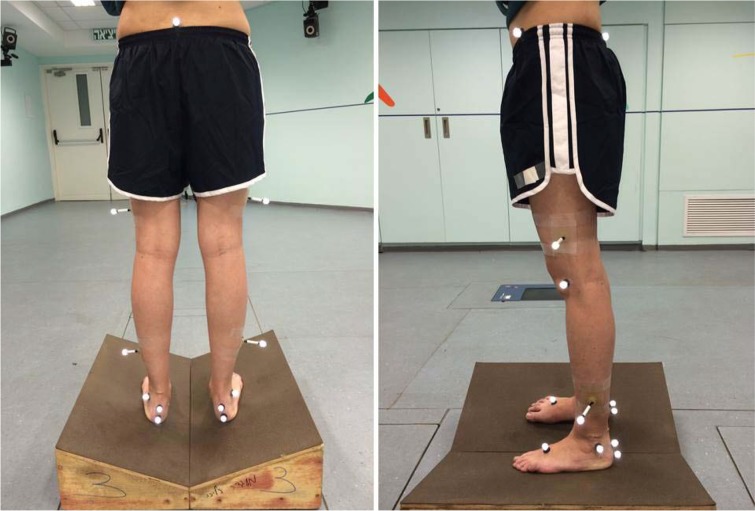
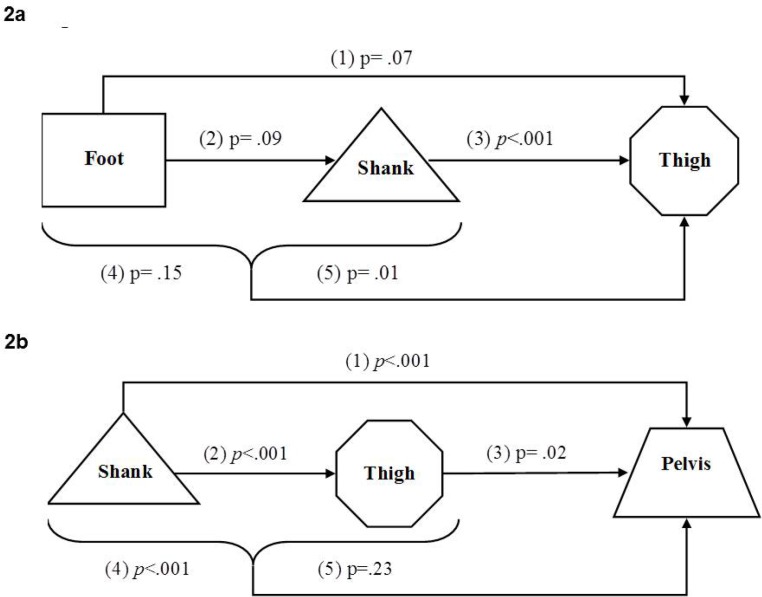
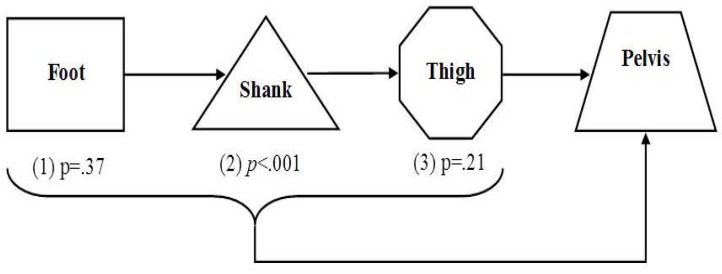
A normal motion and segmental interrelationship has been determined as a significant factor in normal function. Yet, the relationship between distal segments and pelvic alignment needs further investigation. The aim of this study was to investigate the interrelationship between distal and proximal lower extremity segments while standing and during induced feet hyperpronation. Changes in alignment of the pelvis and lower extremities were measured at a gait laboratory using the VICON 612 computerized motion analysis system. Thirty-five healthy volunteer subjects were recruited. Four randomized repeated-measure standing modes were used: standing directly on the floor and then on three wedges angled at 10°, 15° and 20° to induce bilateral hyperpronation for 20 seconds. A significant (p<0.05) bi-variate relationship was found between the anterior pelvic tilt and thigh internal rotation, in all four standing positions (.41≤r≤.46, in all p<0.014). A combined effect of rotational alignment between segments and the cumulative effect of foot hyperpronation on pelvic tilt revealed that only the shank significantly affected pelvic alignment, acting as a mediator between a foot and a thigh with the thigh having a crude significant effect on the pelvis. When internal rotation of the shank occurs, calcaneal eversion couples with thigh internal rotation and anterior pelvic tilt. It can be concluded that in response to induced hyperpronation, the shank is a pivotal segment in postural adjustment.
正常的运动及节段间相互关系已被确定为正常功能的一个重要因素。然而,远端节段与骨盆排列之间的关系仍需进一步研究。本研究的目的是调查站立时以及诱发足部过度旋前时下肢远端与近端节段之间的相互关系。在步态实验室使用VICON 612计算机化运动分析系统测量骨盆和下肢的排列变化。招募了35名健康志愿者。采用四种随机重复测量的站立模式:直接站在地面上,然后站在三个角度分别为10°、15°和20°的楔形物上,诱发双侧过度旋前20秒。在所有四个站立位置,均发现骨盆前倾与大腿内旋之间存在显著的(p<0.05)双变量关系(所有r值在0.41至0.46之间,所有p<0.014)。节段间旋转排列的综合作用以及足部过度旋前对骨盆倾斜的累积作用表明,只有小腿显著影响骨盆排列,在足部和大腿之间起中介作用,而大腿对骨盆有粗略的显著影响。当小腿发生内旋时,跟骨外翻与大腿内旋和骨盆前倾相关联。可以得出结论,对于诱发的过度旋前,小腿是姿势调整中的关键节段。