Garza-Villarreal Eduardo A, Jiang Zhiguo, Vuust Peter, Alcauter Sarael, Vase Lene, Pasaye Erick H, Cavazos-Rodriguez Roberto, Brattico Elvira, Jensen Troels S, Barrios Fernando A
Subdireccion de Investigaciones Clinicas, Instituto Nacional de Psiquiatria "Dr. Ramón de la Fuente Muñiz," Mexico City, Mexico ; Cátedras, National Council of Science and Technology (CONACYT) Mexico City, Mexico ; Department of Neurology, Faculty of Medicine and University Hospital "Dr. Jose E. Gonzalez" and Neuroscience Unit, Center for Research and Development in the Health Sciences, Universidad Autónoma de Nuevo León Monterrey, Mexico ; Music in the Brain, Center of Functionally Integrative Neuroscience, Aarhus University Aarhus, Denmark.
Human Performance and Engineering, Kessler Foundation West Orange, NJ, USA ; Department of Biomedical Engineering, New Jersey Institute of Technology Newark, NJ, USA.
Front Psychol. 2015 Jul 22;6:1051. doi: 10.3389/fpsyg.2015.01051. eCollection 2015.
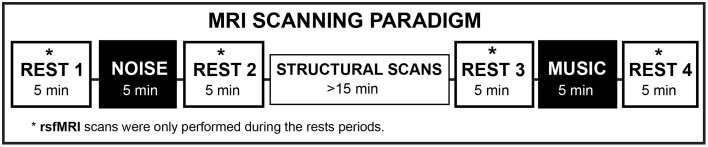
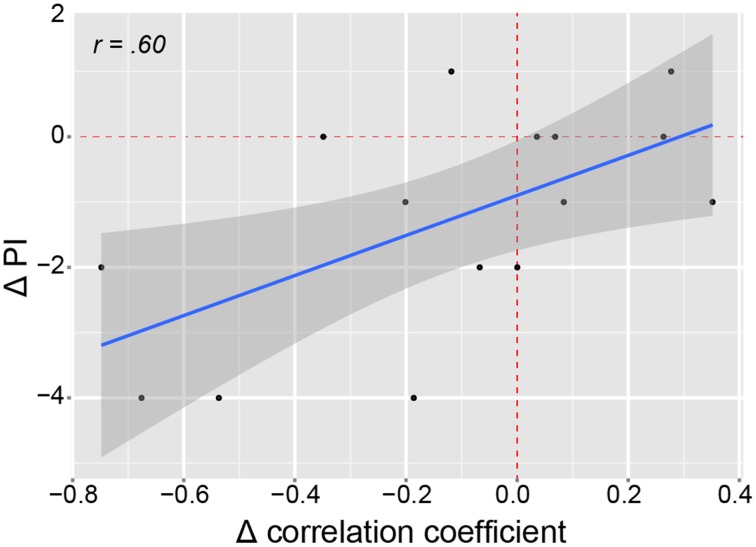
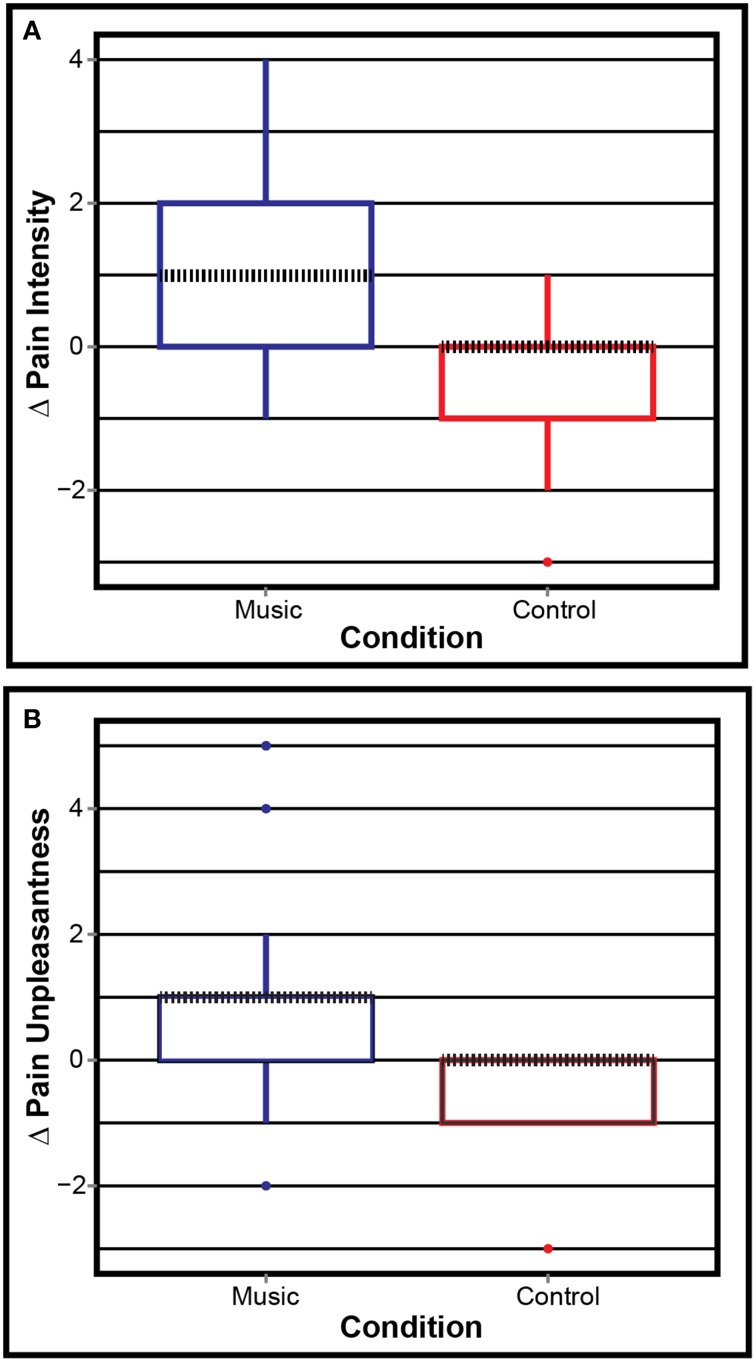
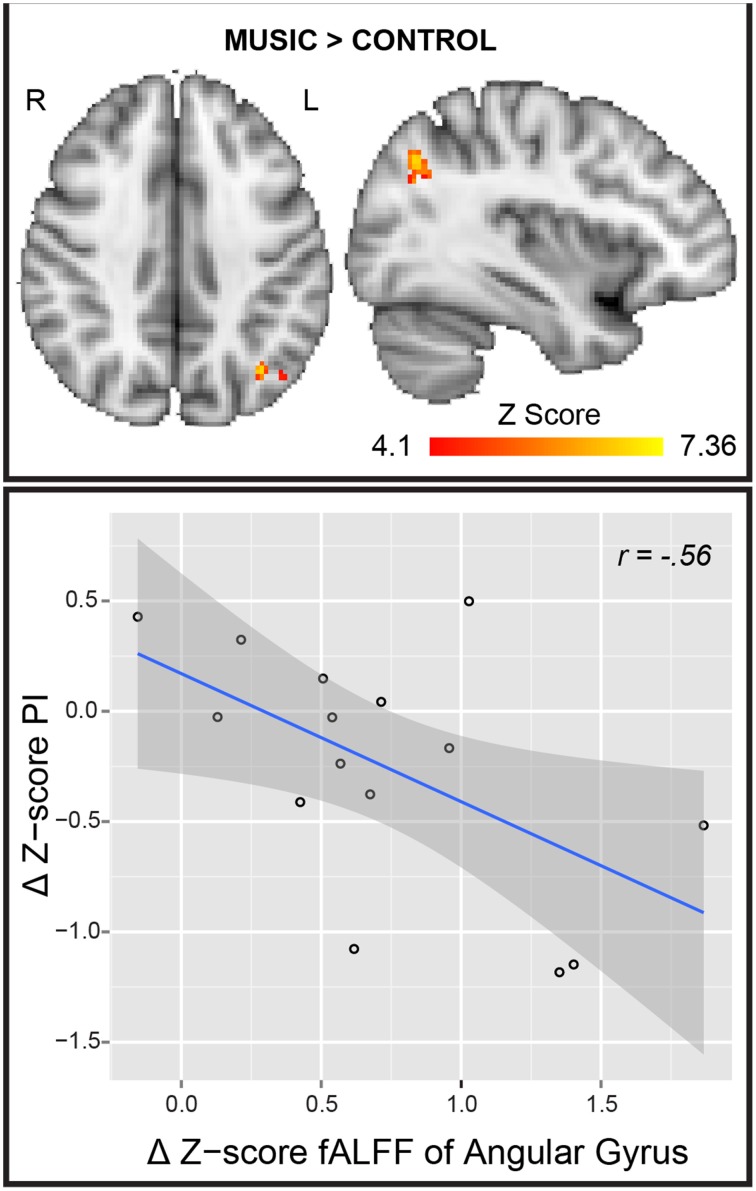
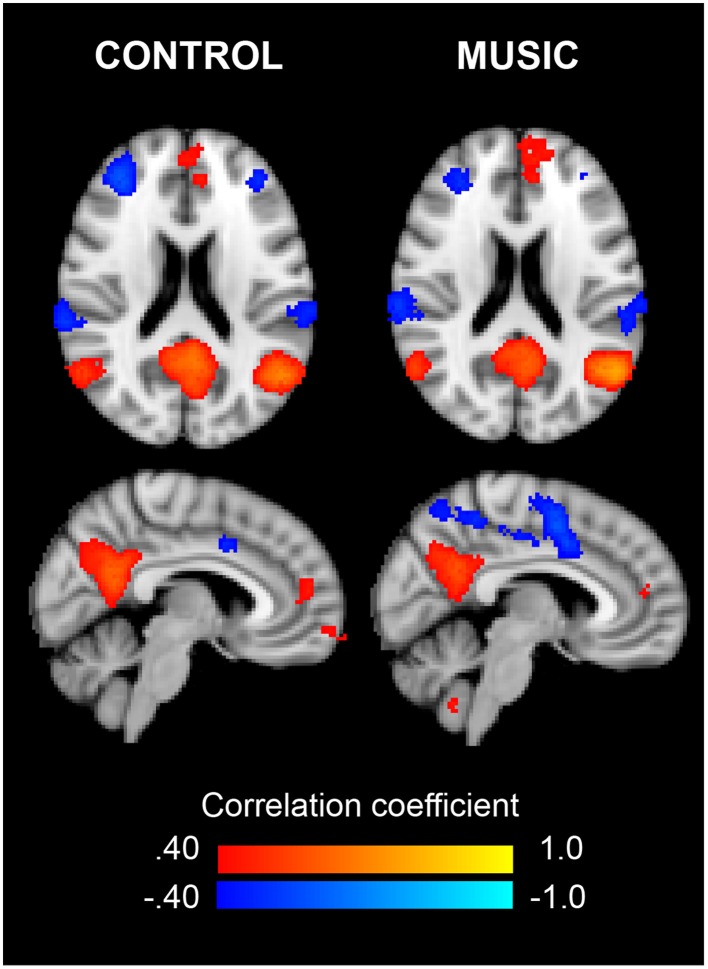
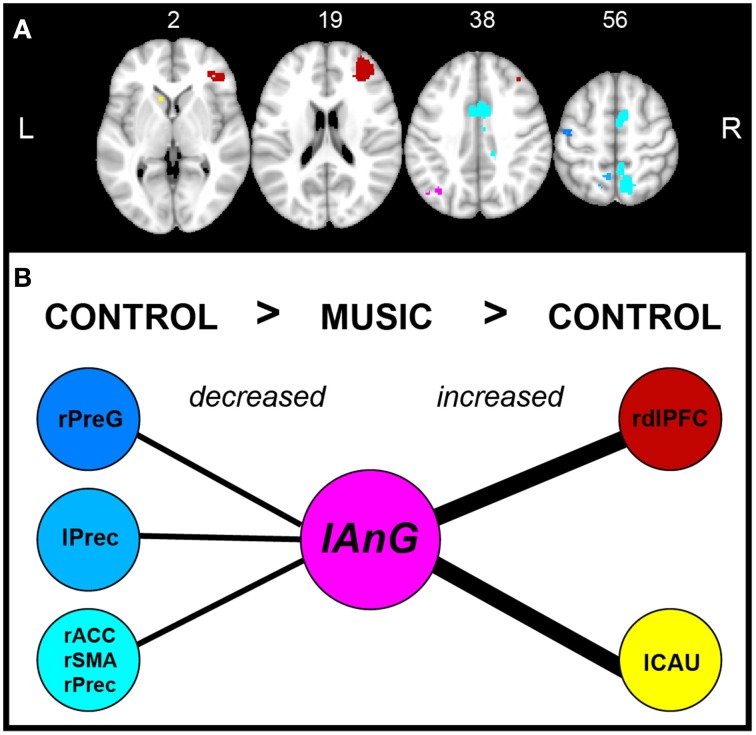
Music reduces pain in fibromyalgia (FM), a chronic pain disease, but the functional neural correlates of music-induced analgesia (MIA) are still largely unknown. We recruited FM patients (n = 22) who listened to their preferred relaxing music and an auditory control (pink noise) for 5 min without external noise from fMRI image acquisition. Resting state fMRI was then acquired before and after the music and control conditions. A significant increase in the amplitude of low frequency fluctuations of the BOLD signal was evident in the left angular gyrus (lAnG) after listening to music, which in turn, correlated to the analgesia reports. The post-hoc seed-based functional connectivity analysis of the lAnG showed found higher connectivity after listening to music with right dorsolateral prefrontal cortex (rdlPFC), the left caudate (lCau), and decreased connectivity with right anterior cingulate cortex (rACC), right supplementary motor area (rSMA), precuneus and right precentral gyrus (rPreG). Pain intensity (PI) analgesia was correlated (r = 0.61) to the connectivity of the lAnG with the rPreG. Our results show that MIA in FM is related to top-down regulation of the pain modulatory network by the default mode network (DMN).
音乐可减轻纤维肌痛(FM)这种慢性疼痛疾病的疼痛,但音乐诱导镇痛(MIA)的功能性神经关联仍很大程度上未知。我们招募了FM患者(n = 22),他们在没有功能磁共振成像(fMRI)图像采集外部噪音的情况下,听了5分钟自己喜欢的舒缓音乐和听觉对照(粉红噪声)。然后在音乐和对照条件前后采集静息态fMRI。听音乐后,左侧角回(lAnG)的血氧水平依赖(BOLD)信号低频波动幅度显著增加,这反过来又与镇痛报告相关。对lAnG进行基于种子的事后功能连接分析发现,听音乐后与右侧背外侧前额叶皮质(rdlPFC)、左侧尾状核(lCau)的连接性更高,与右侧前扣带回皮质(rACC)、右侧辅助运动区(rSMA)、楔前叶和右侧中央前回(rPreG)的连接性降低。疼痛强度(PI)镇痛与lAnG与rPreG的连接性相关(r = 0.61)。我们的结果表明,FM中的MIA与默认模式网络(DMN)对疼痛调节网络的自上而下调节有关。