Skorve Jon, Hilvo Mika, Vihervaara Terhi, Burri Lena, Bohov Pavol, Tillander Veronika, Bjørndal Bodil, Suoniemi Matti, Laaksonen Reijo, Ekroos Kim, Berge Rolf K, Alexson Stefan E H
Department of Clinical Science, University of Bergen, N-5021, Bergen, Norway.
Zora Biosciences Oy, Biologinkuja 1, 02150, Espoo, Finland.
Lipids Health Dis. 2015 Aug 11;14:88. doi: 10.1186/s12944-015-0086-2.
Marine food is an important source of omega-3 fatty acids with beneficial health effects. Oils from marine organisms have different fatty acid composition and differ in their molecular composition. Fish oil (FO) has a high content of eicosapentaenoic and docosahexaenoic acids mainly esterified to triacylglycerols, while in krill oil (KO) these fatty acids are mainly esterified to phospholipids. The aim was to study the effects of these oils on the lipid content and fatty acid distribution in the various lipid classes in liver and brain of mice.
Mice were fed either a high-fat diet (HF), a HF diet supplemented with FO or with KO (n = 6). After six weeks of feeding, liver and brain lipid extracts were analysed using a shotgun and TAG lipidomics approach. Student t-test was performed after log-transformation to compare differences between study groups.
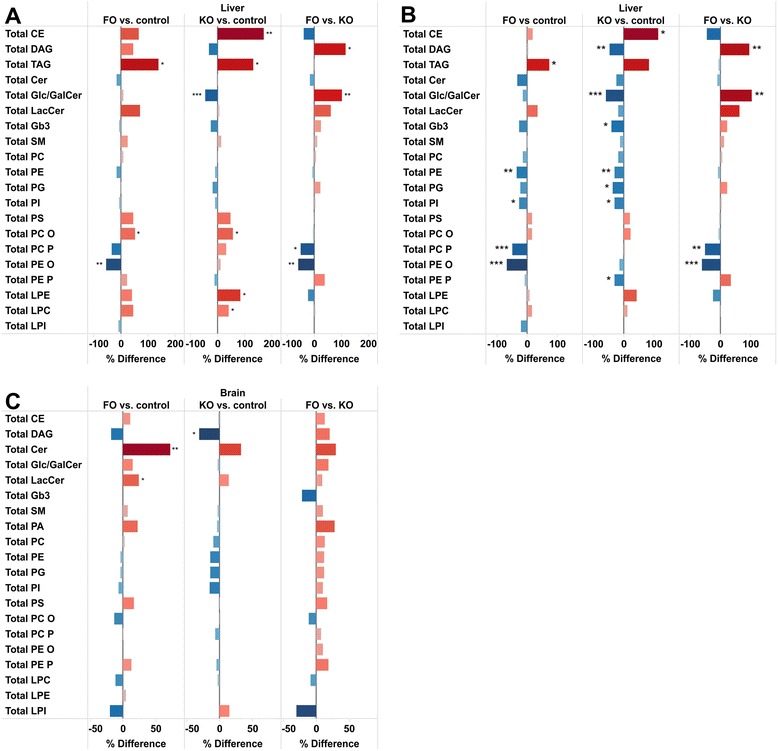
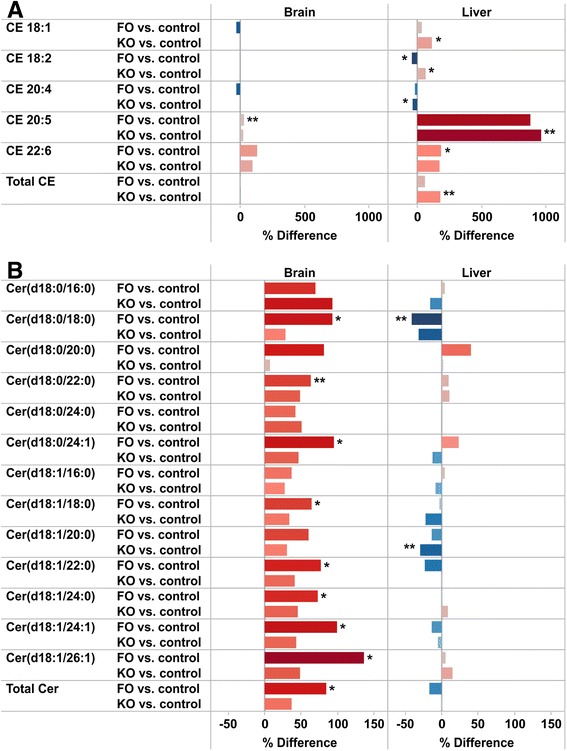
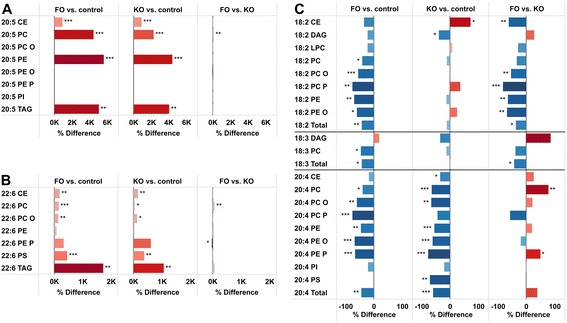
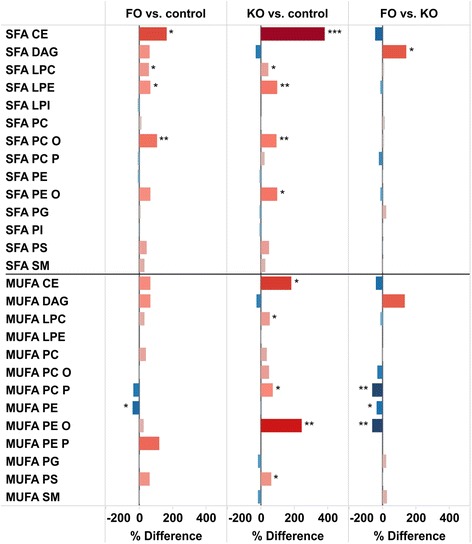
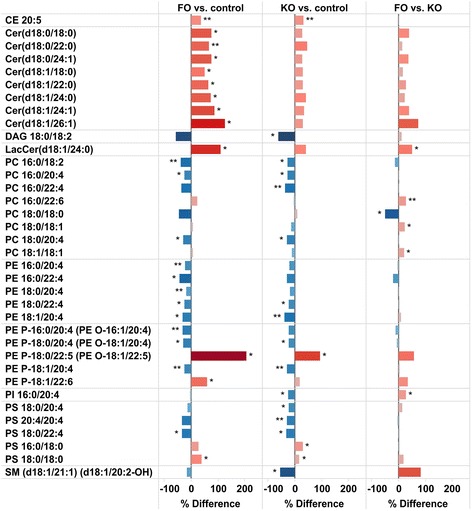
Six weeks of feeding resulted in significant changes in the relative abundance of many lipid classes compared to control mice. In both FO and KO fed mice, the triacylglycerol content in the liver was more than doubled. The fatty acid distribution was affected by the oils in both liver and brain with a decrease in the abundance of 18:2 and 20:4, and an increase in 20:5 and 22:6 in both study groups. 18:2 decreased in all lipid classes in the FO group but with only minor changes in the KO group. Differences between the feeding groups were particularly evident in some of the minor lipid classes that are associated with inflammation and insulin resistance. Ceramides and diacylglycerols were decreased and cholesteryl esters increased in the liver of the KO group, while plasmalogens were decreased in the FO group. In the brain, diacylglycerols were decreased, more by KO than FO, while ceramides and lactosylceramides were increased, more by FO than KO.
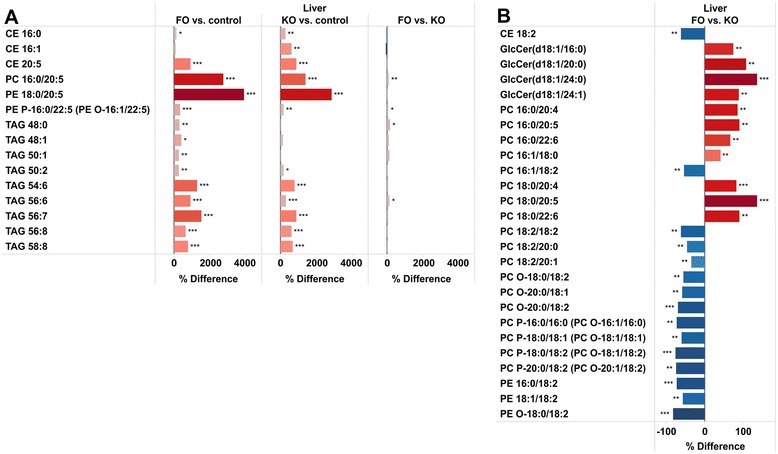
The changes in the hepatic sphingolipids and 20:4 fatty acid levels were greater in the KO compared to the FO fed mice, and are consistent with a hypothesis that krill oil will have a stronger anti-inflammatory action and enhances insulin sensitivity more potently than fish oil.
海洋食物是ω-3脂肪酸的重要来源,对健康有益。海洋生物的油具有不同的脂肪酸组成和分子组成。鱼油(FO)富含二十碳五烯酸和二十二碳六烯酸,主要酯化到三酰甘油中,而在磷虾油(KO)中,这些脂肪酸主要酯化到磷脂中。目的是研究这些油对小鼠肝脏和大脑中各种脂质类别的脂质含量和脂肪酸分布的影响。
给小鼠喂食高脂饮食(HF)、添加FO或KO的HF饮食(n = 6)。喂食六周后,使用鸟枪法和TAG脂质组学方法分析肝脏和大脑脂质提取物。在对数转换后进行学生t检验以比较研究组之间的差异。
与对照小鼠相比,六周的喂食导致许多脂质类别的相对丰度发生显著变化。在喂食FO和KO的小鼠中,肝脏中的三酰甘油含量均增加了一倍多。肝脏和大脑中的脂肪酸分布均受这些油的影响,两个研究组中18:2和20:4的丰度降低,20:5和22:6的丰度增加。FO组中所有脂质类别中的18:2均降低,但KO组中只有微小变化。喂食组之间的差异在一些与炎症和胰岛素抵抗相关的次要脂质类别中尤为明显。KO组肝脏中的神经酰胺和二酰甘油减少,胆固醇酯增加,而FO组中的缩醛磷脂减少。在大脑中,二酰甘油减少,KO组比FO组减少更多,而神经酰胺和乳糖神经酰胺增加,FO组比KO组增加更多。
与喂食FO的小鼠相比,KO喂养的小鼠肝脏鞘脂和20:4脂肪酸水平的变化更大,这与磷虾油比鱼油具有更强的抗炎作用并更有效地增强胰岛素敏感性的假设一致。