Landy J, Walker A W, Li J V, Al-Hassi H O, Ronde E, English N R, Mann E R, Bernardo D, McLaughlin S D, Parkhill J, Ciclitira P J, Clark S K, Knight S C, Hart A L
1] IBD Unit, Gastroenterology Dept. St Mark's Hospital, Harrow, London, UK [2] Antigen Presentation Research Group, Faculty of Medicine, Imperial College London, Northwick Park and St Mark's Campus, Harrow, UK.
1] Pathogen Genomics Group, Wellcome Trust Sanger Institute, Hinxton, Cambridgeshire, UK [2] Microbiology Group, Rowett Institute of Nutrition and Health, University of Aberdeen, Greenburn Road, Aberdeen, UK.
Sci Rep. 2015 Aug 12;5:12955. doi: 10.1038/srep12955.
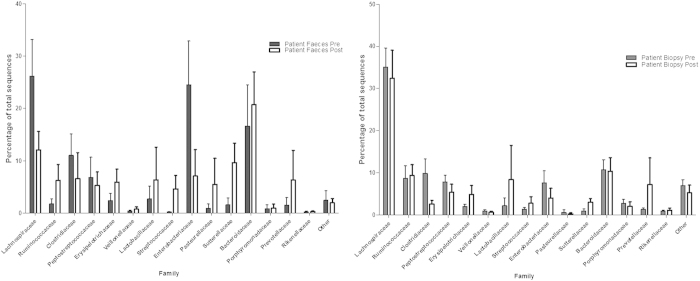
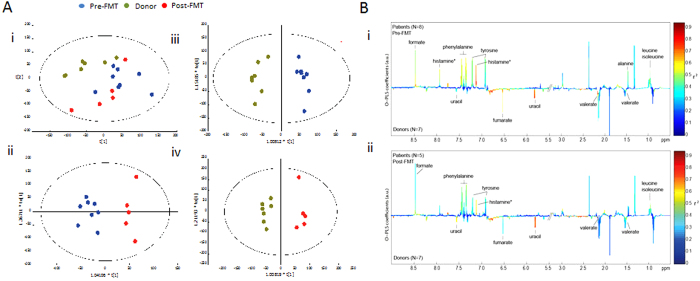
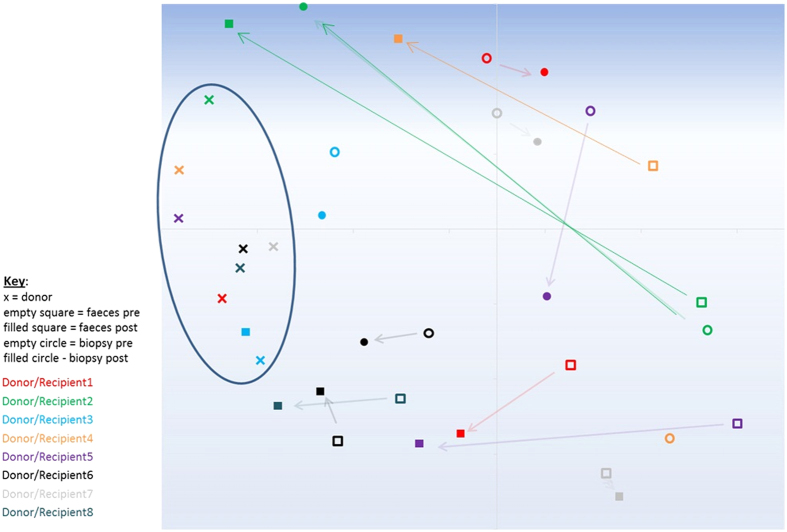
Faecal microbiota transplantation (FMT) is effective in the treatment of Clostridium difficile infection, where efficacy correlates with changes in microbiota diversity and composition. The effects of FMT on recipient microbiota in inflammatory bowel diseases (IBD) remain unclear. We assessed the effects of FMT on microbiota composition and function, mucosal immune response, and clinical outcome in patients with chronic pouchitis. Eight patients with chronic pouchitis (current PDAI ≥7) were treated with FMT via nasogastric administration. Clinical activity was assessed before and four weeks following FMT. Faecal coliform antibiotic sensitivities were analysed, and changes in pouch faecal and mucosal microbiota assessed by 16S rRNA gene pyrosequencing and (1)H NMR spectroscopy. Lamina propria dendritic cell phenotype and cytokine profiles were assessed by flow cytometric analysis and multiplex assay. Following FMT, there were variable shifts in faecal and mucosal microbiota composition and, in some patients, changes in proportional abundance of species suggestive of a "healthier" pouch microbiota. However, there were no significant FMT-induced metabolic or immunological changes, or beneficial clinical response. Given the lack of clinical response following FMT via a single nasogastric administration our results suggest that FMT/bacteriotherapy for pouchitis patients requires further optimisation.
粪菌移植(FMT)在治疗艰难梭菌感染方面有效,其疗效与微生物群多样性和组成的变化相关。FMT对炎症性肠病(IBD)患者受体微生物群的影响仍不清楚。我们评估了FMT对慢性袋炎患者微生物群组成和功能、黏膜免疫反应及临床结局的影响。8例慢性袋炎患者(当前PDAI≥7)通过鼻胃管给予FMT治疗。在FMT前及FMT后4周评估临床活动度。分析粪便大肠菌群抗生素敏感性,并通过16S rRNA基因焦磷酸测序和(1)H NMR光谱评估袋粪便和黏膜微生物群的变化。通过流式细胞术分析和多重检测评估固有层树突状细胞表型和细胞因子谱。FMT后,粪便和黏膜微生物群组成出现不同变化,在一些患者中,某些物种相对丰度的变化提示袋微生物群“更健康”。然而,FMT未引起显著的代谢或免疫变化,也未产生有益的临床反应。鉴于单次鼻胃管给予FMT后缺乏临床反应,我们的结果表明,用于袋炎患者的FMT/细菌疗法需要进一步优化。