de Abreu L, Holloway Kara L, Kotowicz Mark A, Pasco Julie A
School of Medicine, Deakin University, 285 Ryrie Street, Geelong, VIC 3220, Australia.
School of Medicine, Deakin University, 285 Ryrie Street, Geelong, VIC 3220, Australia ; Department of Medicine, NorthWest Academic Centre, The University of Melbourne, 176 Furlong Road, St Albans, VIC 3021, Australia ; Barwon Health, Ryrie Street, Geelong, VIC 3220, Australia.
J Diabetes Res. 2015;2015:373762. doi: 10.1155/2015/373762. Epub 2015 Jul 27.
Diabetes mellitus is a growing health problem worldwide. This study aimed to describe dysglycaemia and determine the impact of body composition and clinical and lifestyle factors on the risk of progression or regression from impaired fasting glucose (IFG) to diabetes or normoglycaemia in Australian women.
This study included 1167 women, aged 20-94 years, enrolled in the Geelong Osteoporosis Study. Multivariable logistic regression was used to identify predictors for progression to diabetes or regression to normoglycaemia (from IFG), over 10 years of follow-up.
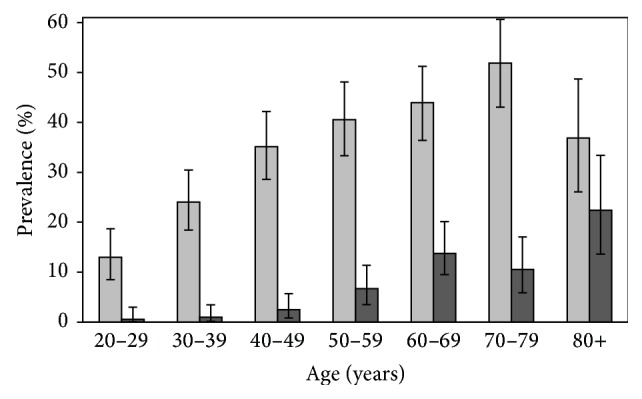
At baseline the proportion of women with IFG was 33.8% and 6.5% had diabetes. Those with fasting dysglycaemia had higher obesity-related factors, lower serum HDL cholesterol, and lower physical activity. Over a decade, the incidence of progression from IFG to diabetes was 18.1 per 1,000 person-years (95% CI, 10.7-28.2). Fasting plasma glucose and serum triglycerides were important factors in both progression to diabetes and regression to normoglycaemia.
Our results show a transitional process; those with IFG had risk factors intermediate to normoglycaemics and those with diabetes. This investigation may help target interventions to those with IFG at high risk of progression to diabetes and thereby prevent cases of diabetes.
糖尿病在全球范围内是一个日益严重的健康问题。本研究旨在描述血糖异常情况,并确定身体组成、临床及生活方式因素对澳大利亚女性从空腹血糖受损(IFG)进展为糖尿病或恢复至正常血糖水平的风险的影响。
本研究纳入了1167名年龄在20 - 94岁之间、参与吉朗骨质疏松症研究的女性。采用多变量逻辑回归分析,以确定在10年随访期间进展为糖尿病或恢复至正常血糖水平(从IFG开始)的预测因素。
基线时,IFG女性的比例为33.8%,糖尿病女性的比例为6.5%。空腹血糖异常的女性肥胖相关因素更高,血清高密度脂蛋白胆固醇更低,身体活动更少。在十年间,从IFG进展为糖尿病的发病率为每1000人年18.1例(95%可信区间,10.7 - 28.2)。空腹血糖和血清甘油三酯在进展为糖尿病和恢复至正常血糖水平这两个过程中都是重要因素。
我们的结果显示了一个过渡过程;IFG患者的危险因素介于正常血糖者和糖尿病患者之间。这项研究可能有助于针对有进展为糖尿病高风险的IFG患者进行干预,从而预防糖尿病病例。