Seweryn Paulina, Van Lan Bich, Kjeldgaard Morten, Russo Christopher J, Passmore Lori A, Hove-Jensen Bjarne, Jochimsen Bjarne, Brodersen Ditlev E
Department of Molecular Biology and Genetics, Aarhus University, Gustav Wieds Vej 10c, DK-8000 Aarhus C, Denmark.
Medical Research Council Laboratory of Molecular Biology, Francis Crick Avenue, Cambridge CB2 0QH, UK.
Nature. 2015 Sep 3;525(7567):68-72. doi: 10.1038/nature14683. Epub 2015 Aug 17.
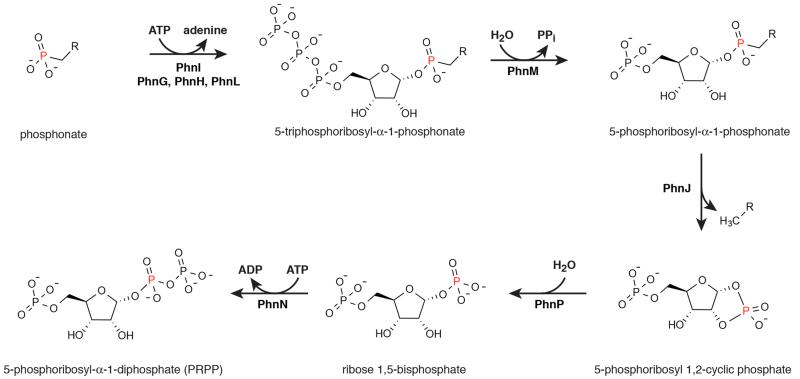
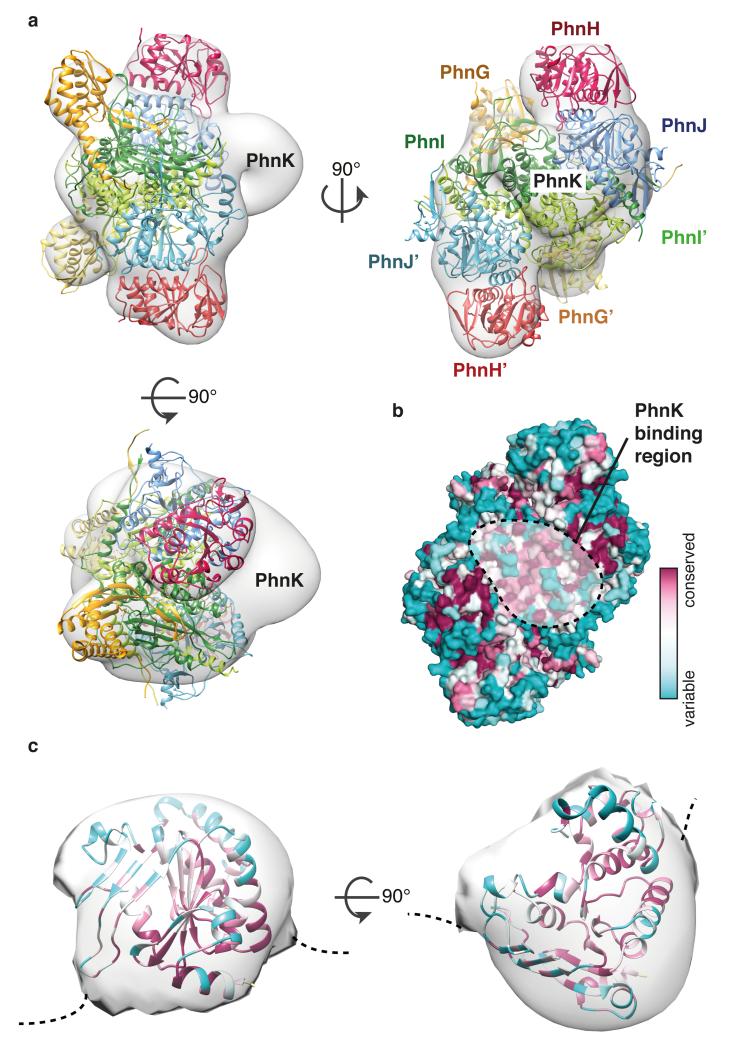
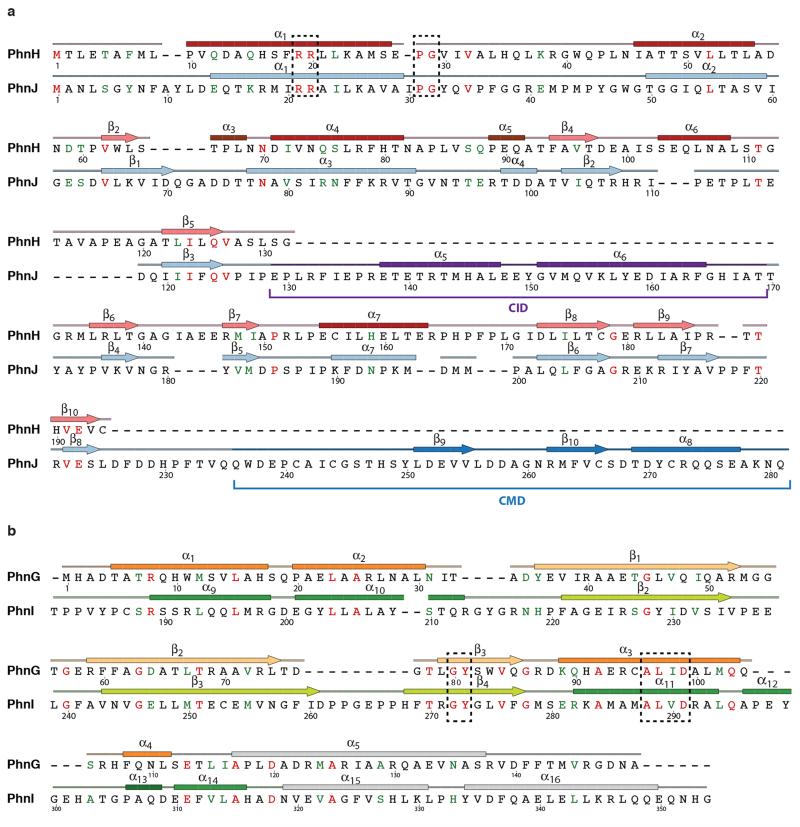
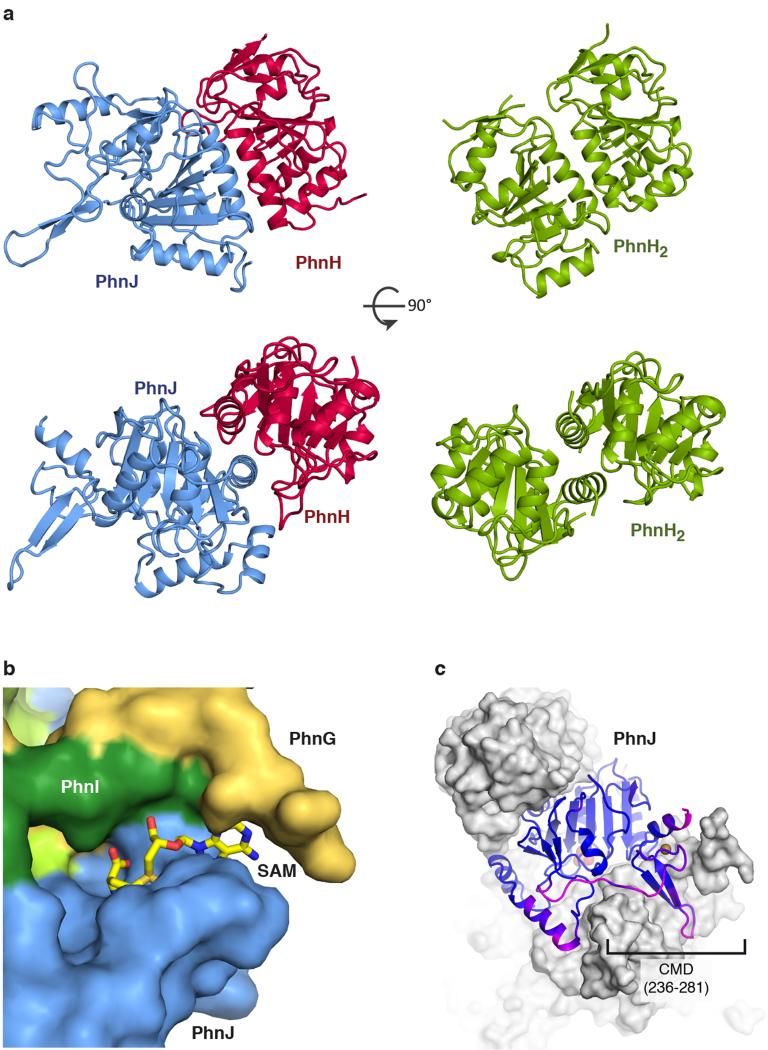
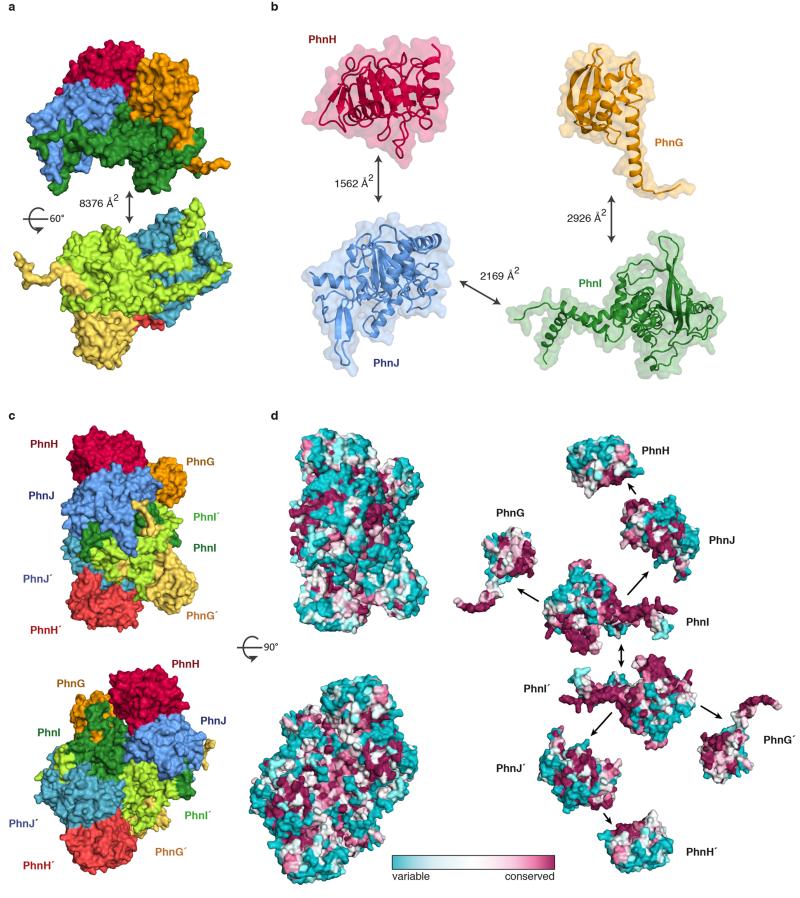
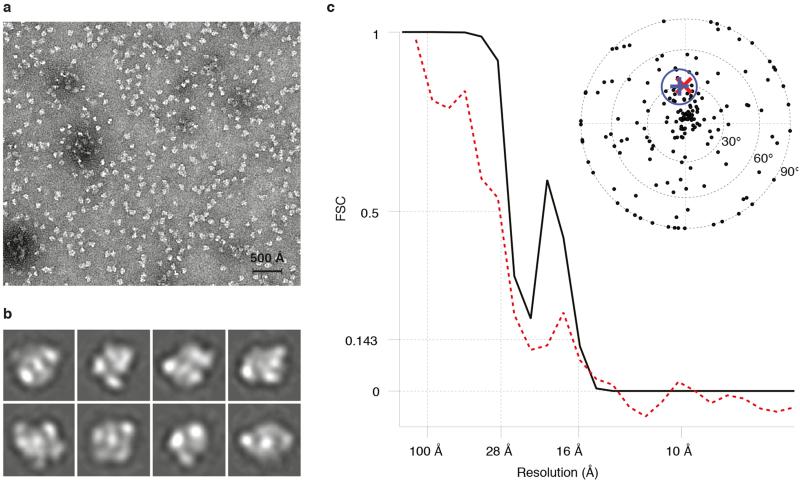
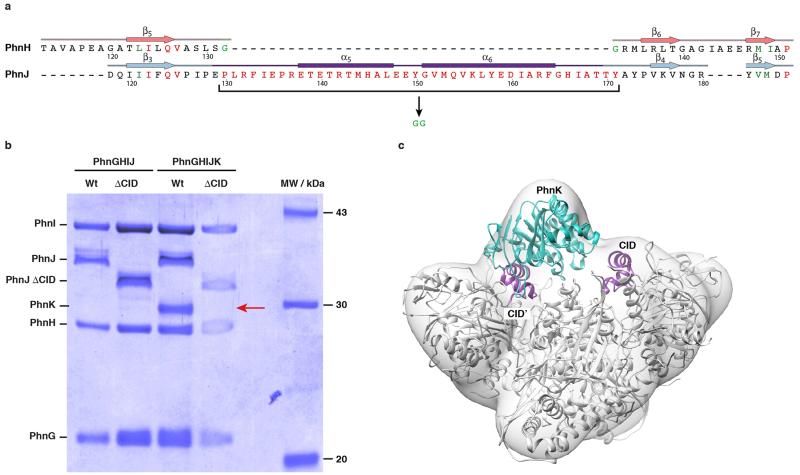
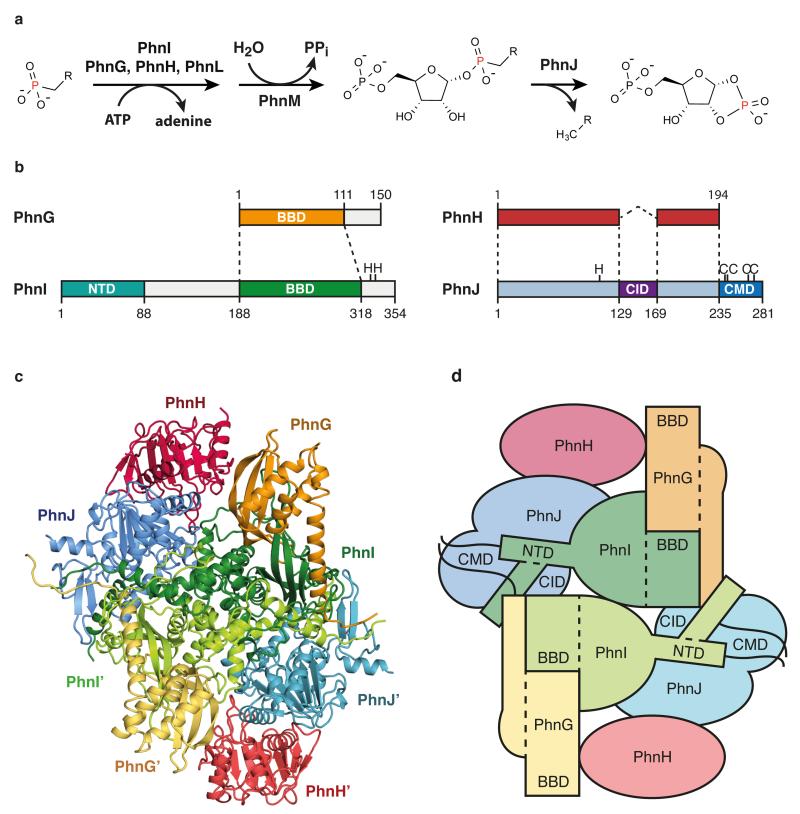
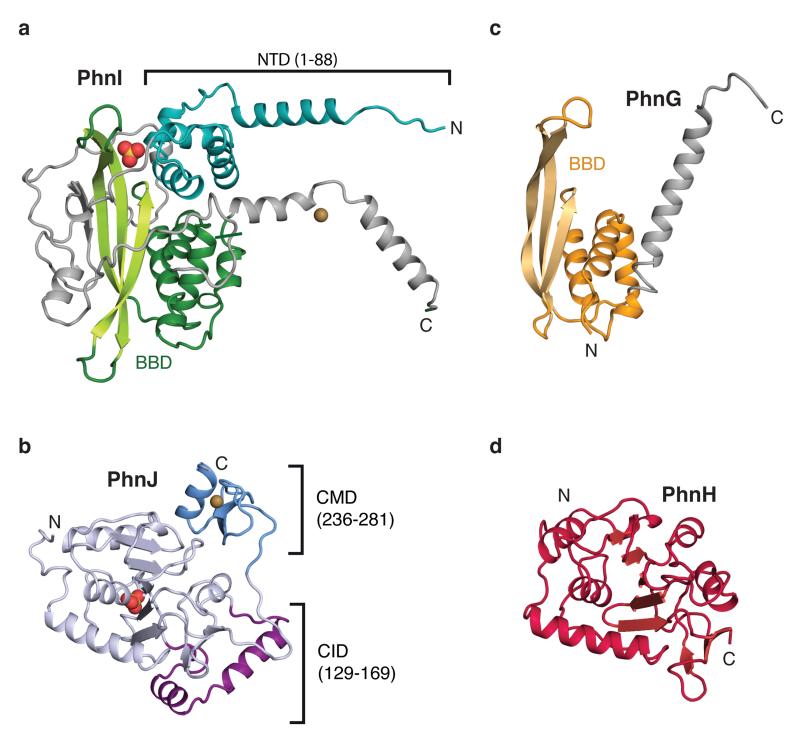
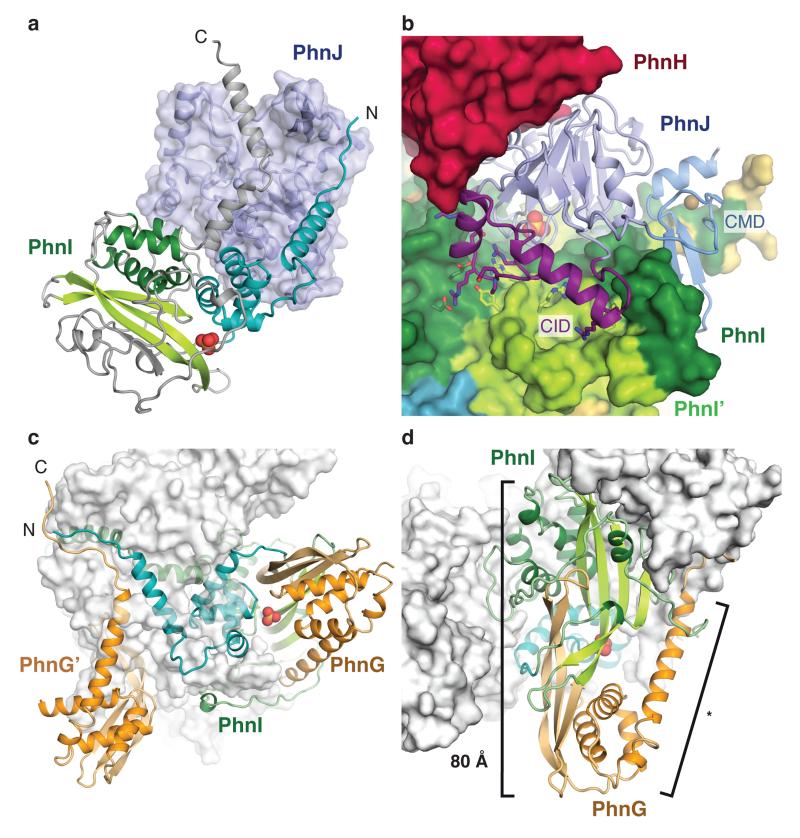
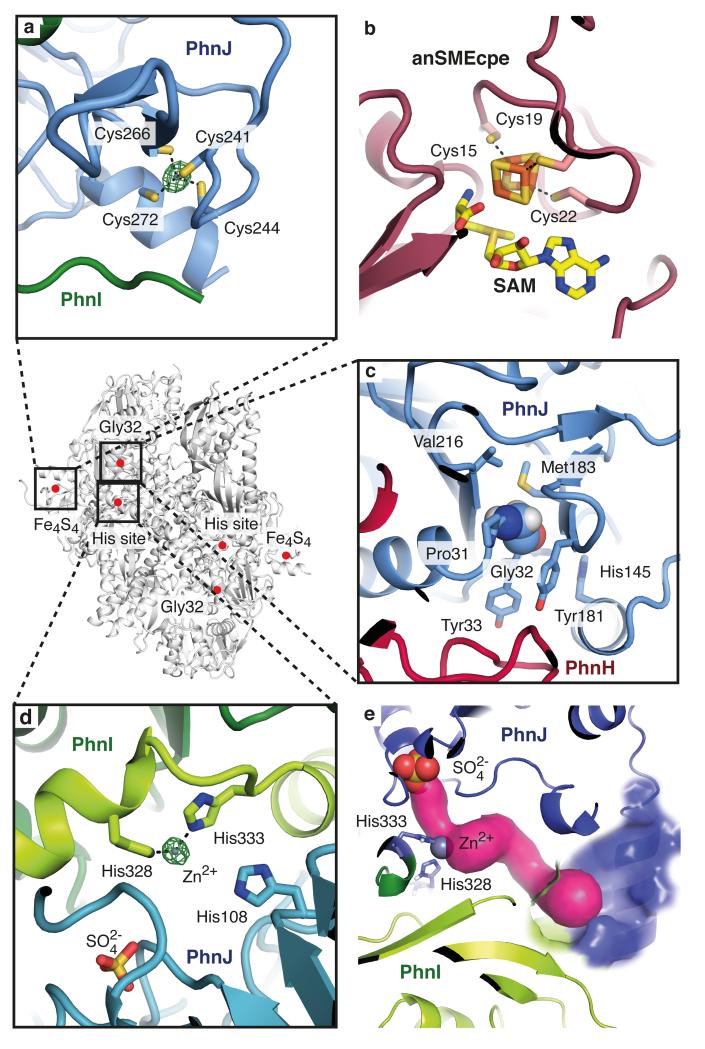
Phosphorus is required for all life and microorganisms can extract it from their environment through several metabolic pathways. When phosphate is in limited supply, some bacteria are able to use phosphonate compounds, which require specialized enzymatic machinery to break the stable carbon-phosphorus (C-P) bond. Despite its importance, the details of how this machinery catabolizes phosphonates remain unknown. Here we determine the crystal structure of the 240-kilodalton Escherichia coli C-P lyase core complex (PhnG-PhnH-PhnI-PhnJ; PhnGHIJ), and show that it is a two-fold symmetric hetero-octamer comprising an intertwined network of subunits with unexpected self-homologies. It contains two potential active sites that probably couple phosphonate compounds to ATP and subsequently hydrolyse the C-P bond. We map the binding site of PhnK on the complex using electron microscopy, and show that it binds to a conserved insertion domain of PhnJ. Our results provide a structural basis for understanding microbial phosphonate breakdown.
所有生命都需要磷,微生物可以通过多种代谢途径从其环境中摄取磷。当磷酸盐供应有限时,一些细菌能够利用膦酸盐化合物,这需要专门的酶机制来打破稳定的碳 - 磷(C - P)键。尽管其很重要,但这种机制如何分解膦酸盐的细节仍不清楚。在这里,我们确定了240千道尔顿的大肠杆菌C - P裂解酶核心复合物(PhnG - PhnH - PhnI - PhnJ;PhnGHIJ)的晶体结构,并表明它是一个双重对称的异源八聚体,由具有意外自我同源性的亚基相互缠绕网络组成。它包含两个潜在的活性位点,可能将膦酸盐化合物与ATP偶联,随后水解C - P键。我们使用电子显微镜绘制了PhnK在复合物上的结合位点,并表明它与PhnJ的保守插入结构域结合。我们的结果为理解微生物膦酸盐分解提供了结构基础。