Trebicka Jonel, Strassburg Christian P
Department of Internal Medicine I, University of Bonn, Bonn, Germany.
Viszeralmedizin. 2014 Dec;30(6):375-80. doi: 10.1159/000369987.
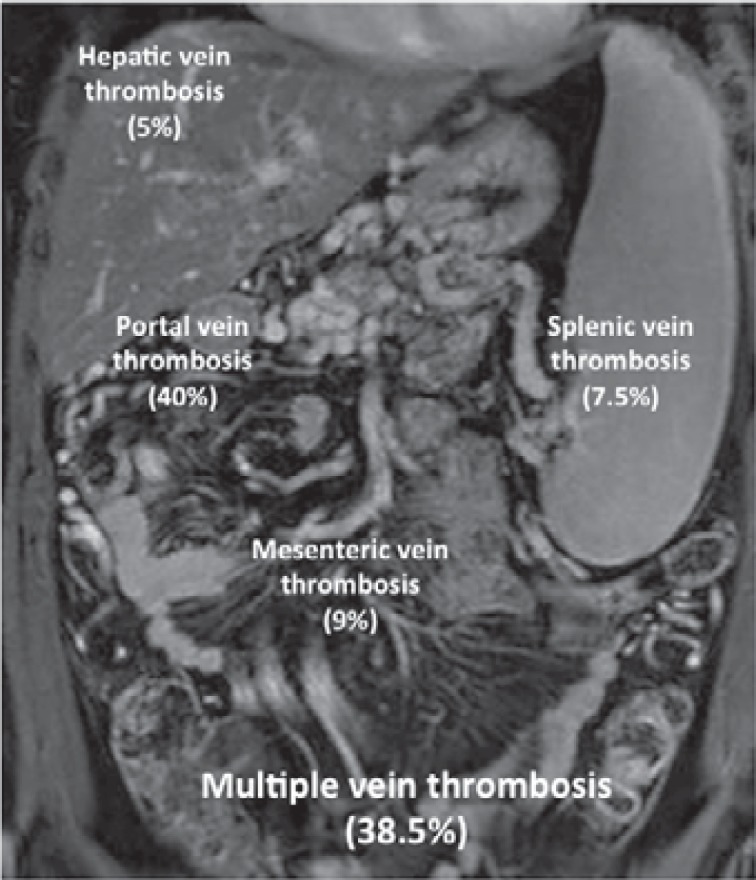
Portal venous occlusion represents a disorder with considerable clinical relevance. The underlying causes of portal vein thrombosis (PVT) are frequently multifactorial and include malignancies, progressive chronic liver diseases, processes localized to the epigastrium and hepatobiliary system, and acquired as well as inherited thrombophilia. The three main categorical groups are malignant thrombosis, cirrhotic PVT, and non-malignant, non-cirrhotic PVT.
Review of the literature.
The site, the extent, its chronicity, and the course of thromboses characterize a relatively heterogeneous clinical presentation and the ensuing complications in affected patients. While the occlusion of the extrahepatic portal and splenic vein likely provokes mainly complications related to portal hypertension, mesenteric venous obstruction shows a high rate of complications and mortality due to intestinal infarction. Especially in patients with liver cirrhosis, special care is warranted with regard to PVTs due to their pathogenetic role and influence on patient survival.
This article aims to summarize the current opinion on etiologies, risk factors, and complications of this heterogeneous condition in adults.
门静脉闭塞是一种具有重要临床意义的病症。门静脉血栓形成(PVT)的潜在病因通常是多因素的,包括恶性肿瘤、进行性慢性肝病、上腹部和肝胆系统局部病变以及获得性和遗传性血栓形成倾向。主要的三类是恶性血栓形成、肝硬化性PVT和非恶性、非肝硬化性PVT。
文献综述。
血栓形成的部位、范围、慢性程度及病程表现出相对异质性的临床表现以及受影响患者随之出现的并发症。虽然肝外门静脉和脾静脉闭塞可能主要引发与门静脉高压相关的并发症,但肠系膜静脉梗阻因肠梗死导致的并发症和死亡率较高。特别是在肝硬化患者中,由于PVT的致病作用及其对患者生存的影响,对其需格外关注。
本文旨在总结目前关于成人这种异质性病症的病因、危险因素及并发症的观点。