Biesmans Steven, Bouwknecht Jan A, Ver Donck Luc, Langlois Xavier, Acton Paul D, De Haes Patrick, Davoodi Nima, Meert Theo F, Hellings Niels, Nuydens Rony
BIOMED, Hasselt University, Agoralaan C Building, 3590 Diepenbeek, Belgium ; Neurosciences, Janssen Research & Development, Division of Janssen Pharmaceutica NV, Turnhoutseweg 30, 2340 Beerse, Belgium.
Neurosciences, Janssen Research & Development, Division of Janssen Pharmaceutica NV, Turnhoutseweg 30, 2340 Beerse, Belgium.
Biomed Res Int. 2015;2015:716920. doi: 10.1155/2015/716920. Epub 2015 Jul 28.
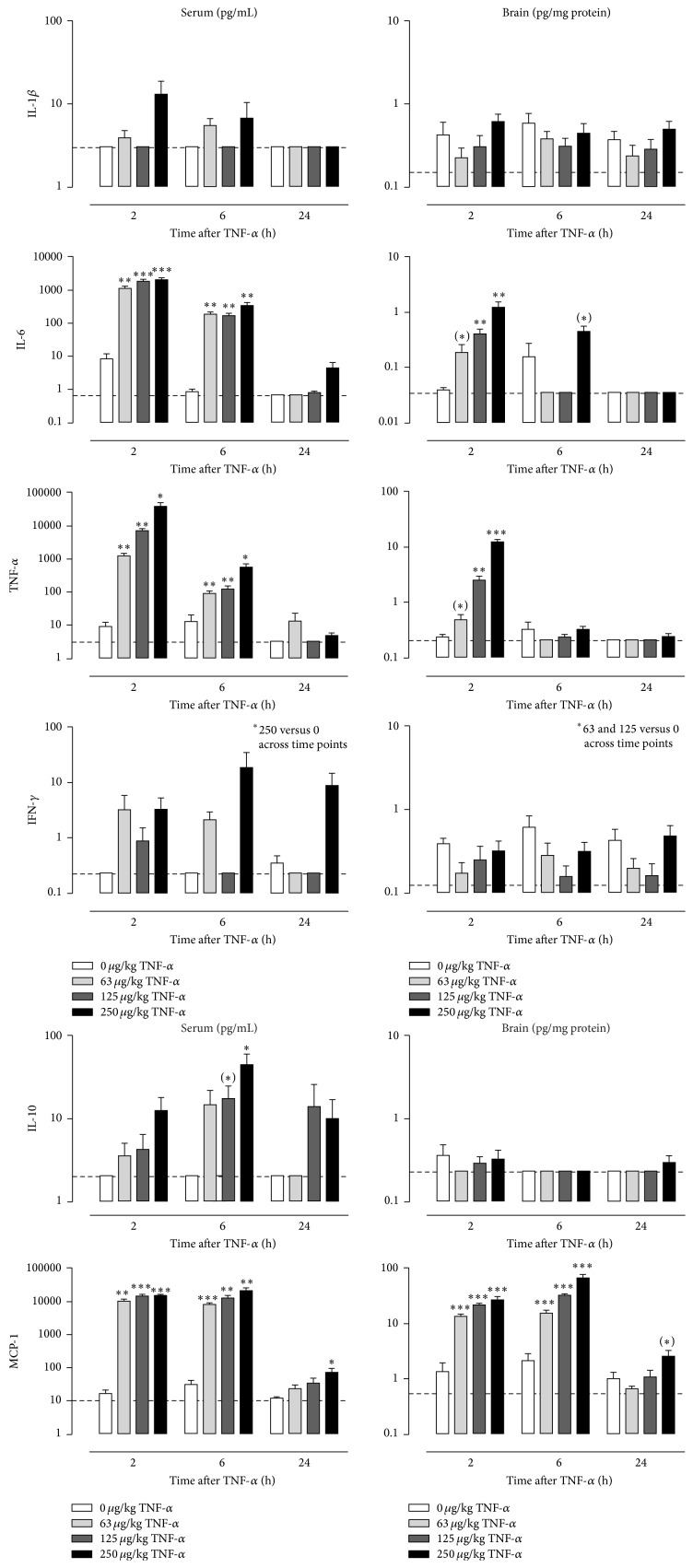
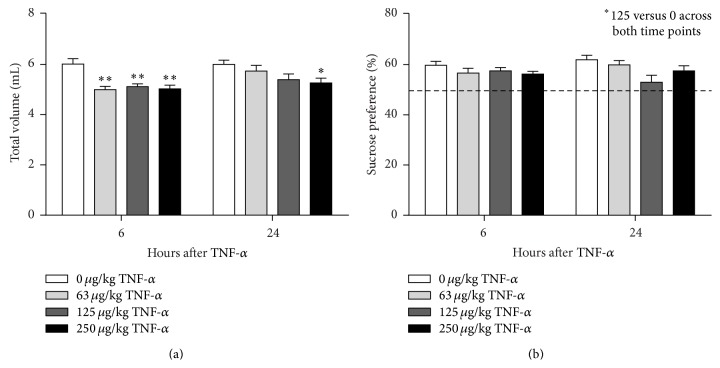
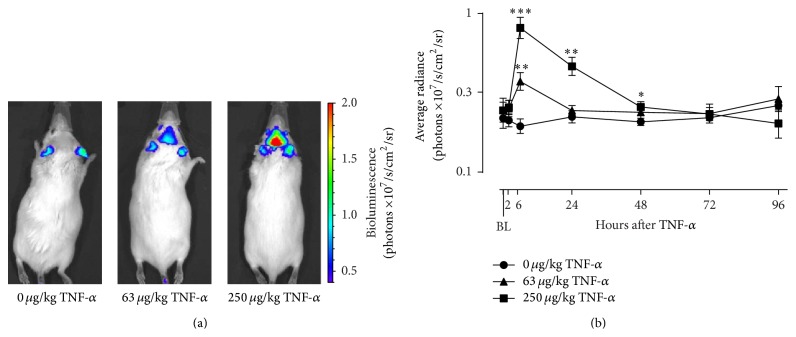
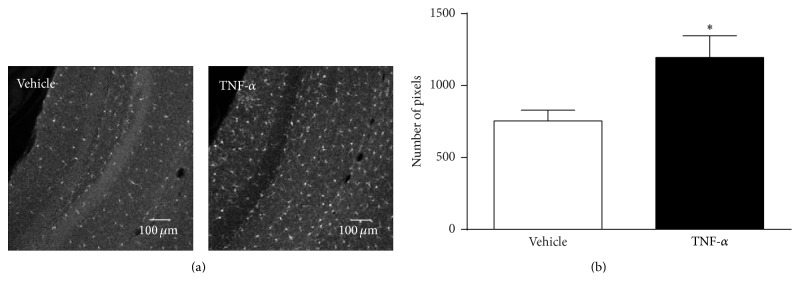
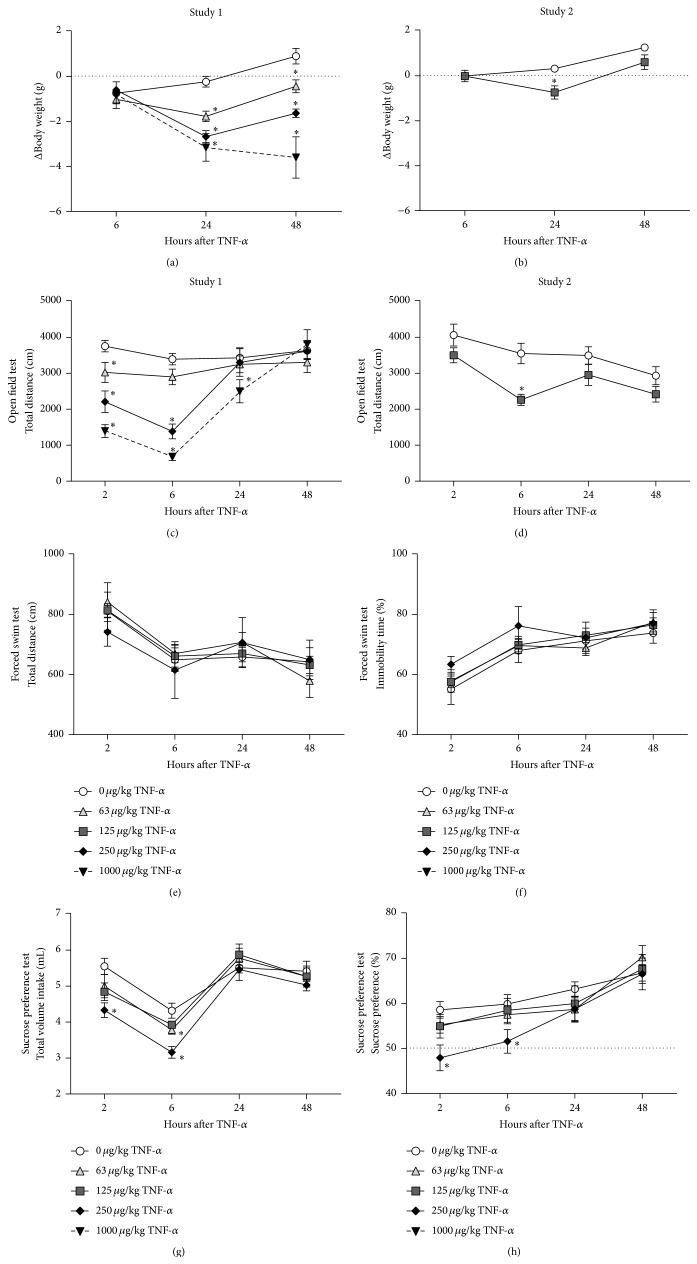
Clinical observations indicate that activation of the TNF-α system may contribute to the development of inflammation-associated depression. Here, we tested the hypothesis that systemic upregulation of TNF-α induces neuroinflammation and behavioral changes relevant to depression. We report that a single intraperitoneal injection of TNF-α in mice increased serum and brain levels of the proinflammatory mediators TNF-α, IL-6, and MCP-1, in a dose- and time-dependent manner, but not IL-1β. Protein levels of the anti-inflammatory cytokine IL-10 increased in serum but not in the brain. The transient release of immune molecules was followed by glial cell activation as indicated by increased astrocyte activation in bioluminescent Gfap-luc mice and elevated immunoreactivity against the microglial marker Iba1 in the dentate gyrus of TNF-α-challenged mice. Additionally, TNF-α-injected mice were evaluated in a panel of behavioral tests commonly used to study sickness and depressive-like behavior in rodents. Our behavioral data imply that systemic administration of TNF-α induces a strong sickness response characterized by reduced locomotor activity, decreased fluid intake, and body weight loss. Depressive-like behavior could not be separated from sickness at any of the time points studied. Together, these results demonstrate that peripheral TNF-α affects the central nervous system at a neuroimmune and behavioral level.
临床观察表明,肿瘤坏死因子-α(TNF-α)系统的激活可能促成炎症相关性抑郁症的发展。在此,我们验证了如下假说:TNF-α的全身上调会诱发与抑郁症相关的神经炎症和行为改变。我们报告称,给小鼠单次腹腔注射TNF-α会使促炎介质TNF-α、白细胞介素-6(IL-6)和单核细胞趋化蛋白-1(MCP-1)的血清和脑内水平呈剂量和时间依赖性增加,但不会使白细胞介素-1β(IL-1β)增加。抗炎细胞因子IL-10的蛋白水平在血清中升高,但在脑内未升高。免疫分子的短暂释放之后是胶质细胞激活,这在生物发光Gfap-luc小鼠中表现为星形胶质细胞激活增加,在TNF-α攻击的小鼠齿状回中表现为针对小胶质细胞标志物离子钙结合衔接分子1(Iba1)的免疫反应性升高。此外,对注射TNF-α的小鼠进行了一组常用于研究啮齿动物疾病和抑郁样行为的行为测试评估。我们的行为学数据表明,全身给予TNF-α会诱发强烈的疾病反应,其特征为运动活动减少、液体摄入量减少和体重减轻。在任何研究的时间点,抑郁样行为都无法与疾病相区分。总之,这些结果表明外周TNF-α在神经免疫和行为水平上影响中枢神经系统。