Pelosi Barbara, Pratelli Marta, Migliarini Sara, Pacini Giulia, Pasqualetti Massimo
Department of Biology, Unit of Cell and Developmental Biology, University of Pisa, S.S.12 Abetone e Brennero 4, 56127, Pisa, Italy.
Department of Biology, Unit of Cell and Developmental Biology, University of Pisa, S.S.12 Abetone e Brennero 4, 56127, Pisa, Italy; Center for Neuroscience and Cognitive Systems@UniTn, Istituto Italiano di Tecnologia, Via Bettini 31, 38068, Rovereto (TN), Italy.
PLoS One. 2015 Aug 20;10(8):e0136422. doi: 10.1371/journal.pone.0136422. eCollection 2015.
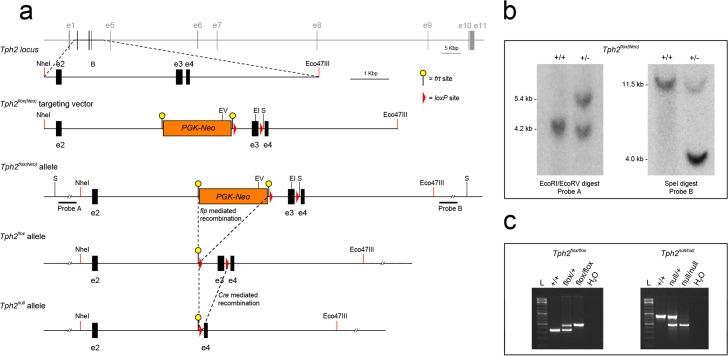
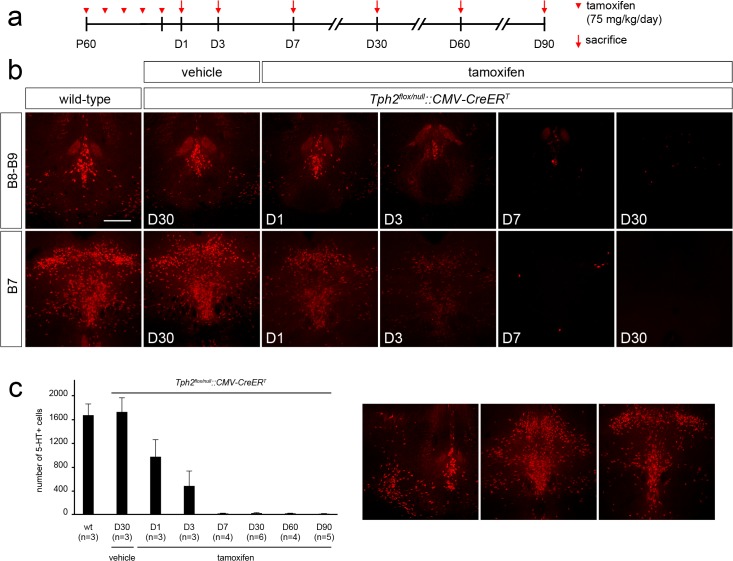
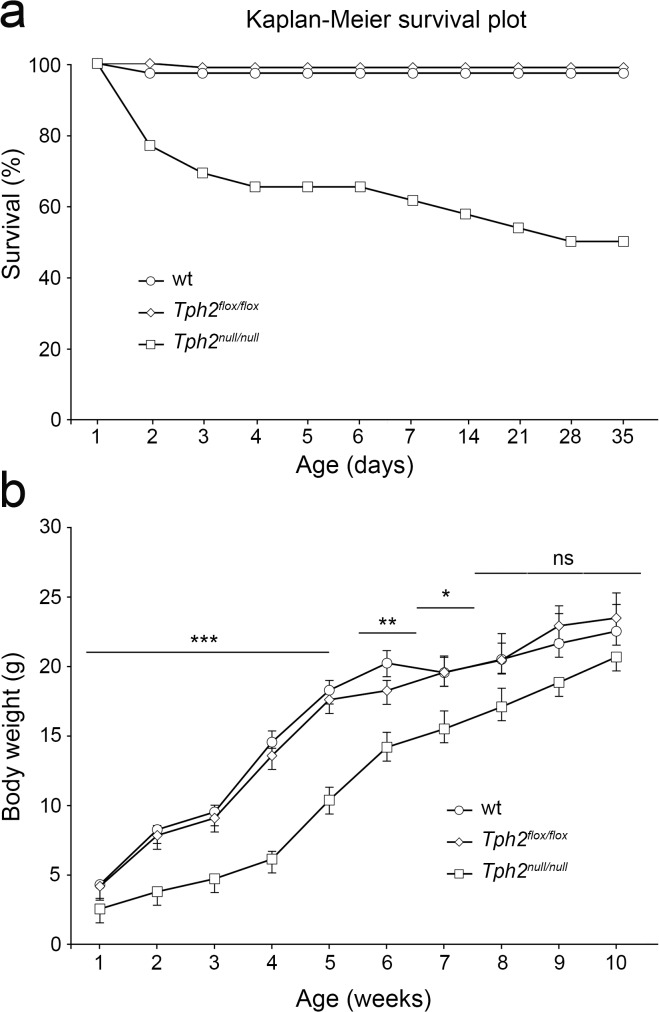
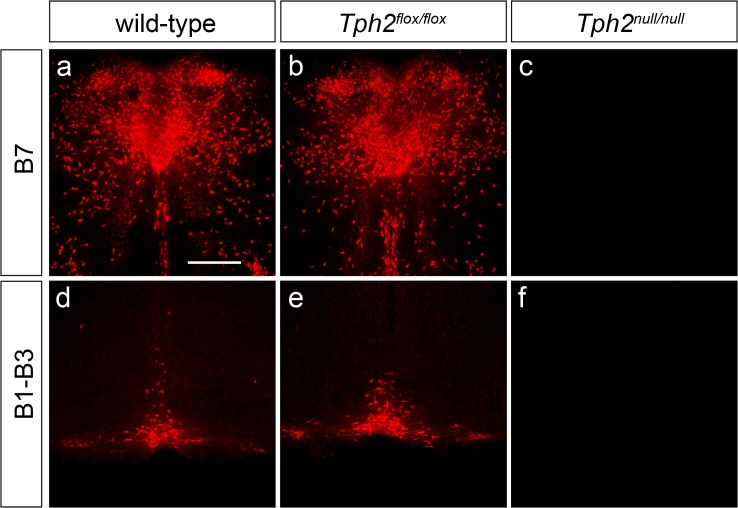
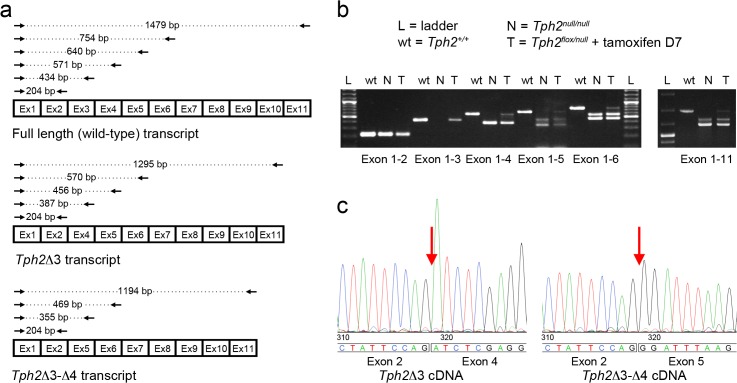
Serotonin has been gaining increasing attention during the last two decades due to the dual function of this monoamine as key regulator during critical developmental events and as neurotransmitter. Importantly, unbalanced serotonergic levels during critical temporal phases might contribute to the onset of neuropsychiatric disorders, such as schizophrenia and autism. Despite increasing evidences from both animal models and human genetic studies have underpinned the importance of serotonin homeostasis maintenance during central nervous system development and adulthood, the precise role of this molecule in time-specific activities is only beginning to be elucidated. Serotonin synthesis is a 2-step process, the first step of which is mediated by the rate-limiting activity of Tph enzymes, belonging to the family of aromatic amino acid hydroxylases and existing in two isoforms, Tph1 and Tph2, responsible for the production of peripheral and brain serotonin, respectively. In the present study, we generated and validated a conditional knockout mouse line, Tph2flox/flox, in which brain serotonin can be effectively ablated with time specificity. We demonstrated that the Cre-mediated excision of the third exon of Tph2 gene results in the production of a Tph2null allele in which we observed the near-complete loss of brain serotonin, as well as the growth defects and perinatal lethality observed in serotonin conventional knockouts. We also revealed that in mice harbouring the Tph2null allele, but not in wild-types, two distinct Tph2 mRNA isoforms are present, namely Tph2Δ3 and Tph2Δ3Δ4, with the latter showing an in-frame deletion of amino acids 84-178 and coding a protein that could potentially retain non-negligible enzymatic activity. As we could not detect Tph1 expression in the raphe, we made the hypothesis that the Tph2Δ3Δ4 isoform can be at the origin of the residual, sub-threshold amount of serotonin detected in the brain of Tph2null/null mice. Finally, we set up a tamoxifen administration protocol that allows an efficient, time-specific inactivation of brain serotonin synthesis. On the whole, we generated a suitable genetic tool to investigate how serotonin depletion impacts on time-specific events during central nervous system development and adulthood life.
在过去二十年中,血清素因其作为关键调节因子在关键发育事件中以及作为神经递质的双重功能而受到越来越多的关注。重要的是,在关键的时间阶段血清素水平失衡可能导致神经精神疾病的发作,如精神分裂症和自闭症。尽管动物模型和人类遗传学研究的证据越来越多,支持了血清素稳态维持在中枢神经系统发育和成年期的重要性,但该分子在特定时间活动中的精确作用才刚刚开始被阐明。血清素合成是一个两步过程,第一步由Tph酶的限速活性介导,Tph酶属于芳香族氨基酸羟化酶家族,有两种同工型,Tph1和Tph2,分别负责外周和脑血清素的产生。在本研究中,我们构建并验证了一个条件性敲除小鼠品系Tph2flox/flox,其中脑血清素可以被时间特异性地有效消除。我们证明,Cre介导的Tph2基因第三个外显子的切除导致产生一个Tph2无效等位基因,在其中我们观察到脑血清素几乎完全丧失,以及在血清素传统敲除小鼠中观察到的生长缺陷和围产期致死率。我们还发现,在携带Tph2无效等位基因的小鼠中,而不是在野生型小鼠中,存在两种不同的Tph2 mRNA同工型,即Tph2Δ3和Tph2Δ3Δ4,后者显示第84 - 178位氨基酸的框内缺失,并编码一种可能保留不可忽略的酶活性的蛋白质。由于我们在中缝核中未检测到Tph1表达,我们推测Tph2Δ3Δ4同工型可能是在Tph2null/null小鼠脑中检测到的残余的、低于阈值量的血清素的来源。最后,我们建立了一种他莫昔芬给药方案,该方案允许对脑血清素合成进行高效、时间特异性的失活。总体而言,我们生成了一个合适的遗传工具,以研究血清素耗竭如何影响中枢神经系统发育和成年期生活中的特定时间事件。