Qian Chao, Zhu Chenyuan, Yu Weiqiang, Jiang Xinquan, Zhang Fuqiang
Department of Prosthodontics, School of Stomatology, Ninth People's Hospital, Shanghai Jiao Tong University School of Medicine, Shanghai Key Laboratory of Stomatology. Shanghai, 200011, People's Republic of China.
PLoS One. 2015 Aug 21;10(8):e0136390. doi: 10.1371/journal.pone.0136390. eCollection 2015.
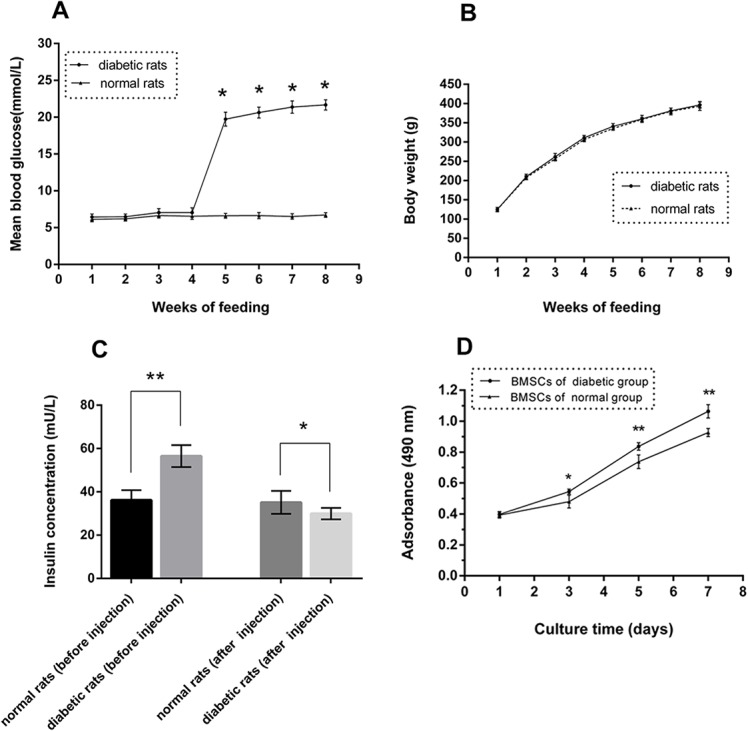
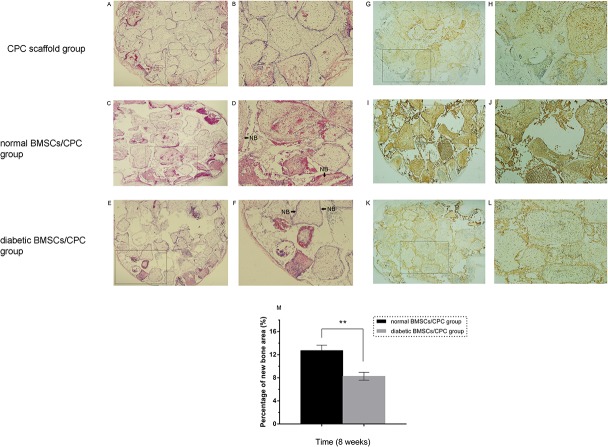
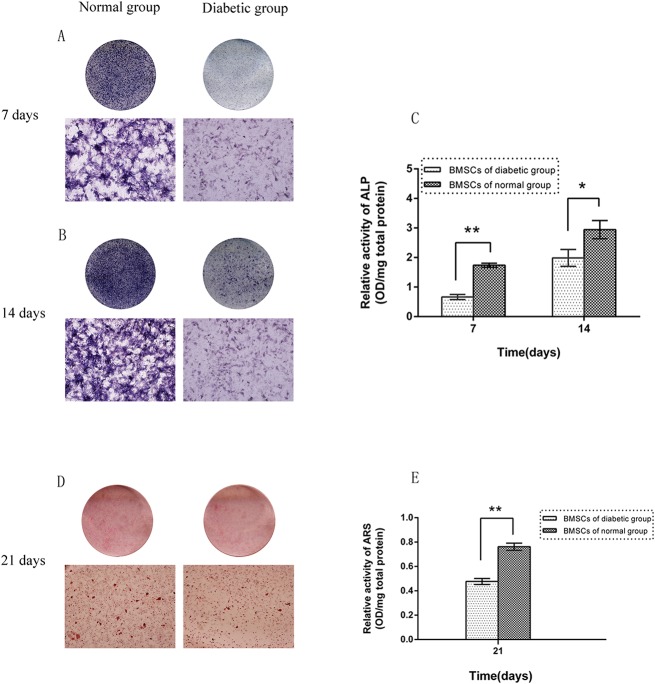
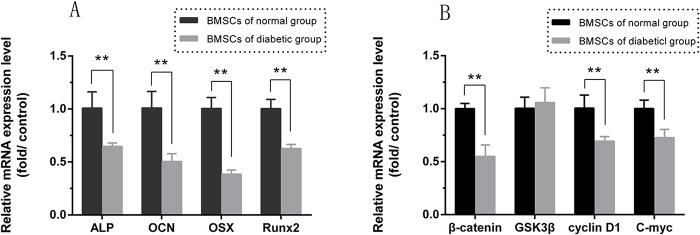
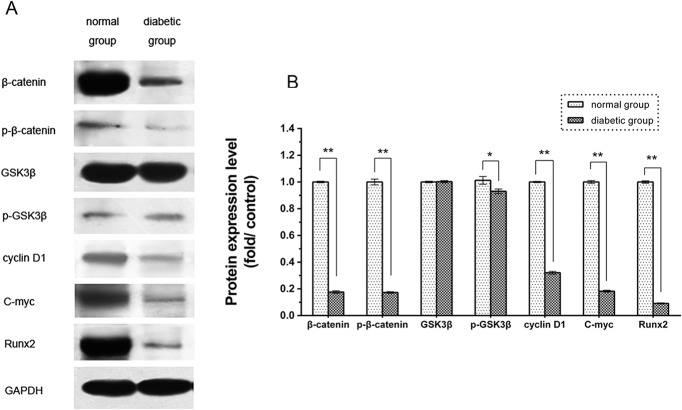
Bone regeneration disorders are a significant problem in patients with type 2 diabetes mellitus. Bone marrow stromal cells (BMSCs) are recognized as ideal seed cells for tissue engineering because they can stimulate osteogenesis during bone regeneration. Therefore, the aim of this study was to investigate the osteogenic potential of BMSCs derived from type 2 diabetic rats and the pathogenic characteristics of dysfunctional BMSCs that affect osteogenesis. BMSCs were isolated from normal and high-fat diet+streptozotocin-induced type 2 diabetic rats. Cell metabolic activity, alkaline phosphatase (ALP) activity, mineralization and osteogenic gene expression were reduced in the type 2 diabetic rat BMSCs. The expression levels of Wnt signaling genes, such as β-catenin, cyclin D1 and c-myc, were also significantly decreased in the type 2 diabetic rat BMSCs, but the expression of GSK3β remained unchanged. The derived BMSCs were cultured on calcium phosphate cement (CPC) scaffolds and placed subcutaneously into nude mice for eight weeks; they were detected at a low level in newly formed bone. The osteogenic potential of the type 2 diabetic rat BMSCs was not impaired by the culture environment, but it was impaired by inhibition of the Wnt signaling pathway, likely due to an insufficient accumulation of β-catenin rather than because of GSK3β stimulation. Using BMSCs derived from diabetic subjects could offer an alternative method of regenerating bone together with the use of supplementary growth factors to stimulate the Wnt signaling pathway.
骨再生障碍是2型糖尿病患者面临的一个重大问题。骨髓间充质干细胞(BMSCs)被认为是组织工程的理想种子细胞,因为它们在骨再生过程中能刺激成骨。因此,本研究的目的是探讨2型糖尿病大鼠来源的BMSCs的成骨潜能以及影响成骨的功能失调BMSCs的致病特征。从正常大鼠和高脂饮食+链脲佐菌素诱导的2型糖尿病大鼠中分离出BMSCs。2型糖尿病大鼠的BMSCs的细胞代谢活性、碱性磷酸酶(ALP)活性、矿化和成骨基因表达均降低。2型糖尿病大鼠的BMSCs中Wnt信号基因如β-连环蛋白、细胞周期蛋白D1和c-myc的表达水平也显著降低,但糖原合成酶激酶3β(GSK3β)的表达保持不变。将所获得的BMSCs接种于磷酸钙骨水泥(CPC)支架上,并皮下植入裸鼠体内8周;在新形成的骨中检测到其含量较低。2型糖尿病大鼠BMSCs的成骨潜能不受培养环境的影响,但Wnt信号通路的抑制会损害其成骨潜能,这可能是由于β-连环蛋白积累不足而非GSK3β的刺激所致。使用糖尿病患者来源的BMSCs并结合使用补充生长因子来刺激Wnt信号通路,可能为骨再生提供一种替代方法。