Narayana Swamy A, Valasala Harika, Kamma Sreenivasulu
Department of Biotechnology, K L University, Vaddeswaram, India.
Avicenna J Med Biotechnol. 2015 Jul-Sep;7(3):121-7.
The human ADIPOQ gene encodes adiponectin protein hormone, which is involved in regulating glucose levels as well as fatty acid breakdown. It is exclusively produced by adipose tissue and abundantly present in the circulation, with concentration of around 0.01% of total serum proteins, with important effect on metabolism.
Most deleterious nonsynonymous single nucleotide polymorphisms in the coding region of the ADIPOQ gene were investigated using SNP databases, and detected nonsynonymous variants were analyzed in silico from the standpoint of relevant protein function and stability by using SIFT, PolyPhen-2, PROVEAN and MUpro, I-Mutant2.0 tools, respectively.
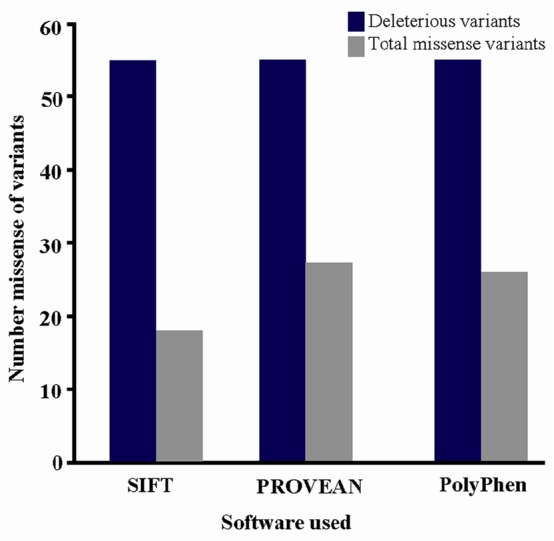
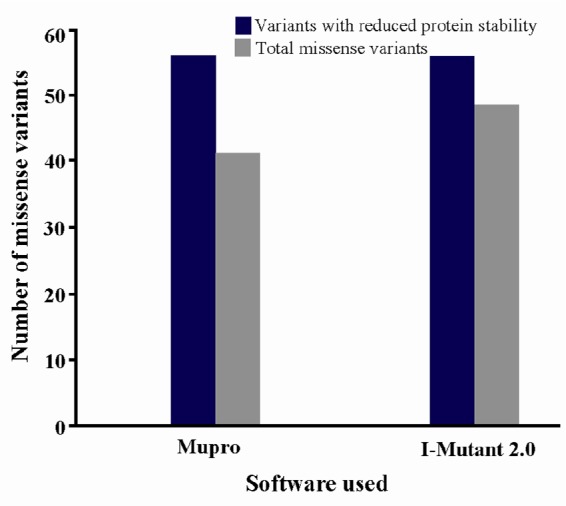
A total of 58 nonsynonymous SNPs consisting of 55 missense variations, 3 nonsense variations were found in the ADIPOQ gene. Next, 14 of the 55 missense variants were predicted to be damaging or deleterious by three different software programs (PolyPhen-2, SIFT, and PROVEAN), and 38 of them were predicted to be less stable (I-Mutant 2.0 and MUpro software). Totally, 10 variants out of 55 missense variants were predicted to be both deleterious and reduce protein stability. Additionally, 3 nonsense variants were predicted to produce a truncated ADIPOQ protein. RMSD and total energy were calculated for 4 nsSNPs out of 10 nsSNPs which were both deleterious and showed a decrease in protein stability.
rs144526209 has high root-mean-square deviation (RMSD) and lower total energy value compared to the native modeled structure. It was concluded that this nsSNP, potentially functional and polymorphic in the ADIPOQ gene, might be associated with diabetes, obesity, and inflammation.
人类ADIPOQ基因编码脂联素蛋白激素,该激素参与调节血糖水平以及脂肪酸分解。它仅由脂肪组织产生,在循环中大量存在,其浓度约占血清总蛋白的0.01%,对代谢有重要影响。
利用SNP数据库研究ADIPOQ基因编码区中最有害的非同义单核苷酸多态性,并分别使用SIFT、PolyPhen-2、PROVEAN和MUpro、I-Mutant2.0工具,从相关蛋白质功能和稳定性的角度对检测到的非同义变体进行计算机模拟分析。
在ADIPOQ基因中总共发现了58个非同义单核苷酸多态性,包括55个错义变异和3个无义变异。接下来,55个错义变体中的14个被三种不同的软件程序(PolyPhen-2、SIFT和PROVEAN)预测为有害或有损害,其中38个被预测为稳定性较低(I-Mutant 2.0和MUpro软件)。在55个错义变体中,总共有10个变体被预测既有害又会降低蛋白质稳定性。此外,3个无义变体被预测会产生截短的ADIPOQ蛋白。对10个既有害又显示蛋白质稳定性下降的非同义单核苷酸多态性中的4个计算了均方根偏差(RMSD)和总能量。
与天然建模结构相比,rs144526209具有较高的均方根偏差(RMSD)和较低的总能量值。得出的结论是,这个在ADIPOQ基因中可能具有功能且多态的非同义单核苷酸多态性可能与糖尿病、肥胖和炎症有关。