Creech C Buddy, Al-Zubeidi Duha N, Fritz Stephanie A
Vanderbilt Vaccine Research Program, Division of Pediatric Infectious Diseases, Department of Pediatrics, Vanderbilt University School of Medicine and the Monroe Carell, Jr. Children's Hospital at Vanderbilt, S2323 MCN, 1161 21st Avenue South, Nashville, TN 37232, USA.
Department of Pediatrics, Children's Mercy Hospital Infection Prevention and Control, University of Missouri-Kansas City School of Medicine, 2401 Gillham Road, Kansas City, MO 64108, USA.
Infect Dis Clin North Am. 2015 Sep;29(3):429-64. doi: 10.1016/j.idc.2015.05.007.
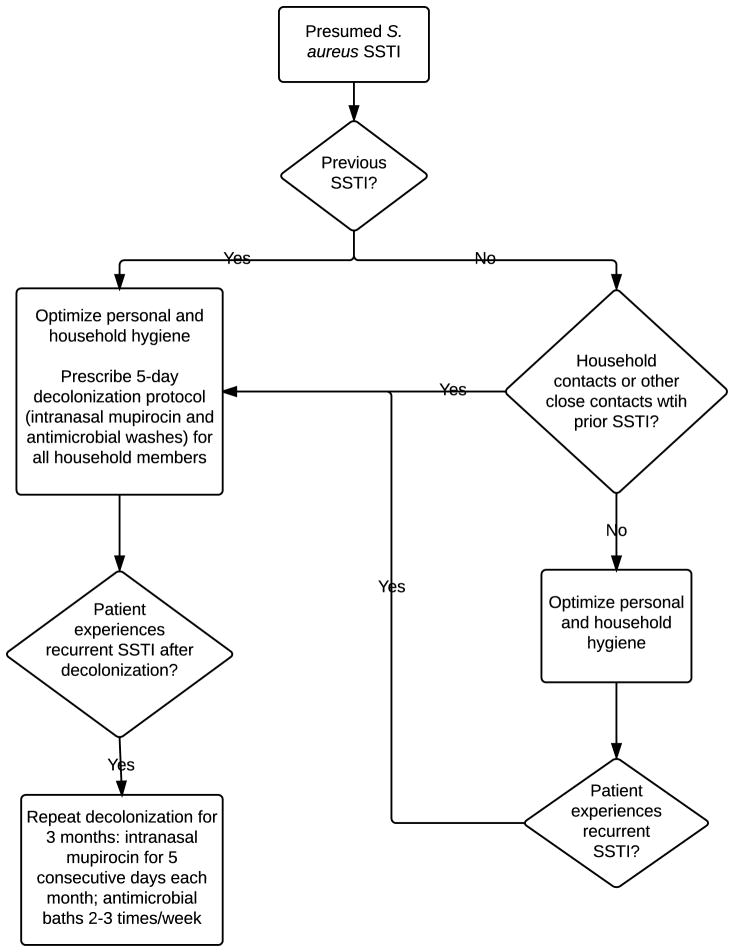
Staphylococcus aureus infections pose a significant health burden. The emergence of community-associated methicillin-resistant S aureus has resulted in an epidemic of skin and soft tissue infections (SSTI), and many patients experience recurrent SSTI. As S aureus colonization is associated with subsequent infection, decolonization is recommended for patients with recurrent SSTI or in settings of ongoing transmission. S aureus infections often cluster within households, and asymptomatic carriers serve as reservoirs for transmission; therefore, a household approach to decolonization is more effective than measures performed by individuals alone. Novel strategies for the prevention of recurrent SSTI are needed.
金黄色葡萄球菌感染带来了重大的健康负担。社区获得性耐甲氧西林金黄色葡萄球菌的出现导致了皮肤和软组织感染(SSTI)的流行,许多患者会经历复发性SSTI。由于金黄色葡萄球菌定植与后续感染相关,因此建议对复发性SSTI患者或在持续传播的环境中进行去定植。金黄色葡萄球菌感染常在家庭中聚集,无症状携带者是传播的储存宿主;因此,家庭去定植方法比个体单独采取的措施更有效。需要预防复发性SSTI的新策略。