• 文献检索
  • 文档翻译
  • 深度研究
  • 学术资讯
  • Suppr Zotero 插件Zotero 插件
  • 邀请有礼
  • 套餐&价格
  • 历史记录
应用&插件
Suppr Zotero 插件Zotero 插件浏览器插件Mac 客户端Windows 客户端微信小程序
定价
高级版会员购买积分包购买API积分包
服务
文献检索文档翻译深度研究API 文档MCP 服务
关于我们
关于 Suppr公司介绍联系我们用户协议隐私条款
关注我们

Suppr 超能文献

核心技术专利:CN118964589B侵权必究
粤ICP备2023148730 号-1Suppr @ 2026

文献检索

告别复杂PubMed语法,用中文像聊天一样搜索,搜遍4000万医学文献。AI智能推荐,让科研检索更轻松。

立即免费搜索

文件翻译

保留排版,准确专业,支持PDF/Word/PPT等文件格式,支持 12+语言互译。

免费翻译文档

深度研究

AI帮你快速写综述,25分钟生成高质量综述,智能提取关键信息,辅助科研写作。

立即免费体验

长期生态学研究解决了一种有争议的外来树木的出现时间、起源地区和建立过程。

Long-term ecology resolves the timing, region of origin and process of establishment for a disputed alien tree.

作者信息

Wilmshurst Janet M, McGlone Matt S, Turney Chris S M

机构信息

Landcare Research, PO Box 69040, Lincoln 7640, New Zealand School of Environment, The University of Auckland, Private Bag 92019, Auckland 1142, New Zealand

Landcare Research, PO Box 69040, Lincoln 7640, New Zealand.

出版信息

AoB Plants. 2015 Aug 26;7:plv104. doi: 10.1093/aobpla/plv104.

DOI:10.1093/aobpla/plv104
PMID:26311733
原文链接:https://pmc.ncbi.nlm.nih.gov/articles/PMC4612295/
Abstract

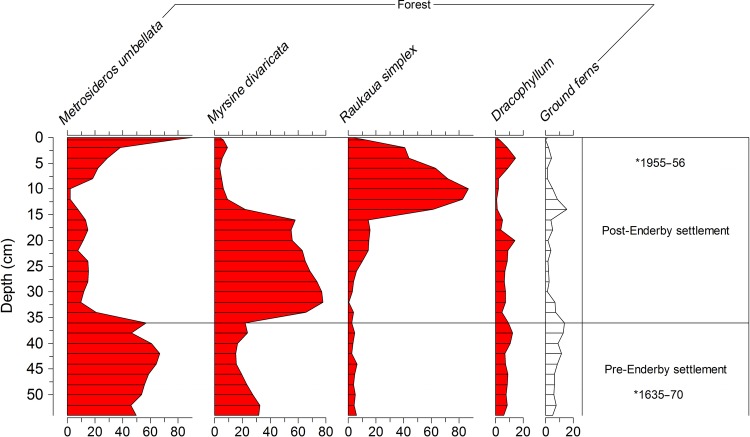
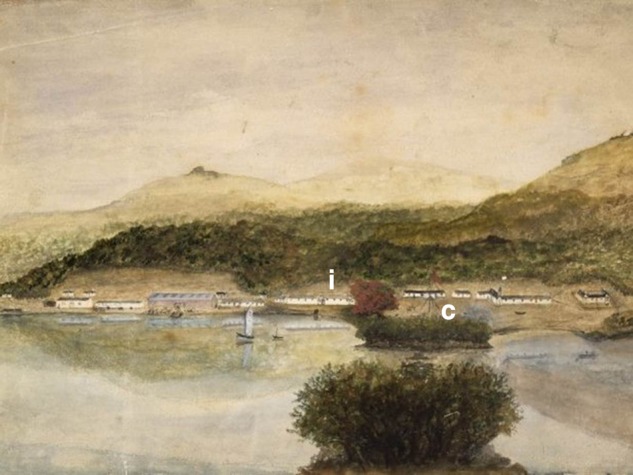
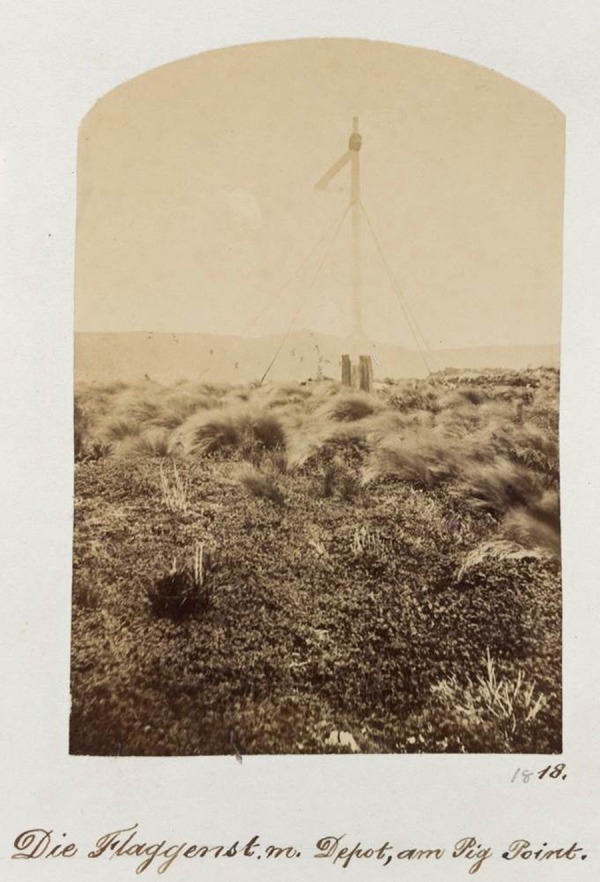
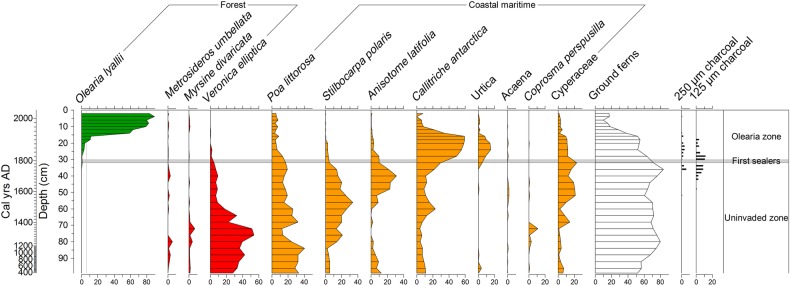
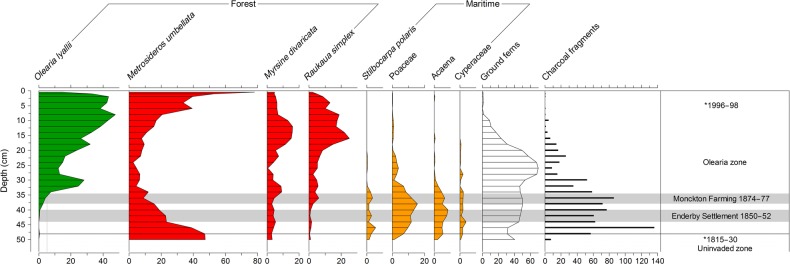
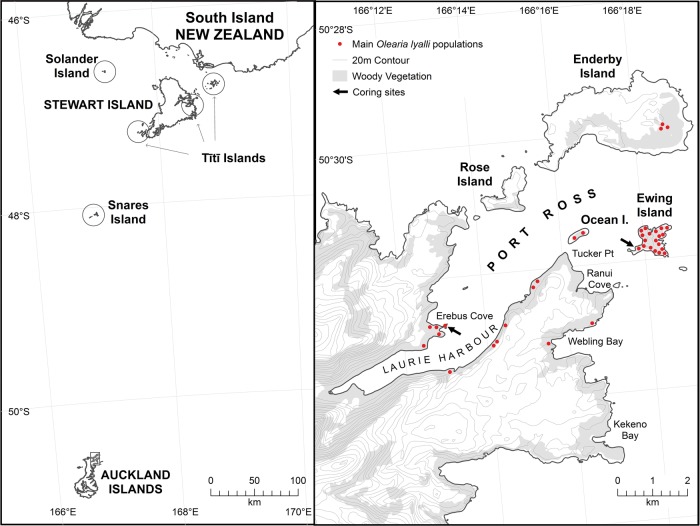
Alien plants are a pervasive environmental problem, particularly on islands where they can rapidly transform unique indigenous ecosystems. However, often it is difficult to confidently determine whether a species is native or alien, especially if establishment occurred before historical records. This can present a management challenge: for example, should such taxa be eradicated or left alone until their region of origin and status are clarified? Here we show how combining palaeoecological and historical records can help resolve such dilemmas, using the tree daisy Olearia lyallii on the remote New Zealand subantarctic Auckland Islands as a case study. The status of this tree as native or introduced has remained uncertain for the 175 years since it was first discovered on the Auckland Islands, and its appropriate management is debated. Elsewhere, O. lyallii has a highly restricted distribution on small sea bird-rich islands within a 2° latitudinal band south of mainland New Zealand. Analysis of palaeoecological and historical records from the Auckland Islands suggest that O. lyallii established there c. 1807 when these islands were first exploited by European sealers. Establishment was facilitated by anthropogenic burning and clearing and its subsequent spread has been slow, limited in distribution and probably human-assisted. Olearia lyallii has succeeded mostly in highly disturbed sites which are also nutrient enriched from nesting sea birds, seals and sea spray. This marine subsidy has fuelled the rapid growth of O. lyallii and allowed this tree to be competitive against the maritime communities it has replaced. Although endemic to the New Zealand region, our evidence suggests that O. lyallii is alien to the Auckland Islands. Although such 'native' aliens can pose unique management challenges on islands, in this instance we suggest that ongoing monitoring with no control is an appropriate management action, as O. lyallii appears to pose minimal risk to ecological integrity.

摘要

外来植物是一个普遍存在的环境问题,尤其是在岛屿上,它们能够迅速改变独特的本土生态系统。然而,通常很难确切地确定一个物种是本土物种还是外来物种,特别是如果其定殖发生在历史记录之前。这可能带来管理上的挑战:例如,对于这类分类群,是应该根除还是任其自生自灭,直到其起源地和地位得到明确?在此,我们以偏远的新西兰亚南极奥克兰群岛上的树雏菊(Olearia lyallii)为例,展示了如何将古生态记录和历史记录相结合来帮助解决此类困境。自该树种在奥克兰群岛首次被发现的175年来,其作为本土物种还是引入物种的地位一直不确定,关于其适当管理的问题也存在争议。在其他地方,树雏菊在新西兰大陆以南2°纬度带内的小型海鸟丰富的岛屿上分布范围极为有限。对奥克兰群岛古生态和历史记录的分析表明,树雏菊大约在1807年这些岛屿首次被欧洲海豹捕猎者开发时就在那里定殖了。人为焚烧和开垦促进了其定殖,其随后的扩散一直很缓慢,分布范围有限,而且可能是人类协助的。树雏菊大多在受到严重干扰的地点成功生长,这些地点也因筑巢海鸟、海豹和海浪喷雾而养分丰富。这种海洋补贴促进了树雏菊的快速生长,并使其能够与它所取代的海洋群落竞争。尽管树雏菊是新西兰地区的特有物种,但我们的证据表明它对于奥克兰群岛来说是外来物种。尽管这类“本土”外来物种可能给岛屿带来独特的管理挑战,但在这种情况下,我们建议持续监测而不进行控制是一种适当的管理行动,因为树雏菊似乎对生态完整性构成的风险极小。
https://cdn.ncbi.nlm.nih.gov/pmc/blobs/c5bf/4612295/468c91525869/plv10407.jpg
https://cdn.ncbi.nlm.nih.gov/pmc/blobs/c5bf/4612295/349a7c4d6587/plv10401.jpg
https://cdn.ncbi.nlm.nih.gov/pmc/blobs/c5bf/4612295/97e9d927cbbd/plv10402.jpg
https://cdn.ncbi.nlm.nih.gov/pmc/blobs/c5bf/4612295/28af788ea363/plv10403.jpg
https://cdn.ncbi.nlm.nih.gov/pmc/blobs/c5bf/4612295/cb1154c1b032/plv10404.jpg
https://cdn.ncbi.nlm.nih.gov/pmc/blobs/c5bf/4612295/0d66a80e9b59/plv10405.jpg
https://cdn.ncbi.nlm.nih.gov/pmc/blobs/c5bf/4612295/53fd5a239b27/plv10406.jpg
https://cdn.ncbi.nlm.nih.gov/pmc/blobs/c5bf/4612295/468c91525869/plv10407.jpg
https://cdn.ncbi.nlm.nih.gov/pmc/blobs/c5bf/4612295/349a7c4d6587/plv10401.jpg
https://cdn.ncbi.nlm.nih.gov/pmc/blobs/c5bf/4612295/97e9d927cbbd/plv10402.jpg
https://cdn.ncbi.nlm.nih.gov/pmc/blobs/c5bf/4612295/28af788ea363/plv10403.jpg
https://cdn.ncbi.nlm.nih.gov/pmc/blobs/c5bf/4612295/cb1154c1b032/plv10404.jpg
https://cdn.ncbi.nlm.nih.gov/pmc/blobs/c5bf/4612295/0d66a80e9b59/plv10405.jpg
https://cdn.ncbi.nlm.nih.gov/pmc/blobs/c5bf/4612295/53fd5a239b27/plv10406.jpg
https://cdn.ncbi.nlm.nih.gov/pmc/blobs/c5bf/4612295/468c91525869/plv10407.jpg

相似文献

1
Long-term ecology resolves the timing, region of origin and process of establishment for a disputed alien tree.长期生态学研究解决了一种有争议的外来树木的出现时间、起源地区和建立过程。
AoB Plants. 2015 Aug 26;7:plv104. doi: 10.1093/aobpla/plv104.
2
Cryptic diversity in smooth-shelled mussels on Southern Ocean islands: connectivity, hybridisation and a marine invasion.南大洋岛屿上光滑壳贻贝的隐秘多样性:连通性、杂交与一次海洋入侵。
Front Zool. 2019 Aug 6;16:32. doi: 10.1186/s12983-019-0332-y. eCollection 2019.
3
Ship-driven biopollution: How aliens transform the local ecosystem diversity in Pacific islands.船载生物污染:外来物种如何改变太平洋岛屿的当地生态系统多样性。
Mar Pollut Bull. 2021 May;166:112251. doi: 10.1016/j.marpolbul.2021.112251. Epub 2021 Mar 11.
4
Vascular plant species of the Kingdom of Tonga by vegetation type, species origin, growth form, and dispersal mechanism.汤加王国维管束植物物种,按植被类型、物种起源、生长形式和传播机制划分。
Ecology. 2020 Jan;101(1):e02902. doi: 10.1002/ecy.2902. Epub 2019 Oct 27.
5
Long-term trajectories of non-native vegetation on islands globally.全球岛屿上非本地植被的长期轨迹。
Ecol Lett. 2023 May;26(5):729-741. doi: 10.1111/ele.14196. Epub 2023 Mar 23.
6
Snakes on the Balearic islands: an invasion tale with implications for native biodiversity conservation.巴利阿里群岛上的蛇类:一个对本土生物多样性保护有影响的入侵故事。
PLoS One. 2015 Apr 8;10(4):e0121026. doi: 10.1371/journal.pone.0121026. eCollection 2015.
7
Alien species pathways to the Galapagos Islands, Ecuador.外来物种进入厄瓜多尔加拉帕戈斯群岛的途径。
PLoS One. 2017 Sep 13;12(9):e0184379. doi: 10.1371/journal.pone.0184379. eCollection 2017.
8
Distributional Ecology of New Guinea Birds: Recent ecological and biogeographical theories can be tested on the bird communities of New Guinea.新几内亚鸟类的分布生态学:近期的生态和生物地理学理论可在新几内亚的鸟类群落上进行检验。
Science. 1973 Feb 23;179(4075):759-69. doi: 10.1126/science.179.4075.759.
9
Mycorrhizal status helps explain invasion success of alien plant species.菌根状态有助于解释外来植物物种的入侵成功。
Ecology. 2017 Jan;98(1):92-102. doi: 10.1002/ecy.1621. Epub 2016 Dec 9.
10
Native and alien flower visitors differ in partner fidelity and network integration.本地和外来花访客在配偶忠诚度和网络整合方面存在差异。
Ecol Lett. 2019 Aug;22(8):1264-1273. doi: 10.1111/ele.13287. Epub 2019 May 30.

引用本文的文献

1
Southern Islands Vascular Flora (SIVFLORA) dataset: A global plant database from Southern Ocean islands.南大洋诸岛维管植物区系(SIVFLORA)数据集:一个来自南大洋岛屿的全球植物数据库。
Sci Data. 2025 Mar 7;12(1):397. doi: 10.1038/s41597-025-04702-9.
2
On the improbability of pre-European Polynesian voyages to Antarctica: a response to Priscilla Wehi and colleagues.关于欧洲人到达之前波利尼西亚人航行至南极洲的不可能性:对普莉西拉·韦希及其同事的回应。
J R Soc N Z. 2021 Sep 12;52(5):599-605. doi: 10.1080/03036758.2021.1973517. eCollection 2022.
3
Introduction to the Special Issue: Advances in island plant biology since Sherwin Carlquist's Island Biology.

本文引用的文献

1
Impacts of biological invasions: what's what and the way forward.生物入侵的影响:是什么以及未来的方向。
Trends Ecol Evol. 2013 Jan;28(1):58-66. doi: 10.1016/j.tree.2012.07.013. Epub 2012 Aug 10.
2
Don't judge species on their origins.不要根据物种的起源来评判它们。
Nature. 2011 Jun 8;474(7350):153-4. doi: 10.1038/474153a.
3
Fossil pollen as a guide to conservation in the Galapagos.化石花粉作为加拉帕戈斯群岛保护工作的指南。
特刊引言:自舍温·卡尔奎斯特的《岛屿生物学》以来岛屿植物生物学的进展
AoB Plants. 2015 Dec 31;8:plv148. doi: 10.1093/aobpla/plv148.
Science. 2008 Nov 21;322(5905):1206. doi: 10.1126/science.1163454.
4
What is natural? The need for a long-term perspective in biodiversity conservation.什么是自然?生物多样性保护需要长远眼光。
Science. 2006 Nov 24;314(5803):1261-5. doi: 10.1126/science.1122667.