Zhong WeiHong, Ye JinDuo, Liu JiFu, Zhang ChunQiu, Zhao MeiJiao
Tianjin Key Laboratory for Control Theory & Applications in Complicated Systems, Tianjin University of Technology, Tianjin, 300384, China ; School of Mechanical Engineering, Tianjin University of Technology, Tianjin,300384, China.
Military General Hospital of Beijing PLA, Beijing, 100026,China.
Open Biomed Eng J. 2014 Dec 31;8:147-52. doi: 10.2174/1874120701408010147. eCollection 2014.
In this article we proposed a modeling method by building an assembled model to simulate the orthopedic process of minimally invasive surgery for pectus excavatum and got the clinical verification, which aims to provide some references for clinic diagnoses, treatment, and surgery planning.
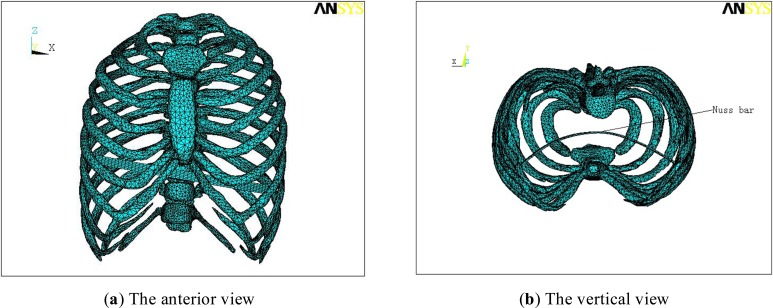
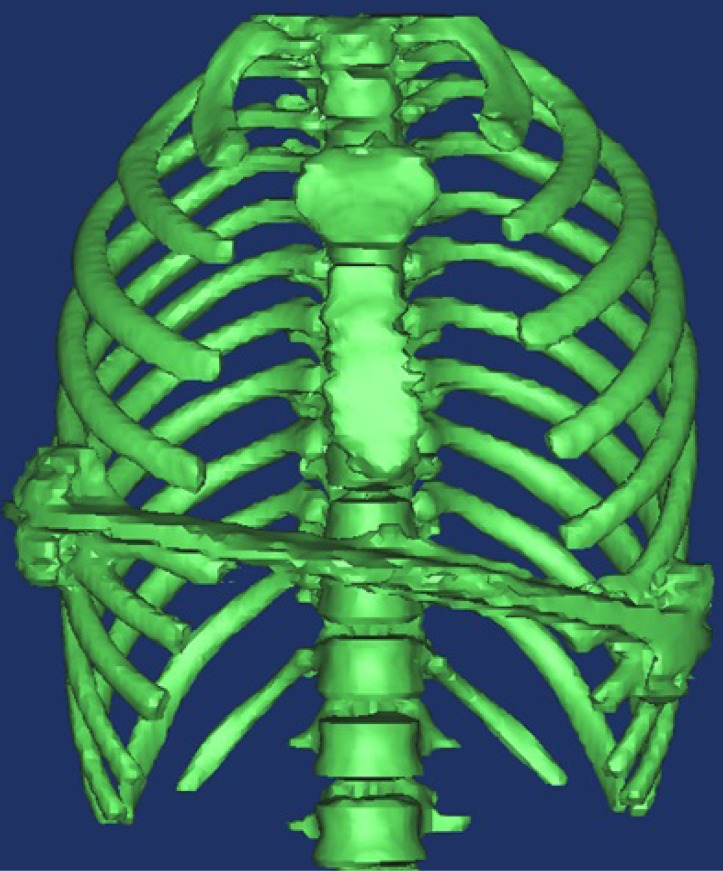
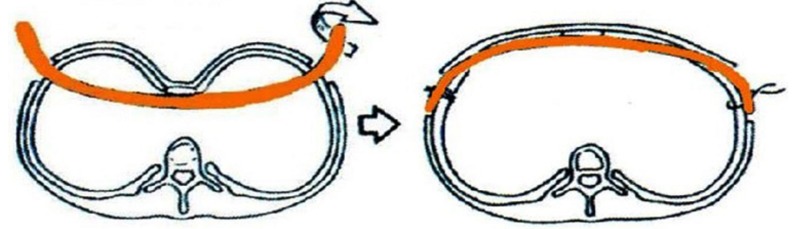
The anterior chest model of a 15-year-old patient was built based on his CT images; and his finite element model and the Nuss bar were created. Coupling of nodal displacement was used to connect bones with cartilages of the anterior chest. Turning the Nuss bar over is completed by rotating displacement of it. By comparing the numerical simulation outcomes with clinical surgery results, the numerical simulation results were verified.
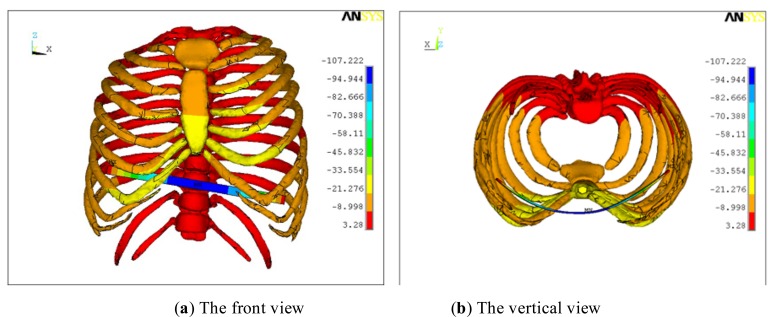
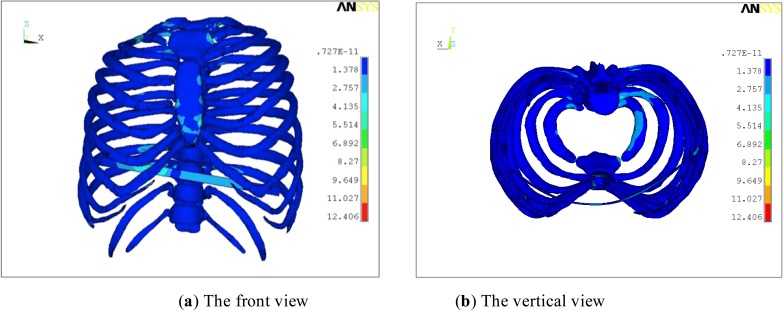
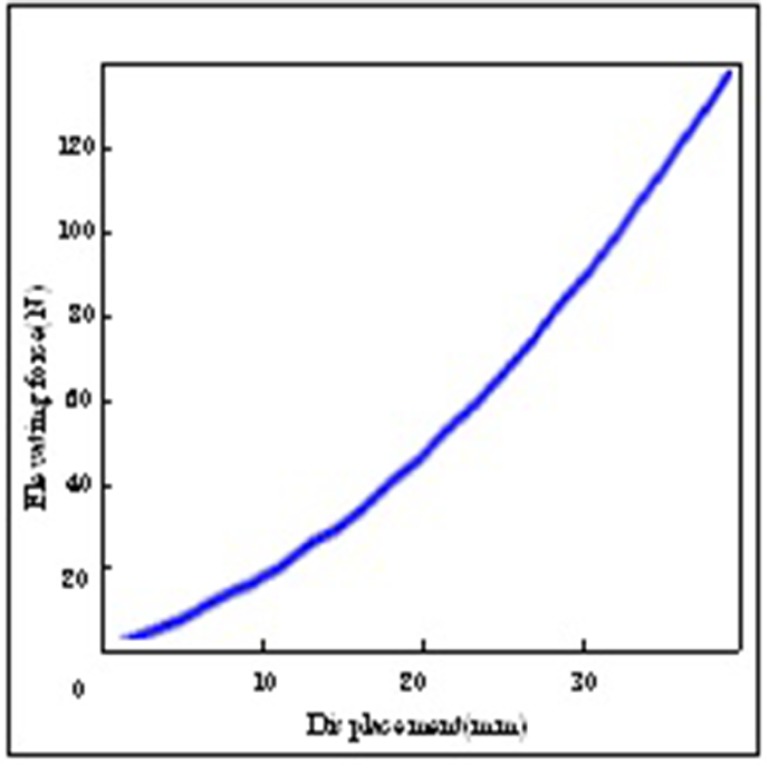
The orthopedic process of minimally invasive surgery of pectus excavatum was simulated by model construction and numerical analysis. The stress, displacement fields and distribution of the contact pressure between the Nuss bar and costal cartilages were analyzed. The relationship between correcting force and displacement was obtained. Compared with the of clinical results, the numerical simulation results were close to that of the actual clinical surgery in displacement field, and the final contact position of the Nuss bar and the costal cartilages.
Compared with the rigid model, the assembled simulation model is in more conformity with the actual clinical practice. The larger curvature results in the maximum equivalent stress, which is the main reason for clinical pain. Soft tissues and muscles should be taken into account in the numerical simulation process.
本文提出一种通过构建组合模型来模拟漏斗胸微创手术矫形过程的建模方法,并获得了临床验证,旨在为临床诊断、治疗及手术规划提供参考。
基于一名15岁患者的CT图像构建其前胸模型;创建其有限元模型及支撑条。采用节点位移耦合将前胸的骨骼与软骨连接起来。支撑条的翻转通过其旋转位移来完成。通过将数值模拟结果与临床手术结果进行比较,对数值模拟结果进行验证。
通过模型构建和数值分析模拟了漏斗胸微创手术的矫形过程。分析了支撑条与肋软骨之间的应力、位移场及接触压力分布。得出了矫形力与位移之间的关系。与临床结果相比,数值模拟结果在位移场以及支撑条与肋软骨的最终接触位置方面与实际临床手术结果相近。
与刚性模型相比,组合模拟模型更符合实际临床情况。较大的曲率导致最大等效应力,这是临床疼痛的主要原因。在数值模拟过程中应考虑软组织和肌肉。