Rajasekaran Devaraja, Siddiq Ayesha, Willoughby Jennifer L S, Biagi Jessica M, Christadore Lisa M, Yunes Sarah A, Gredler Rachel, Jariwala Nidhi, Robertson Chadia L, Akiel Maaged A, Shen Xue-Ning, Subler Mark A, Windle Jolene J, Schaus Scott E, Fisher Paul B, Hansen Ulla, Sarkar Devanand
Department of Human and Molecular Genetics, Virginia Commonwealth University, Richmond, VA 23298, USA.
Department of Biology, Center for Chemical Methodology and Library Development at Boston University, Boston, MA 02215, USA.
Oncotarget. 2015 Sep 22;6(28):26266-77. doi: 10.18632/oncotarget.4656.
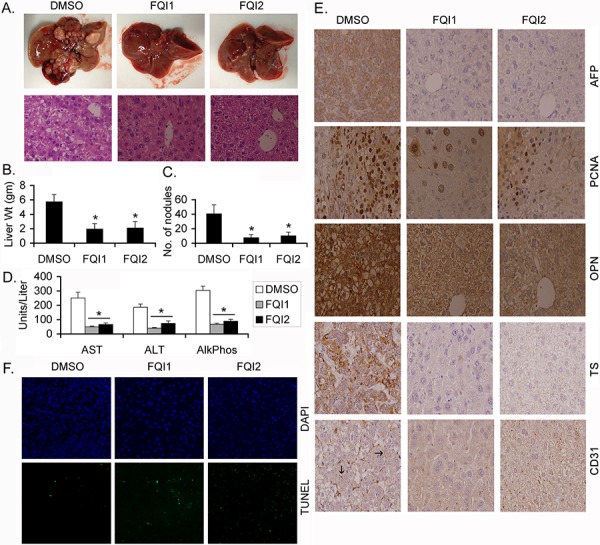
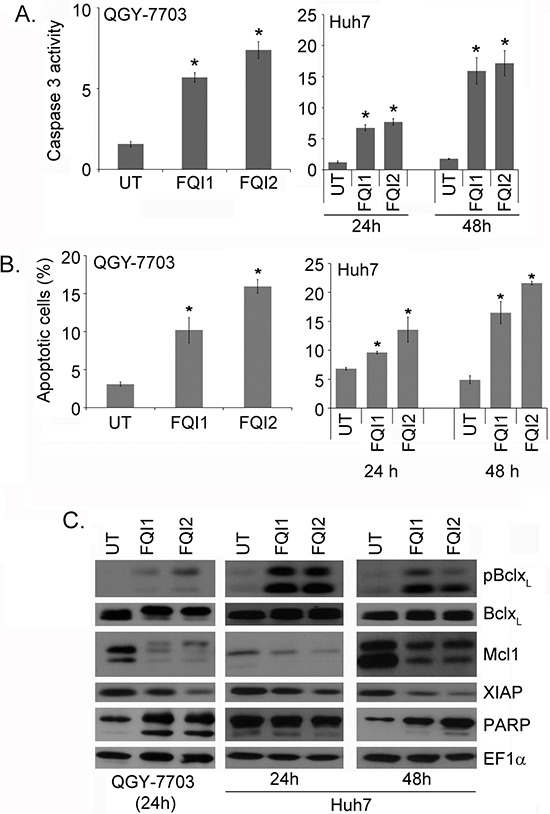
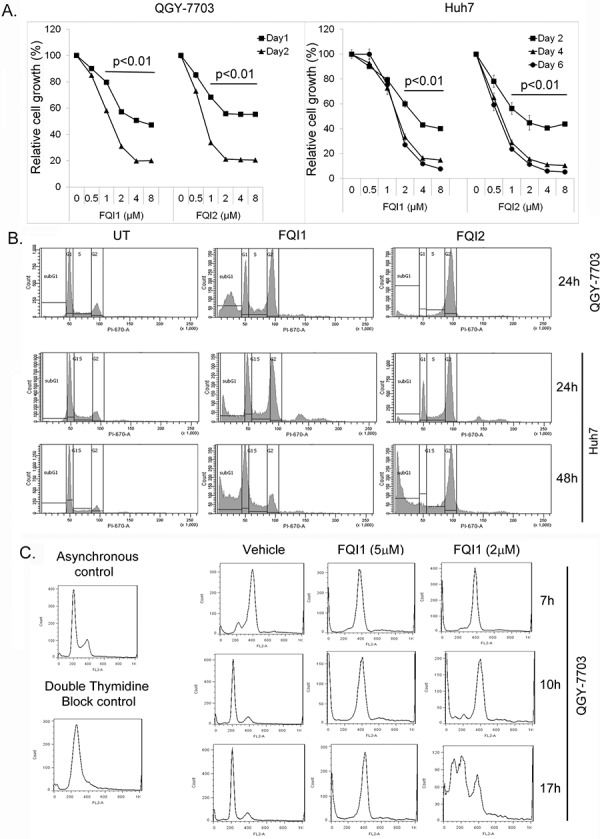
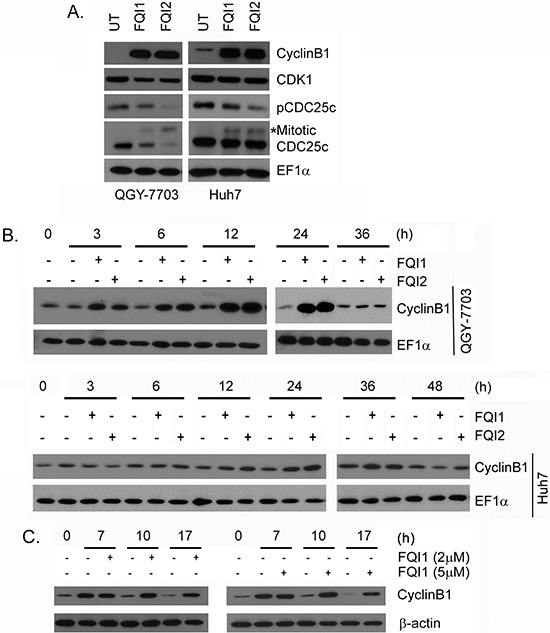
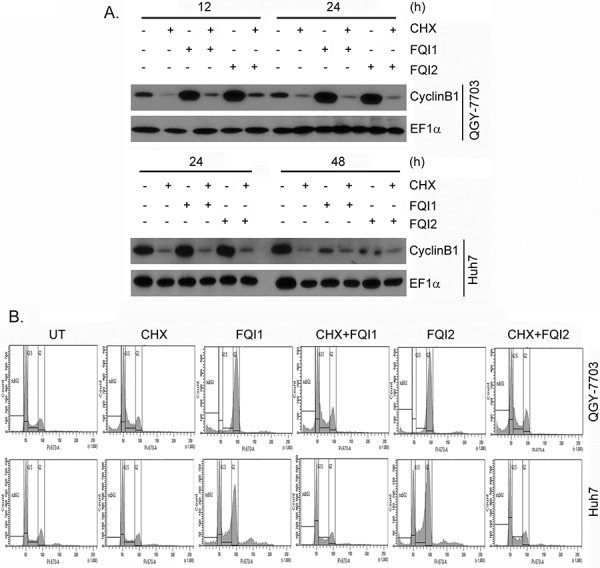
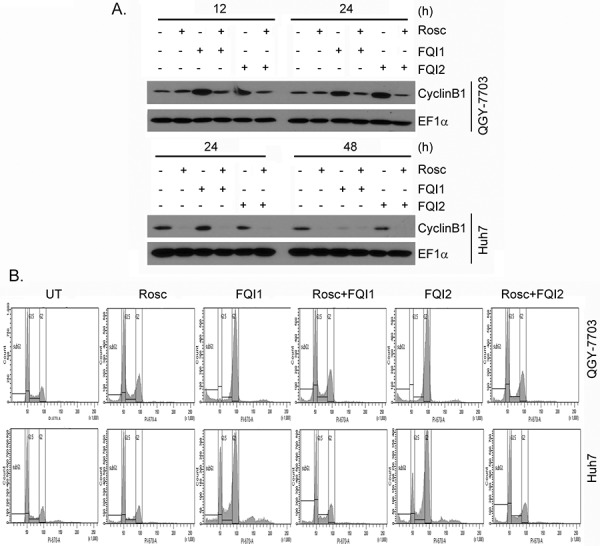
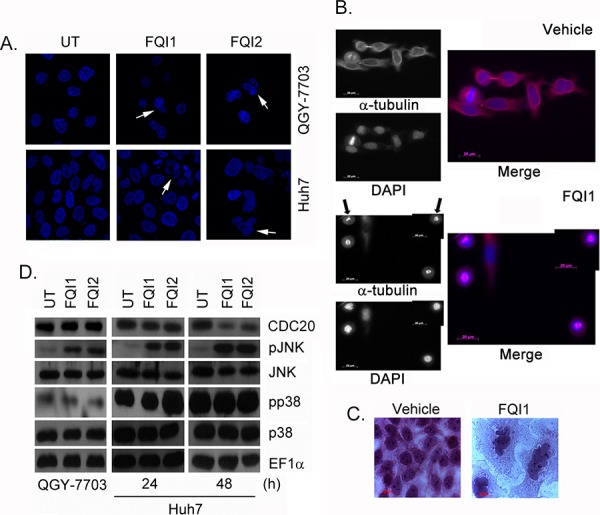
Hepatocellular carcinoma (HCC) is a lethal malignancy with high mortality and poor prognosis. Oncogenic transcription factor Late SV40 Factor (LSF) plays an important role in promoting HCC. A small molecule inhibitor of LSF, Factor Quinolinone Inhibitor 1 (FQI1), significantly inhibited human HCC xenografts in nude mice without harming normal cells. Here we evaluated the efficacy of FQI1 and another inhibitor, FQI2, in inhibiting endogenous hepatocarcinogenesis. HCC was induced in a transgenic mouse with hepatocyte-specific overexpression of c-myc (Alb/c-myc) by injecting N-nitrosodiethylamine (DEN) followed by FQI1 or FQI2 treatment after tumor development. LSF inhibitors markedly decreased tumor burden in Alb/c-myc mice with a corresponding decrease in proliferation and angiogenesis. Interestingly, in vitro treatment of human HCC cells with LSF inhibitors resulted in mitotic arrest with an accompanying increase in CyclinB1. Inhibition of CyclinB1 induction by Cycloheximide or CDK1 activity by Roscovitine significantly prevented FQI-induced mitotic arrest. A significant induction of apoptosis was also observed upon treatment with FQI. These effects of LSF inhibition, mitotic arrest and induction of apoptosis by FQI1s provide multiple avenues by which these inhibitors eliminate HCC cells. LSF inhibitors might be highly potent and effective therapeutics for HCC either alone or in combination with currently existing therapies.
肝细胞癌(HCC)是一种致死性恶性肿瘤,死亡率高且预后较差。致癌转录因子晚期猿猴病毒40因子(LSF)在促进HCC发生中起重要作用。LSF的小分子抑制剂喹啉酮因子抑制剂1(FQI1)可显著抑制裸鼠体内人HCC异种移植瘤生长,且不损害正常细胞。在此,我们评估了FQI1和另一种抑制剂FQI2抑制内源性肝癌发生的疗效。通过注射N-亚硝基二乙胺(DEN)在c-myc肝细胞特异性过表达的转基因小鼠(Alb/c-myc)中诱导HCC,肿瘤形成后给予FQI1或FQI2治疗。LSF抑制剂显著降低了Alb/c-myc小鼠的肿瘤负荷,同时增殖和血管生成也相应减少。有趣的是,用LSF抑制剂体外处理人HCC细胞会导致有丝分裂停滞,同时细胞周期蛋白B1增加。用放线菌酮抑制细胞周期蛋白B1的诱导或用罗可辛抑制CDK1活性可显著阻止FQI诱导的有丝分裂停滞。用FQI处理后还观察到明显的凋亡诱导现象。FQI1对LSF的抑制作用、有丝分裂停滞和凋亡诱导作用为这些抑制剂消除HCC细胞提供了多种途径。LSF抑制剂可能是治疗HCC的高效且有效的疗法,可单独使用或与现有疗法联合使用。