MCBB Graduate Program, Boston University, Boston, MA, 02215, USA.
Department of Biology, Boston University, Boston, MA, 02215, USA.
Sci Rep. 2021 Dec 7;11(1):23564. doi: 10.1038/s41598-021-02962-0.
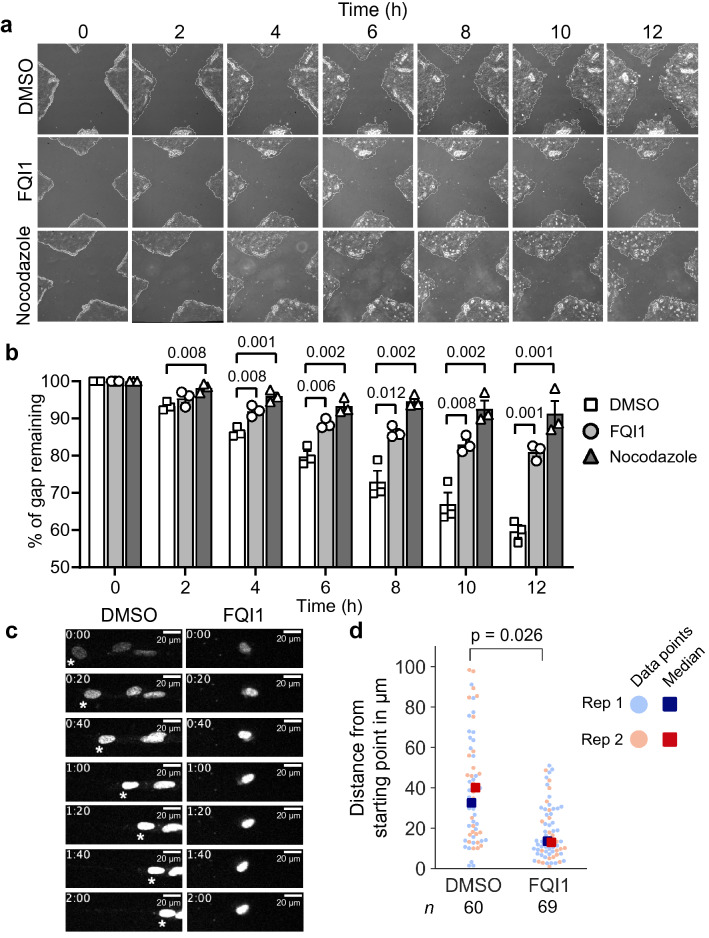
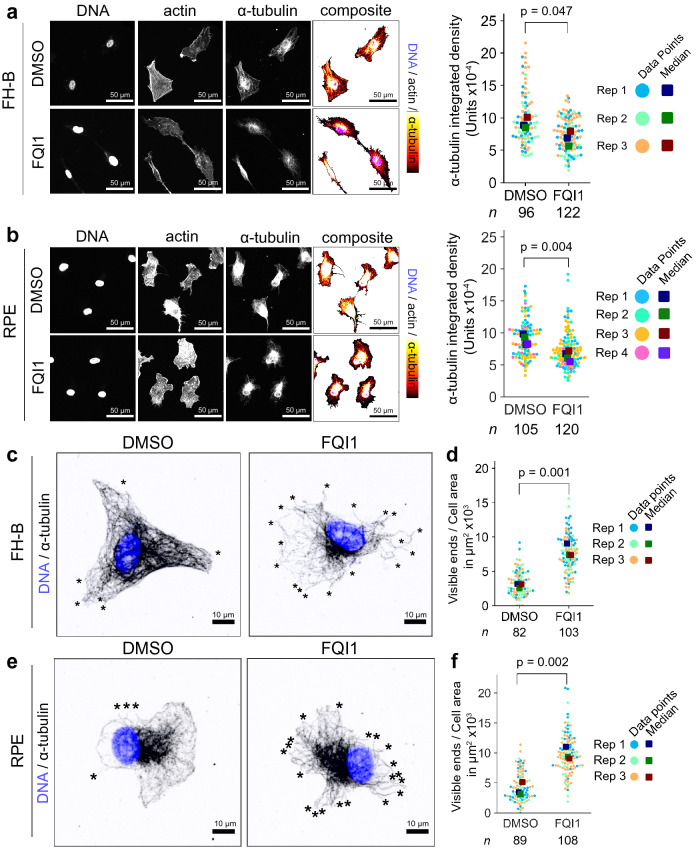
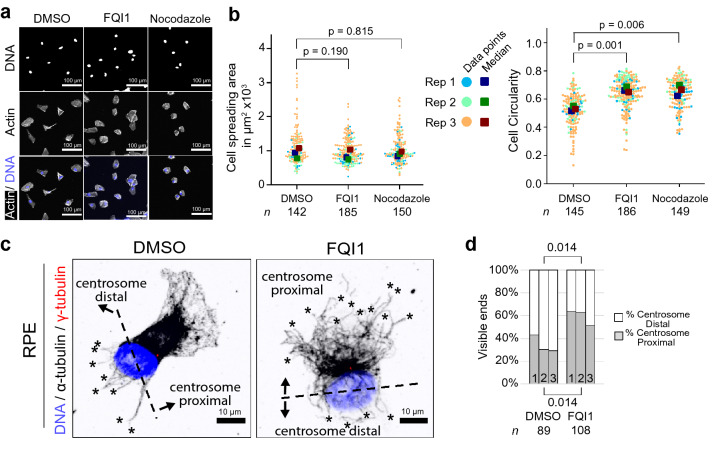
Factor quinolinone inhibitors are promising anti-cancer compounds, initially characterized as specific inhibitors of the oncogenic transcription factor LSF (TFCP2). These compounds exert anti-proliferative activity at least in part by disrupting mitotic spindles. Herein, we report additional interphase consequences of the initial lead compound, FQI1, in two telomerase immortalized cell lines. Within minutes of FQI1 addition, the microtubule network is disrupted, resulting in a substantial, although not complete, depletion of microtubules as evidenced both by microtubule sedimentation assays and microscopy. Surprisingly, this microtubule breakdown is quickly followed by an increase in tubulin acetylation in the remaining microtubules. The sudden breakdown and partial depolymerization of the microtubule network precedes FQI1-induced morphological changes. These involve rapid reduction of cell spreading of interphase fetal hepatocytes and increase in circularity of retinal pigment epithelial cells. Microtubule depolymerization gives rise to FH-B cell compaction, as pretreatment with taxol prevents this morphological change. Finally, FQI1 decreases the rate and range of locomotion of interphase cells, supporting an impact of FQI1-induced microtubule breakdown on cell motility. Taken together, our results show that FQI1 interferes with microtubule-associated functions in interphase, specifically cell morphology and motility.
喹啉酮类因子抑制剂是很有前途的抗癌化合物,最初被表征为致癌转录因子 LSF(TFCP2)的特异性抑制剂。这些化合物通过破坏有丝分裂纺锤体至少部分发挥抗增殖活性。在此,我们报告了初始先导化合物 FQI1 在两种端粒酶永生化细胞系中的另外一些间期后果。在 FQI1 加入后的几分钟内,微管网络被破坏,导致微管大量但不完全耗尽,这一点通过微管沉淀测定和显微镜观察都得到了证明。令人惊讶的是,这种微管的断裂很快被剩余微管中的微管蛋白乙酰化增加所取代。微管网络的突然断裂和部分解聚先于 FQI1 诱导的形态变化。这些变化包括间期胎肝细胞细胞扩散的迅速减少和视网膜色素上皮细胞圆形度的增加。微管解聚导致 FH-B 细胞的凝聚,因为紫杉醇预处理可以防止这种形态变化。最后,FQI1 降低了间期细胞的运动速度和范围,这支持了 FQI1 诱导的微管断裂对细胞运动性的影响。总之,我们的结果表明,FQI1 干扰了间期微管相关功能,特别是细胞形态和运动。