Zhou X, Chen X, Cai J J, Chen L Z, Gong Y S, Wang L X, Gao Z, Zhang H Q, Huang W J, Zhou H
Department of Cardiology, The First Affiliated Hospital of Wenzhou Medical University, Wenzhou, People's Republic of China.
Wenzhou Medical University, Wenzhou, People's Republic of China.
Drug Des Devel Ther. 2015 Aug 11;9:4599-611. doi: 10.2147/DDDT.S85399. eCollection 2015.
Relaxin (RLX) can prevent cardiac fibrosis. We aimed to investigate the possible mechanism and signal transduction pathway of RLX inhibiting cardiac fibrosis.
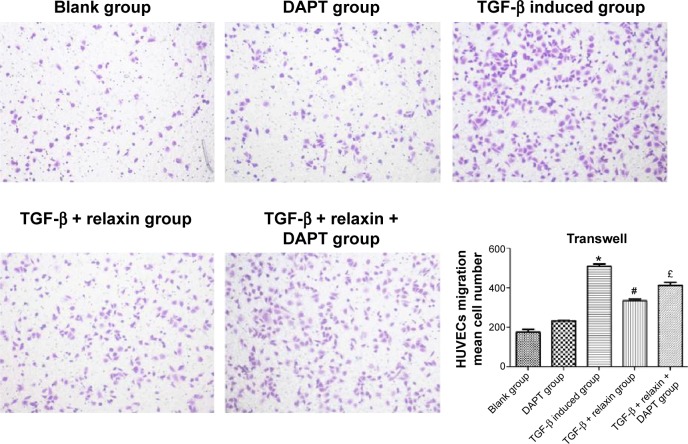
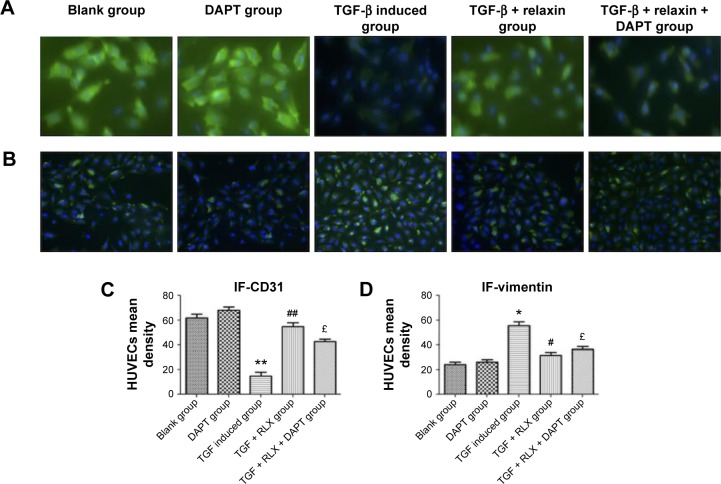
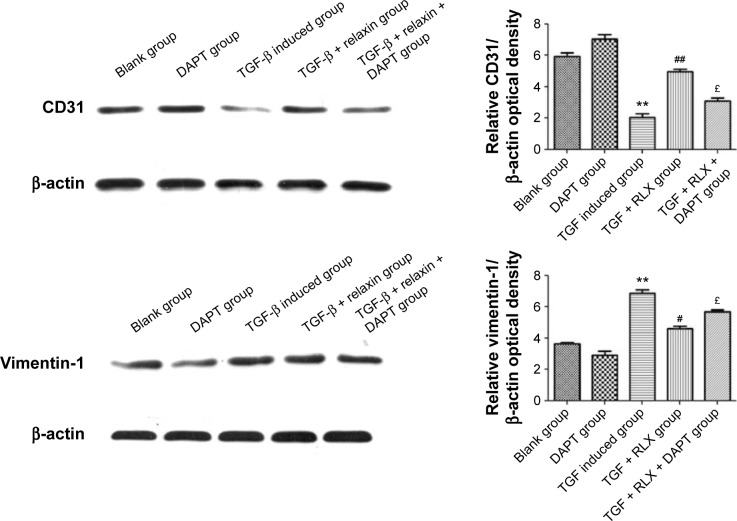
Isoproterenol (5 mg·kg(-1)·d(-1)) was used to establish the cardiac fibrosis model in rats, which were administered RLX. The cardiac function, related targets of cardiac fibrosis, and endothelial-mesenchymal transition (EndMT) were measured. Transforming growth factor β (TGF-β) was used to induce EndMT in human umbilical vein endothelial cells, which were pretreated with RLX, 200 ng·mL(-1), then with the inhibitor of Notch. Transwell cell migration was used to evaluate cell migration. CD31 and vimentin content was determined by immunofluorescence staining and Western blot analysis. Notch protein level was examined by Western blot analysis.
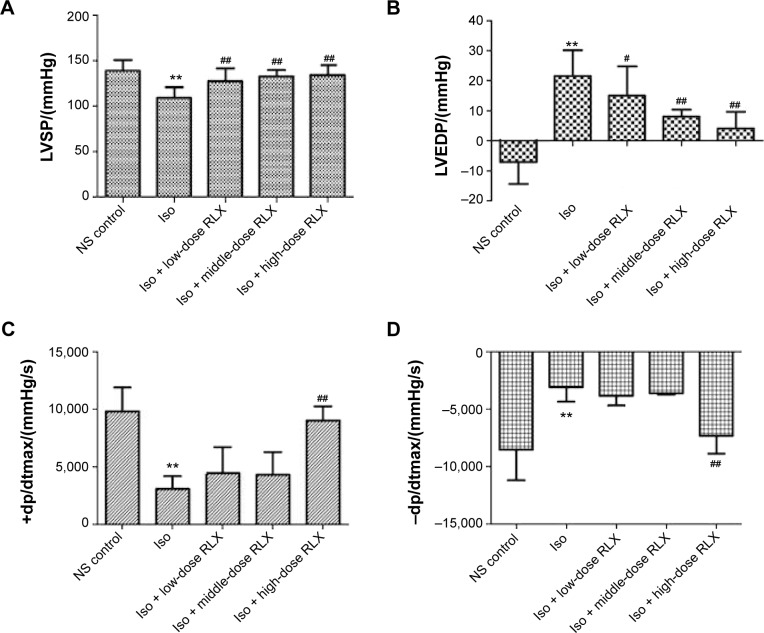
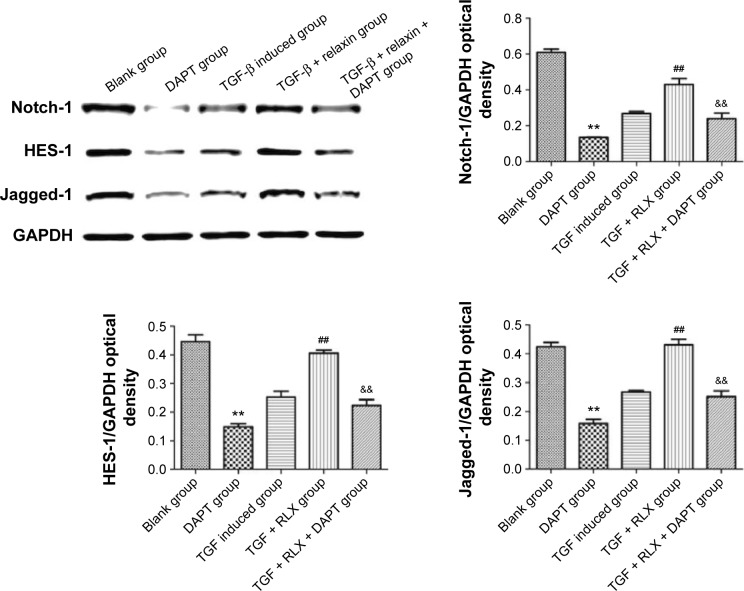
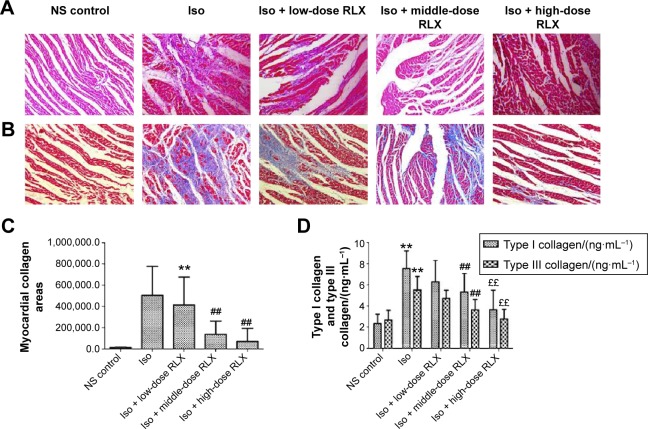
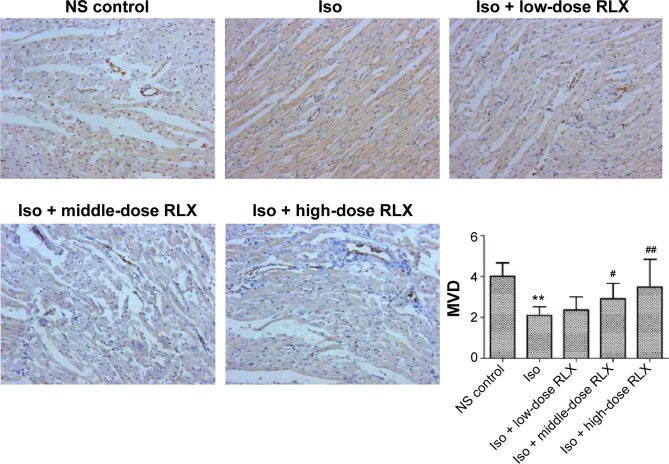
RLX improved cardiac function in rats with cardiac fibrosis; it reduced the content of collagen I and III, increased the microvascular density of the myocardium, and suppressed the EndMT in heart tissue. In vitro, RLX decreased the mobility of human umbilical vein endothelial cells induced by TGF-β, increased the expression of endothelial CD31, and decreased vimentin content. Compared to TGF-β and RLX co-culture alone, TGF-β + RLX + Notch inhibitor increased cell mobility and the EndMT, but decreased the levels of Notch-1, HES-1, and Jagged-1 proteins.
RLX may inhibit the cardiac fibrosis via EndMT by Notch-mediated signaling.
松弛素(RLX)可预防心脏纤维化。我们旨在研究RLX抑制心脏纤维化的可能机制及信号转导途径。
采用异丙肾上腺素(5 mg·kg⁻¹·d⁻¹)建立大鼠心脏纤维化模型,并给予RLX。检测心脏功能、心脏纤维化相关指标及内皮-间质转化(EndMT)情况。用人脐静脉内皮细胞,先用200 ng·mL⁻¹的RLX预处理,再用Notch抑制剂处理,然后用转化生长因子β(TGF-β)诱导EndMT。采用Transwell细胞迁移实验评估细胞迁移能力。通过免疫荧光染色和蛋白质印迹分析测定CD31和波形蛋白含量。采用蛋白质印迹分析检测Notch蛋白水平。
RLX改善了心脏纤维化大鼠的心脏功能;降低了I型和III型胶原含量,增加了心肌微血管密度,并抑制了心脏组织中的EndMT。在体外,RLX降低了TGF-β诱导的人脐静脉内皮细胞的迁移能力,增加了内皮细胞CD31的表达,并降低了波形蛋白含量。与单独的TGF-β和RLX共培养相比,TGF-β + RLX + Notch抑制剂增加了细胞迁移能力和EndMT,但降低了Notch-1、HES-1和Jagged-1蛋白的水平。
RLX可能通过Notch介导的信号通路经EndMT抑制心脏纤维化。