Wang Jin, Yan Bin, Liu Song-Mei, Sun Huanhuan, Pan Yonglong, Guan Daogang, Zhang Xiaoyan, Xu Jianqing, Ma Haiqing
1. Scientific Research Center, Shanghai Public Health Clinical Center, 2901 Caolang Road, Jinshan District, Shanghai 201508, China ; 2. Department of Translational Molecular Pathology, The University of Texas, M.D. Anderson Cancer Center, Houston, TX 77030, USA.
3. Laboratory for Food Safety and Environmental Technology, Institutes of Biomedicine and Biotechnology, Shenzhen Institutes of Advanced Technology, Chinese Academy of Sciences, Shenzhen 518055, China.
J Cancer. 2015 Jul 29;6(10):930-7. doi: 10.7150/jca.12284. eCollection 2015.
There clearly is a need for effective chemotherapy for early-stage, high-risk patients with human cervical carcinoma. Vinblastine (VBL) is a key microtubule inhibitor, but unproven in its mechanisms as an important antitumor agent in cervical carcinoma.
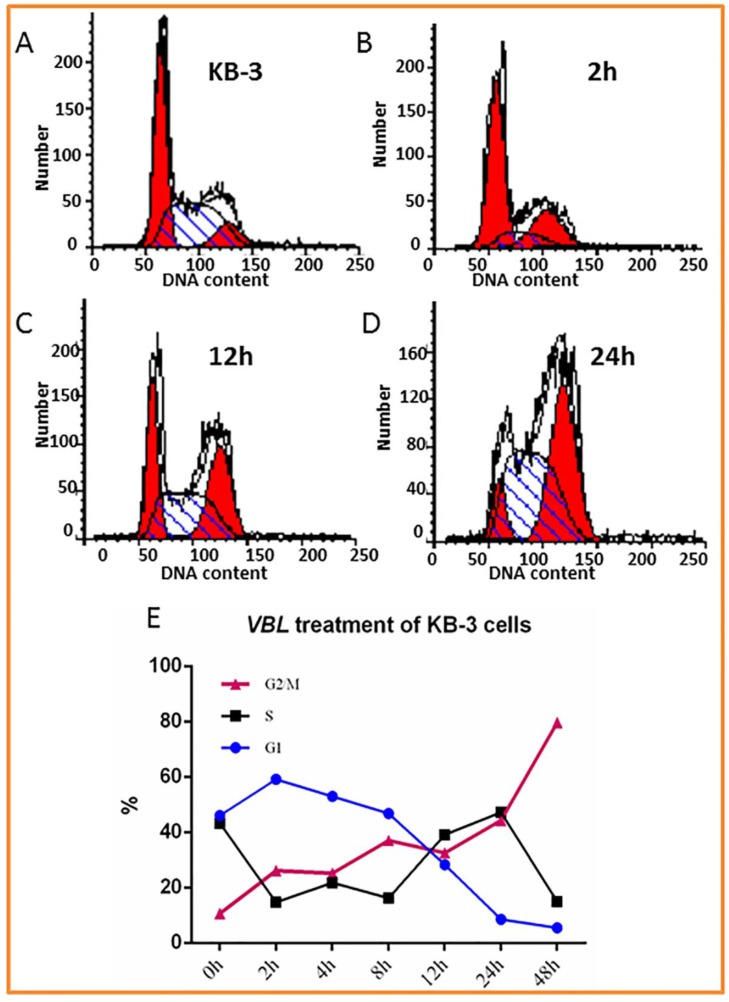
We selected the concentration of vinblastine inducing 30% cell death for analyses assessing the DNA content, gene expression and transcriptional gene regulation of VBL-treated KB-3 cells.
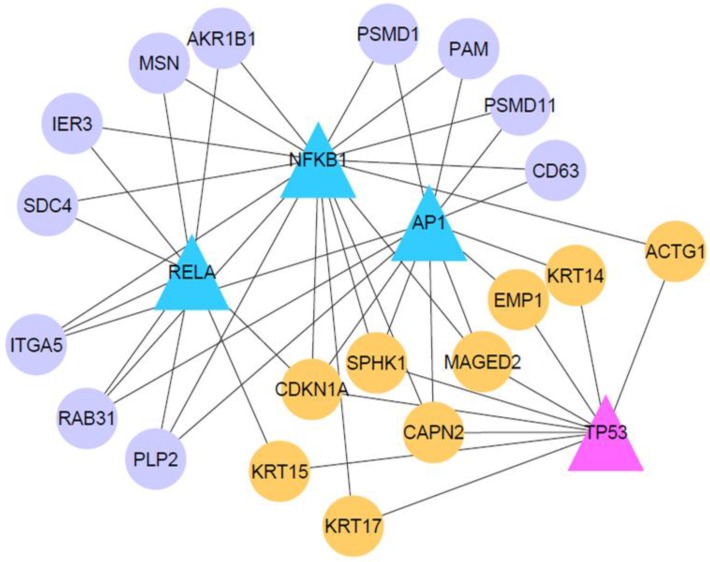
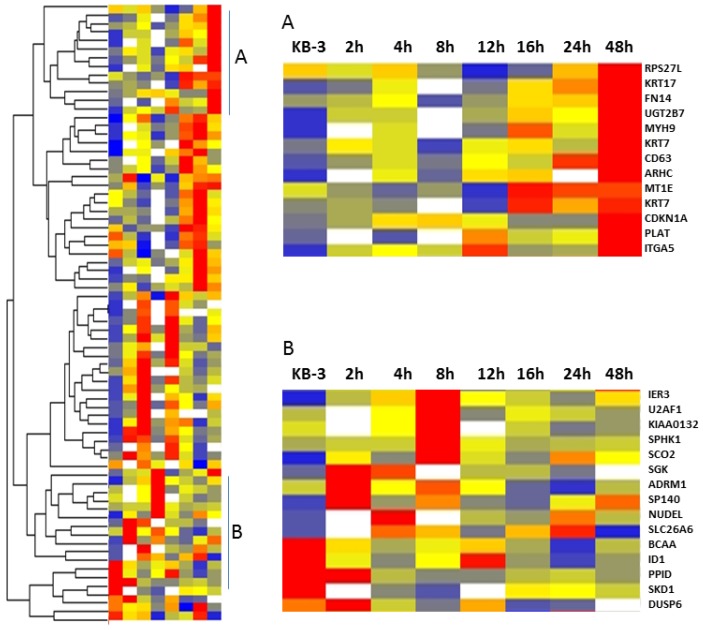
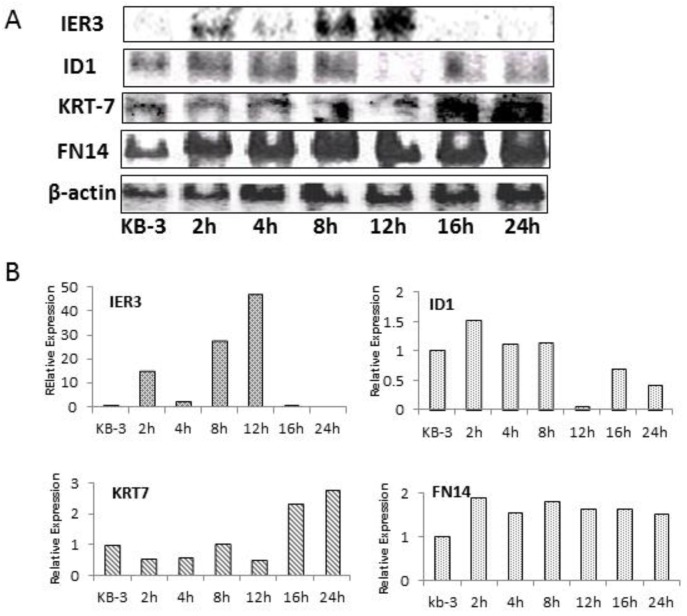
Transcriptomic and hierarchical clustering analysis demonstrated that treatment of KB-3 cells with VBL altered the expression of a diverse group of genes with G2/M arrest, which regulated by four oncogenic or tumor suppresser transcription factors (AP1, NFKB1, RELA, and TP53). Functional pathway analysis revealed the disease response to the biological effects of vinblastine in cervical carcinoma chemotherapy including protein ubiquitination pathway, RhoGDI signaling, integrin signaling, agranulocyte adhesion and biapedesis, and actin nucleation pathways. Northern blots also confirmed that KRT-7, FN14, IER3, and ID1 were deregulated in VBL-treated KB-3 cells.
Transcriptional time series profiles and a functional pathway analysis of VBL-treated KB-3 cells will provide a new strategy for improving microtubule inhibitor chemotherapy for cervical carcinoma.
对于早期高危宫颈癌患者,显然需要有效的化疗方法。长春碱(VBL)是一种关键的微管抑制剂,但其作为宫颈癌重要抗肿瘤药物的作用机制尚未得到证实。
我们选择诱导30%细胞死亡的长春碱浓度,用于分析评估经VBL处理的KB-3细胞的DNA含量、基因表达和转录基因调控。
转录组学和层次聚类分析表明,用VBL处理KB-3细胞会改变一组不同基因的表达,导致G2/M期阻滞,这由四种致癌或抑癌转录因子(AP1、NFKB1、RELA和TP53)调控。功能通路分析揭示了宫颈癌化疗中长春碱生物学效应的疾病反应,包括蛋白质泛素化通路、RhoGDI信号传导、整合素信号传导、粒细胞粘附和双足运动以及肌动蛋白成核通路。Northern印迹也证实,在经VBL处理的KB-3细胞中,KRT-7、FN14、IER3和ID1的表达失调。
对经VBL处理的KB-3细胞进行转录时间序列分析和功能通路分析,将为改进宫颈癌微管抑制剂化疗提供新策略。