Ghilardi Carmen, Silini Antonietta, Figini Sara, Anastasia Alessia, Lupi Monica, Fruscio Robert, Giavazzi Raffaella, Bani Maria Rosa
Laboratory of Biology and Treatment of Metastases, IRCCS-Istituto di Ricerche Farmacologiche Mario Negri, Milan, Italy.
Laboratory of Cancer Pharmacology, IRCCS-Istituto di Ricerche Farmacologiche Mario Negri, Milan, Italy.
Oncotarget. 2015 Sep 29;6(29):28389-400. doi: 10.18632/oncotarget.4949.
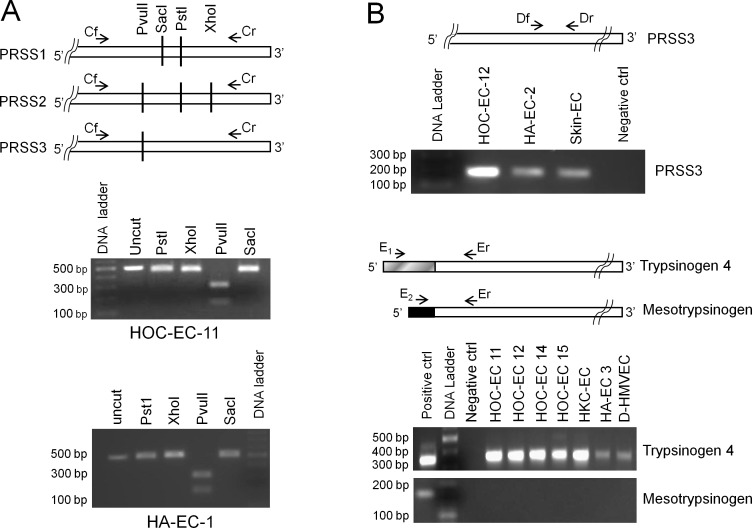
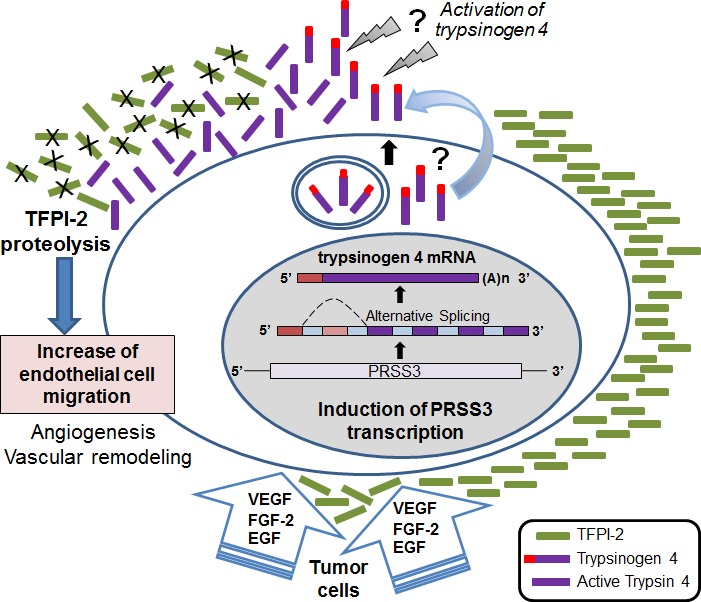
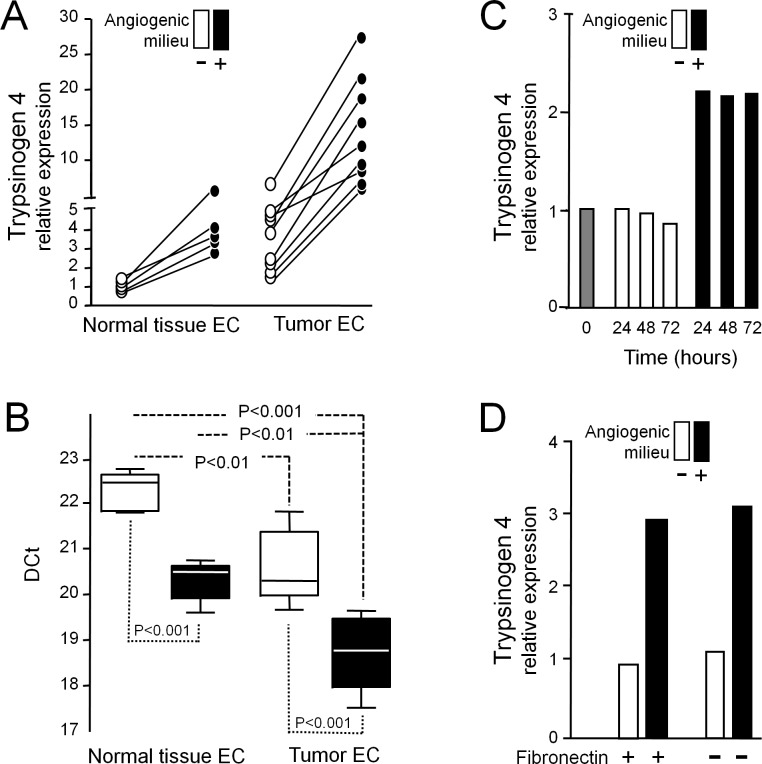
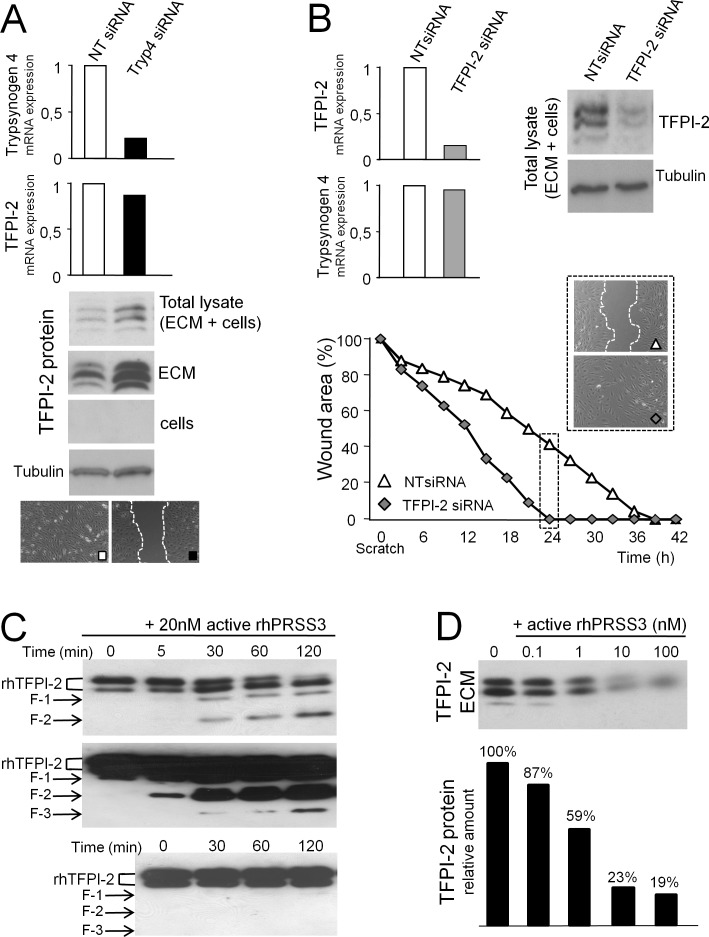
Proteases contribute to cancer in many ways, including tumor vascularization and metastasis, and their pharmacological inhibition is a potential anticancer strategy. We report that human endothelial cells (EC) express the trypsinogen 4 isoform of the serine protease 3 (PRSS3), and lack both PRSS2 and PRSS1. Trypsinogen 4 expression was upregulated by the combined action of VEGF-A, FGF-2 and EGF, angiogenic factors representative of the tumor microenvironment. Suppression of trypsinogen 4 expression by siRNA inhibited the angiogenic milieu-induced migration of EC from cancer specimens (tumor-EC), but did not affect EC from normal tissues. We identified tissue factor pathway inhibitor-2 (TFPI-2), a matrix associated inhibitor of cell motility, as the functional target of trypsinogen 4, which cleaved TFPI-2 and removed it from the matrix put down by tumor-EC. Silencing tumor-EC for trypsinogen 4 accumulated TFPI2 in the matrix. Showing that angiogenic factors stimulate trypsinogen 4 expression, which hydrolyses TFPI-2 favoring a pro-migratory situation, our study suggests a new pathway linking tumor microenvironment signals to endothelial cell migration, which is essential for angiogenesis and blood vessel remodeling. Abolishing trypsinogen 4 functions might be an exploitable strategy as anticancer, particularly anti-vascular, therapy.
蛋白酶在许多方面促进癌症发展,包括肿瘤血管生成和转移,对其进行药理学抑制是一种潜在的抗癌策略。我们报告称,人内皮细胞(EC)表达丝氨酸蛋白酶3(PRSS3)的胰蛋白酶原4亚型,且不表达PRSS2和PRSS1。血管内皮生长因子A(VEGF-A)、成纤维细胞生长因子2(FGF-2)和表皮生长因子(EGF)是肿瘤微环境中具有代表性的血管生成因子,它们共同作用可上调胰蛋白酶原4的表达。用小干扰RNA(siRNA)抑制胰蛋白酶原4的表达可抑制血管生成环境诱导的癌症标本来源内皮细胞(肿瘤内皮细胞)的迁移,但不影响正常组织来源的内皮细胞。我们确定组织因子途径抑制剂-2(TFPI-2)是一种与基质相关的细胞运动抑制剂,为胰蛋白酶原4的功能靶点,胰蛋白酶原4可切割TFPI-2并使其从肿瘤内皮细胞分泌的基质中去除。使肿瘤内皮细胞中胰蛋白酶原4沉默可使TFPI2在基质中积累。我们的研究表明血管生成因子刺激胰蛋白酶原4表达,其水解TFPI-2有利于形成促迁移状态,提示一条将肿瘤微环境信号与内皮细胞迁移相联系的新途径,而内皮细胞迁移对血管生成和血管重塑至关重要。消除胰蛋白酶原4的功能可能是一种可用于抗癌尤其是抗血管生成治疗的策略。