Botta Paolo, Demmou Lynda, Kasugai Yu, Markovic Milica, Xu Chun, Fadok Jonathan P, Lu Tingjia, Poe Michael M, Xu Li, Cook James M, Rudolph Uwe, Sah Pankaj, Ferraguti Francesco, Lüthi Andreas
Friedrich Miescher Institute for Biomedical Research, Basel, Switzerland.
University of Basel, Basel, Switzerland.
Nat Neurosci. 2015 Oct;18(10):1493-500. doi: 10.1038/nn.4102. Epub 2015 Aug 31.
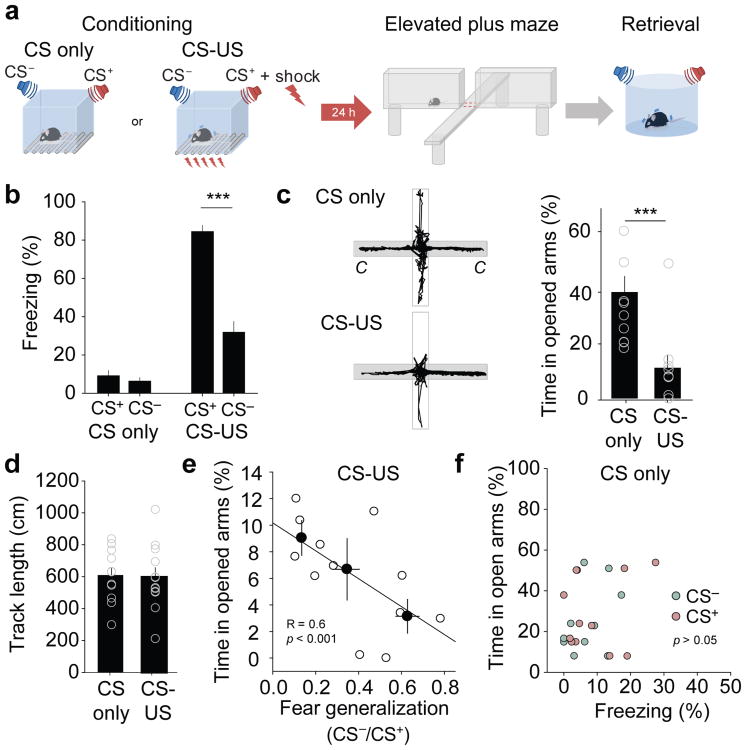
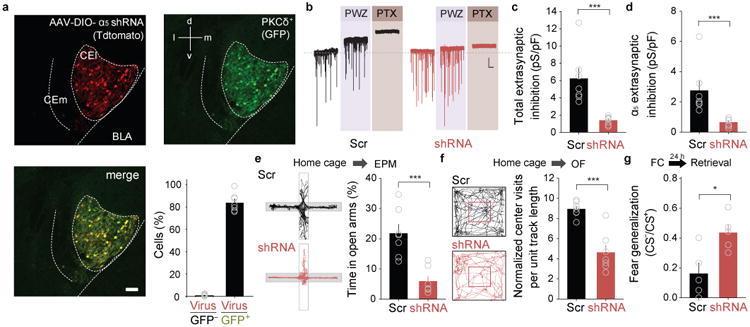
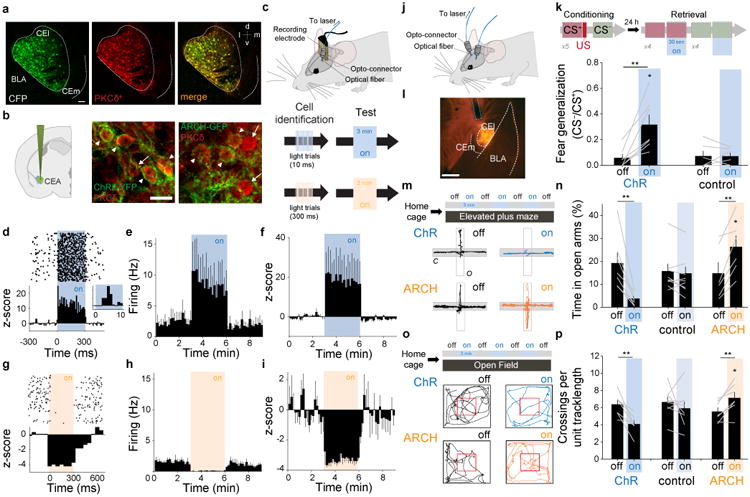
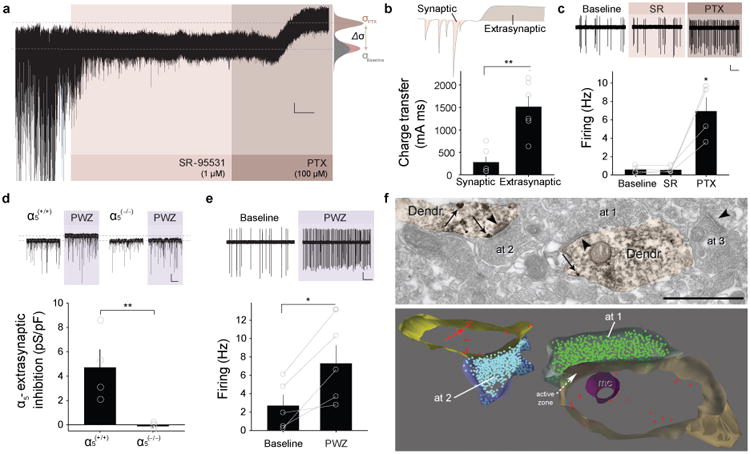
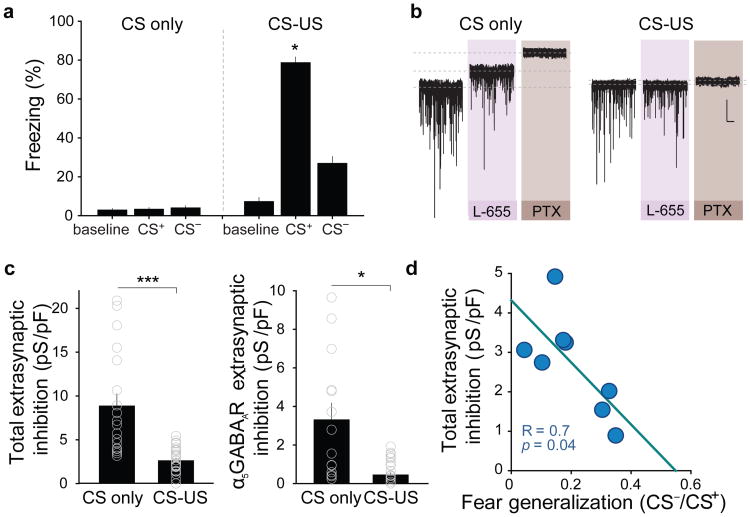
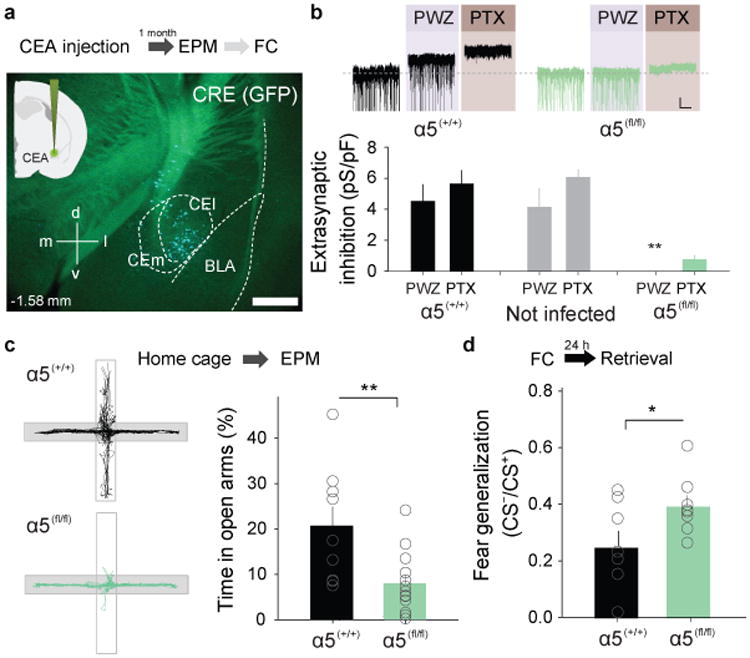
Aversive experiences can lead to complex behavioral adaptations including increased levels of anxiety and fear generalization. The neuronal mechanisms underlying such maladaptive behavioral changes, however, are poorly understood. Here, using a combination of behavioral, physiological and optogenetic approaches in mouse, we identify a specific subpopulation of central amygdala neurons expressing protein kinase C δ (PKCδ) as key elements of the neuronal circuitry controlling anxiety. Moreover, we show that aversive experiences induce anxiety and fear generalization by regulating the activity of PKCδ(+) neurons via extrasynaptic inhibition mediated by α5 subunit-containing GABAA receptors. Our findings reveal that the neuronal circuits that mediate fear and anxiety overlap at the level of defined subpopulations of central amygdala neurons and demonstrate that persistent changes in the excitability of a single cell type can orchestrate complex behavioral changes.
厌恶经历可导致复杂的行为适应,包括焦虑水平增加和恐惧泛化。然而,这种适应不良行为变化背后的神经元机制却知之甚少。在这里,我们结合行为学、生理学和光遗传学方法,在小鼠中鉴定出表达蛋白激酶Cδ(PKCδ)的中央杏仁核神经元的一个特定亚群,作为控制焦虑的神经元回路的关键元件。此外,我们表明,厌恶经历通过由含α5亚基的GABAA受体介导的突触外抑制来调节PKCδ(+)神经元的活性,从而诱发焦虑和恐惧泛化。我们的研究结果揭示,介导恐惧和焦虑的神经元回路在中央杏仁核神经元特定亚群水平上重叠,并表明单一细胞类型兴奋性的持续变化可协调复杂的行为变化。