Xia Hong-Guang, Najafov Ayaz, Geng Jiefei, Galan-Acosta Lorena, Han Xuemei, Guo Yuan, Shan Bing, Zhang Yaoyang, Norberg Erik, Zhang Tao, Pan Lifeng, Liu Junli, Coloff Jonathan L, Ofengeim Dimitry, Zhu Hong, Wu Kejia, Cai Yu, Yates John R, Zhu Zhengjiang, Yuan Junying, Vakifahmetoglu-Norberg Helin
Department of Cell Biology, Harvard Medical School, Boston, MA 02115.
Division of Toxicology, Institute of Environmental Medicine, Karolinska Institutet, SE-171 77 Stockholm, Sweden.
J Cell Biol. 2015 Aug 31;210(5):705-16. doi: 10.1083/jcb.201503044.
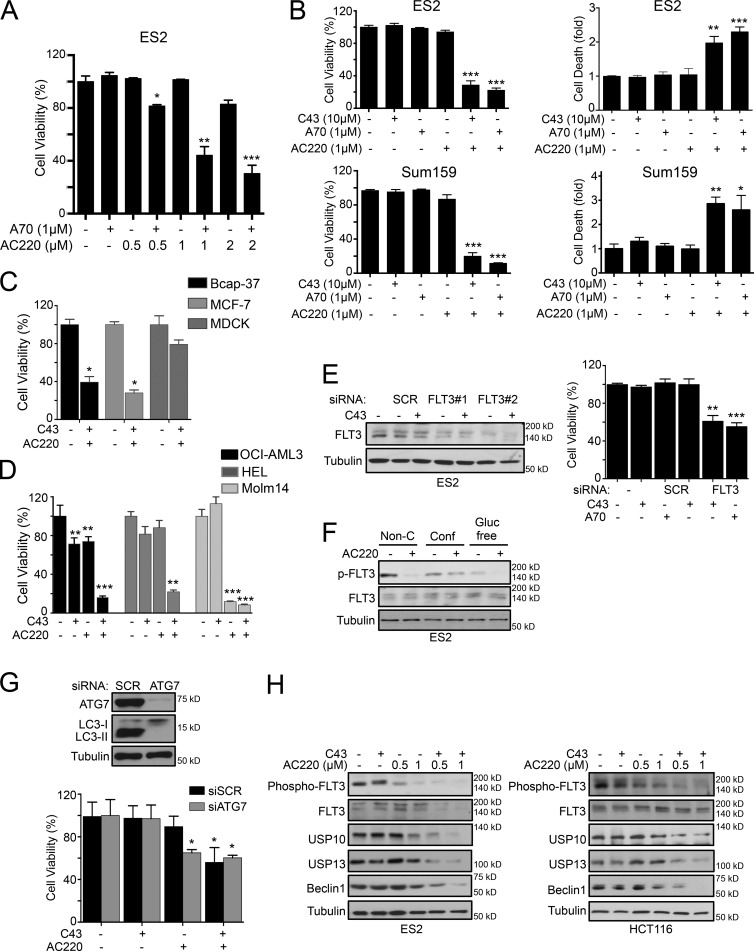
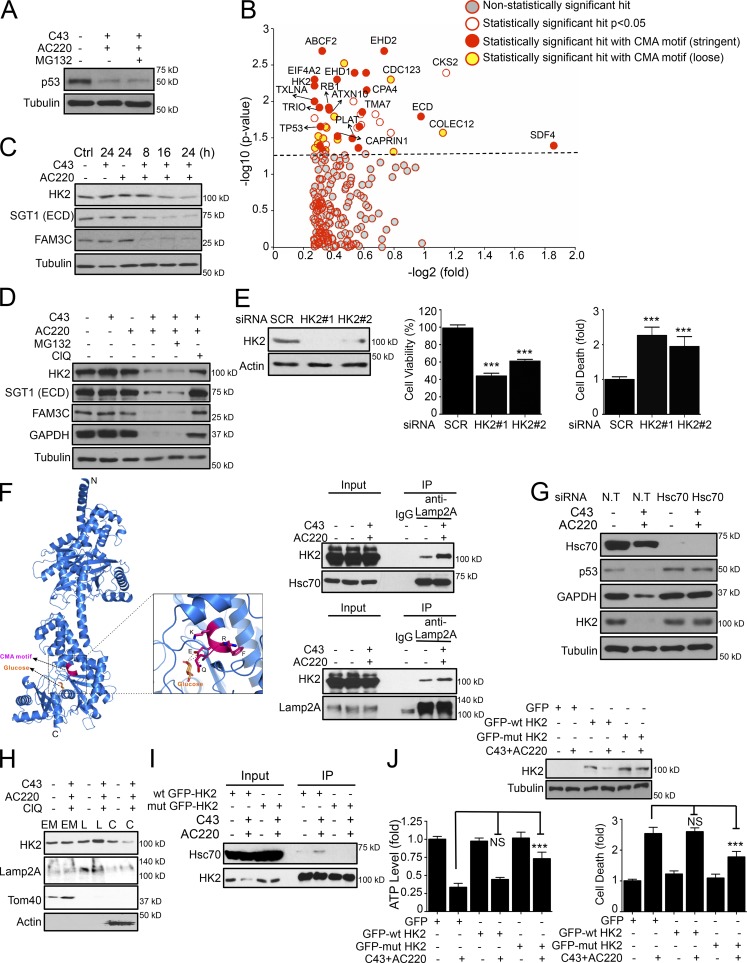
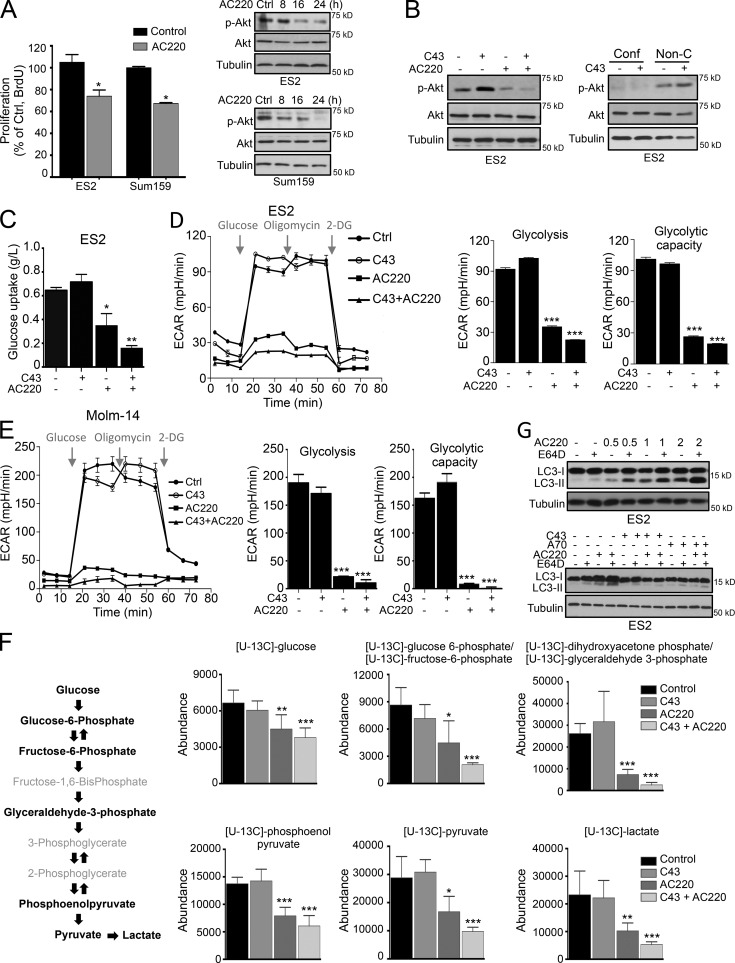
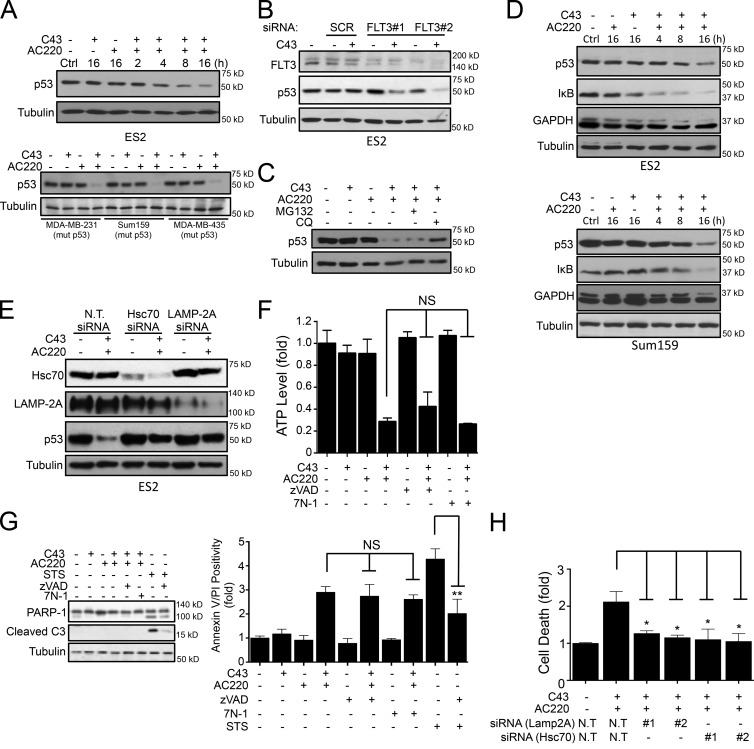
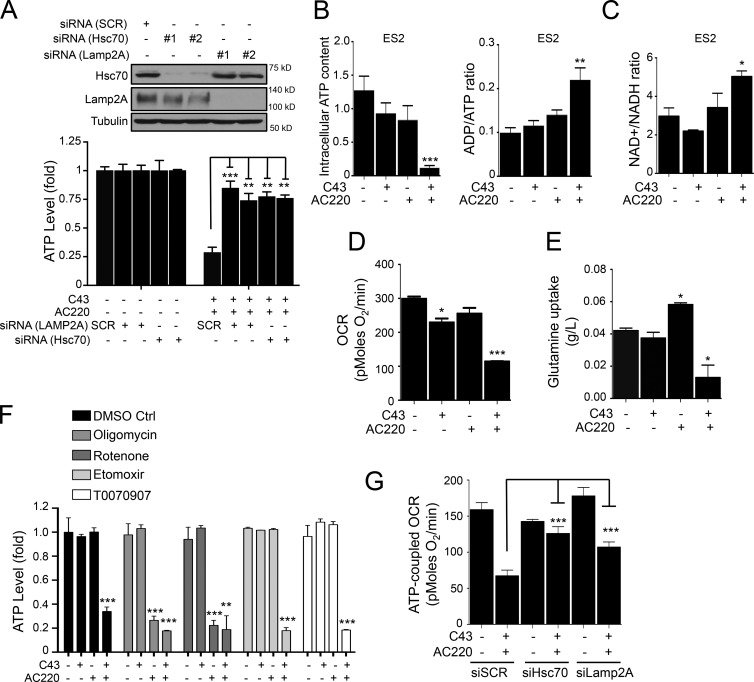
Hexokinase II (HK2), a key enzyme involved in glucose metabolism, is regulated by growth factor signaling and is required for initiation and maintenance of tumors. Here we show that metabolic stress triggered by perturbation of receptor tyrosine kinase FLT3 in non-acute myeloid leukemia cells sensitizes cancer cells to autophagy inhibition and leads to excessive activation of chaperone-mediated autophagy (CMA). Our data demonstrate that FLT3 is an important sensor of cellular nutritional state and elucidate the role and molecular mechanism of CMA in metabolic regulation and mediating cancer cell death. Importantly, our proteome analysis revealed that HK2 is a CMA substrate and that its degradation by CMA is regulated by glucose availability. We reveal a new mechanism by which excessive activation of CMA may be exploited pharmacologically to eliminate cancer cells by inhibiting both FLT3 and autophagy. Our study delineates a novel pharmacological strategy to promote the degradation of HK2 in cancer cells.
己糖激酶II(HK2)是参与葡萄糖代谢的关键酶,受生长因子信号调控,是肿瘤起始和维持所必需的。在此,我们表明,非急性髓系白血病细胞中受体酪氨酸激酶FLT3扰动引发的代谢应激使癌细胞对自噬抑制敏感,并导致伴侣介导的自噬(CMA)过度激活。我们的数据表明,FLT3是细胞营养状态的重要传感器,并阐明了CMA在代谢调节和介导癌细胞死亡中的作用及分子机制。重要的是,我们的蛋白质组分析表明,HK2是CMA的底物,其被CMA降解受葡萄糖可用性调控。我们揭示了一种新机制,通过该机制,可利用药理学手段过度激活CMA,通过抑制FLT3和自噬来消除癌细胞。我们的研究描绘了一种促进癌细胞中HK2降解的新型药理学策略。