Nakayama Atsuko, Morita Hiroyuki, Nakao Tomoko, Yamaguchi Toshihiro, Sumida Tomokazu, Ikeda Yuichi, Kumagai Hidetoshi, Motozawa Yoshihiro, Takahashi Tsukasa, Imaizumi Atsushi, Hashimoto Tadashi, Nagai Ryozo, Komuro Issei
Department of Cardiovascular Medicine, Graduate School of Medicine, The University of Tokyo, Tokyo, Japan.
Department of Translational Research for Healthcare and Clinical Science, Graduate School of Medicine, The University of Tokyo, Tokyo, Japan.
PLoS One. 2015 Sep 1;10(9):e0137106. doi: 10.1371/journal.pone.0137106. eCollection 2015.
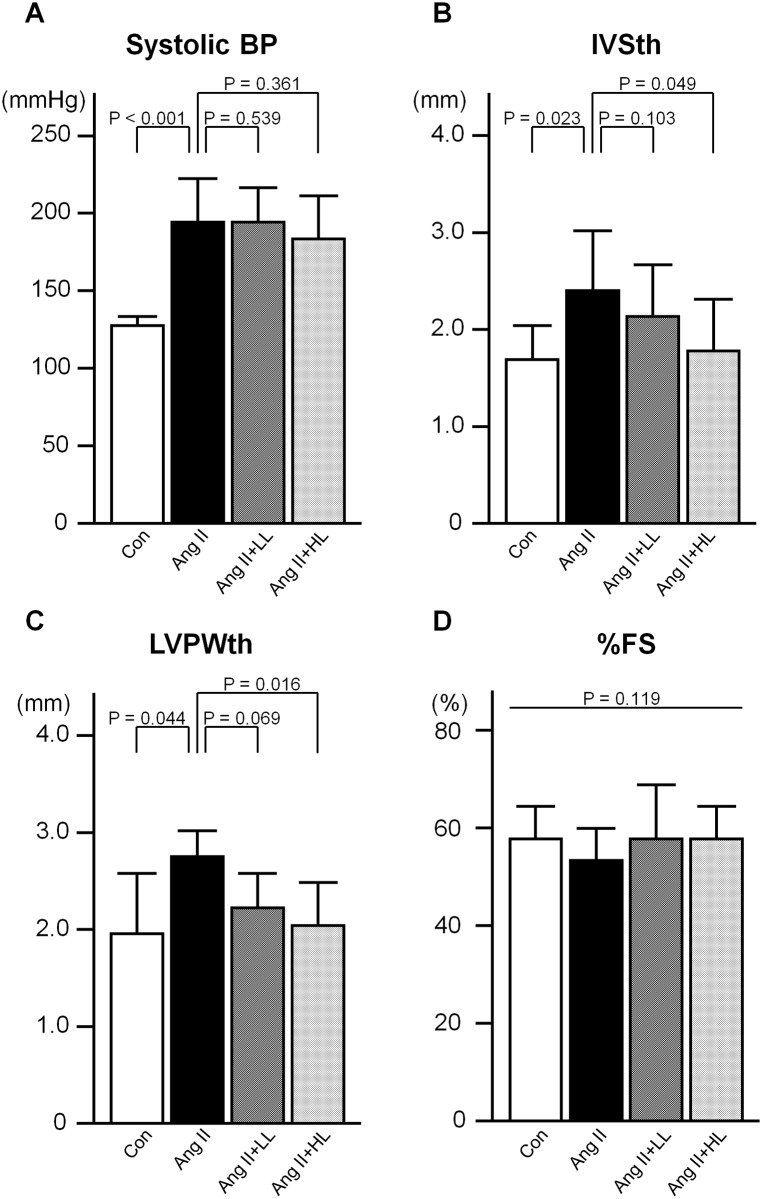
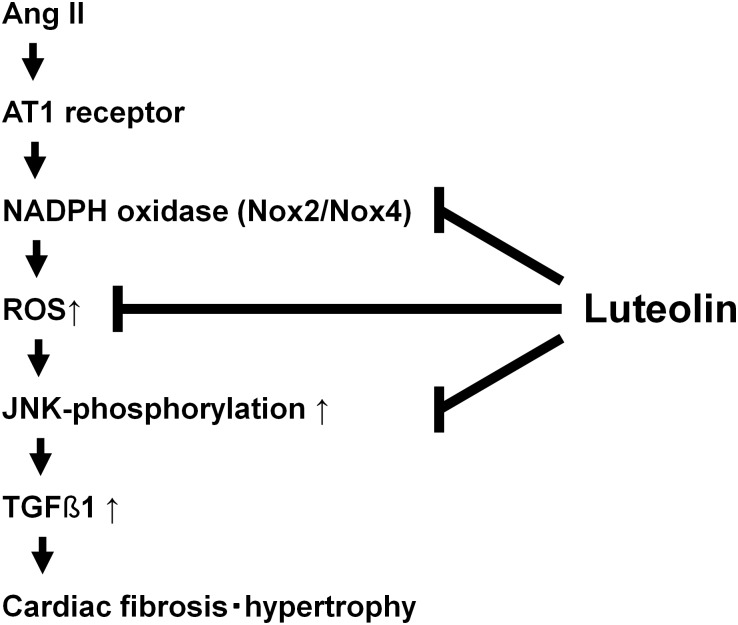
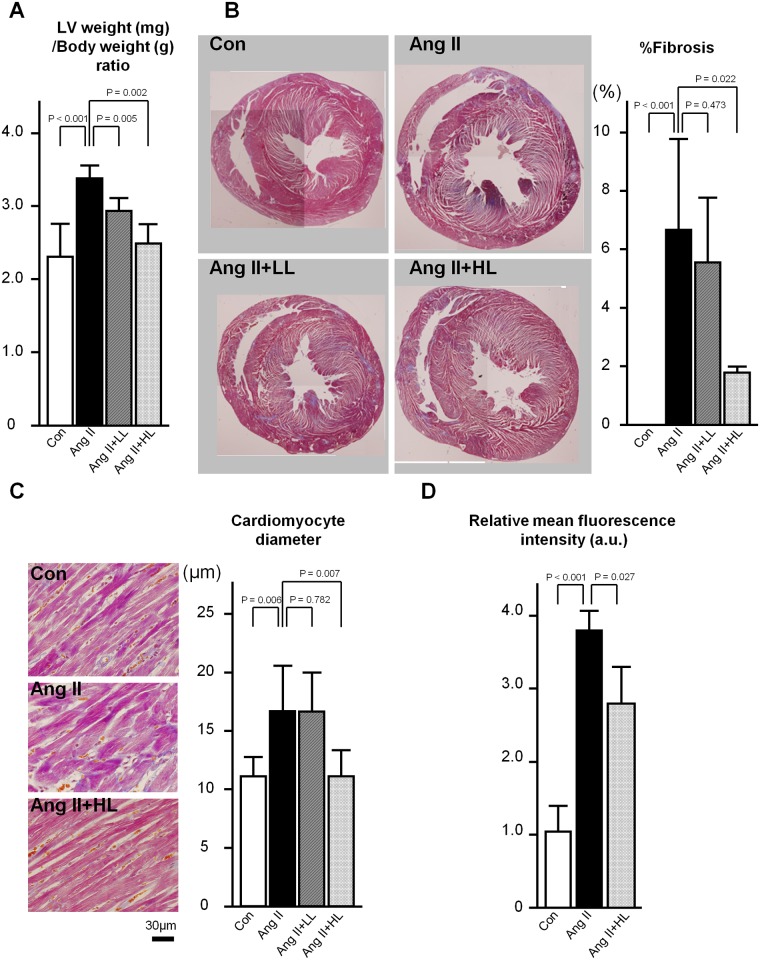
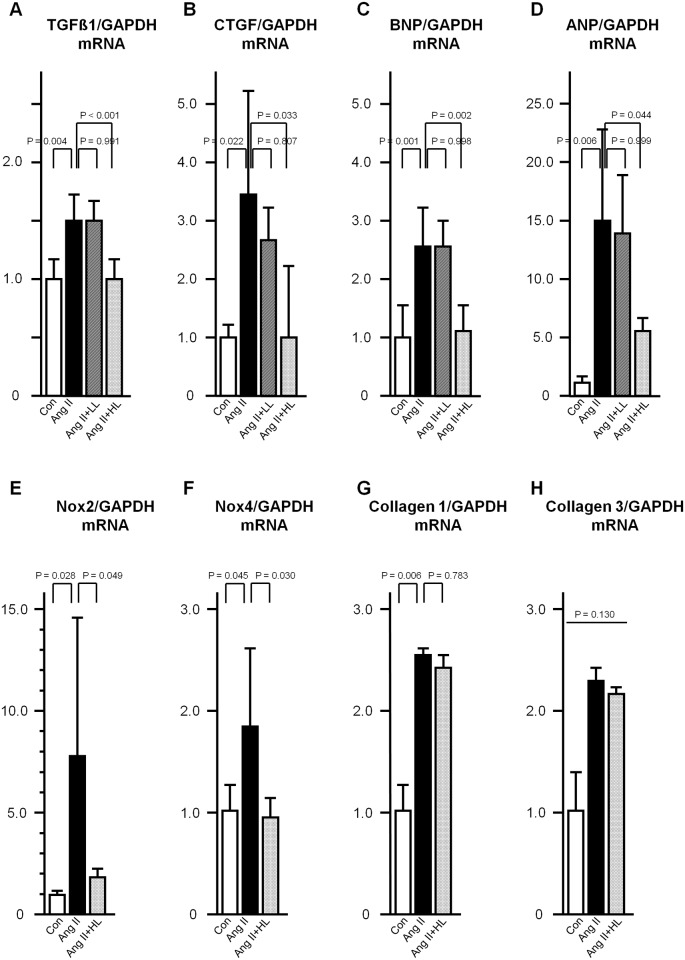
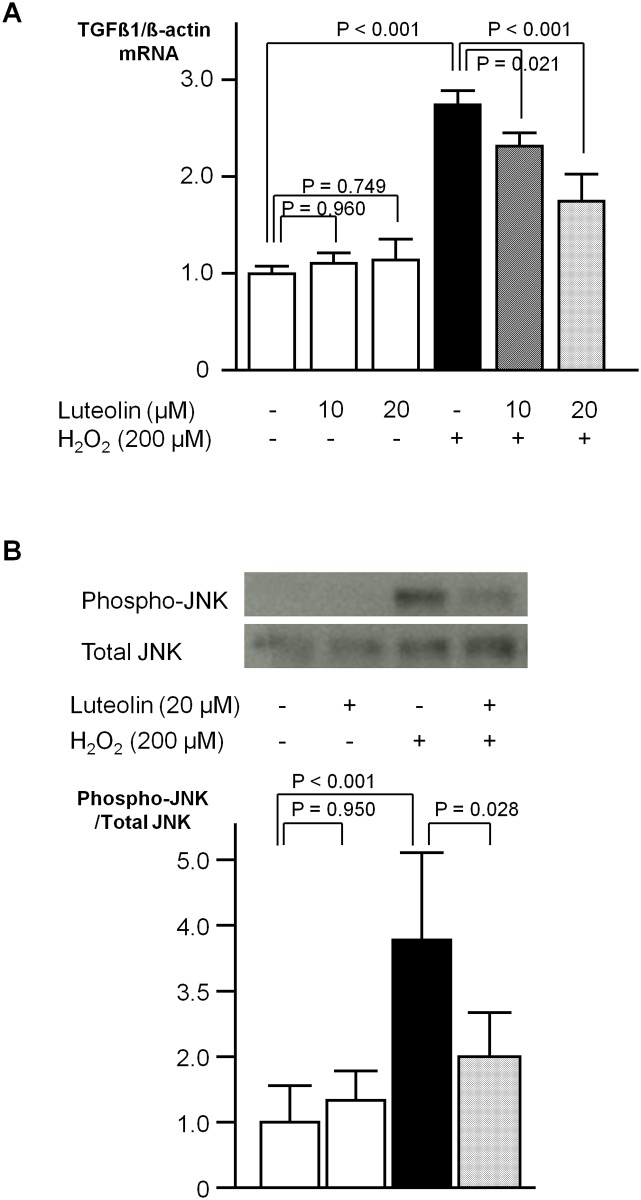
Oxidative stress has been implicated in cardiac remodeling (cardiac fibrosis and hypertrophy), which impairs cardiac function and metabolism; therefore, it is anticipated antioxidative compounds will have protective properties against cardiac remodeling. Luteolin (3',4',5,7-tetrahydroxyflavone), a widely distributed flavonoid found in many herbal extracts including celery, green pepper, perilla leaves and seeds, and chamomile, is a known to be a potent antioxidant and was previously demonstrated to exert an antifibrotic effect in the lungs and the liver. In this study, we clearly demonstrate that oral pretreatment with the higher-luteolin diet (0.035% (wt/wt)) protected against cardiac fibrosis and hypertrophy as well as a hyperoxidative state in Ang II-infused rats. In cardiac tissue, increased gene expression levels of TGFβ1, CTGF, Nox2, Nox4, ANP, and BNP induced by Ang II were restored by oral pretreatment of this high-luteolin diet. In cultured rat cardiac fibroblasts, H2O2-induced TGFβ1 expression and the phosphorylation of JNK were suppressed by luteolin pretreatment. In conclusion, food-derived luteolin has protective actions against Ang II-induced cardiac remodeling, which could be mediated through attenuation of oxidative stress.
氧化应激与心脏重塑(心脏纤维化和肥大)有关,这会损害心脏功能和代谢;因此,预计抗氧化化合物将对心脏重塑具有保护作用。木犀草素(3',4',5,7 - 四羟基黄酮)是一种广泛分布的黄酮类化合物,存在于许多草药提取物中,包括芹菜、青椒、紫苏叶和种子以及洋甘菊,它是一种已知的强效抗氧化剂,先前已证明其在肺和肝脏中具有抗纤维化作用。在本研究中,我们清楚地表明,用高木犀草素饮食(0.035%(重量/重量))进行口服预处理可预防Ang II灌注大鼠的心脏纤维化、肥大以及高氧化状态。在心脏组织中,Ang II诱导的TGFβ1、CTGF、Nox2、Nox4、ANP和BNP基因表达水平升高通过这种高木犀草素饮食的口服预处理得以恢复。在培养的大鼠心脏成纤维细胞中,木犀草素预处理可抑制H2O2诱导的TGFβ1表达和JNK的磷酸化。总之,食物来源的木犀草素对Ang II诱导的心脏重塑具有保护作用,这可能是通过减轻氧化应激介导的。