Tageldin M Elhosseini, Alrashid Mamun, Khoriati Al-Achraf, Gadikoppula Srinivas, Atkinson Henry Dushan
Department of Trauma and Orthopaedics, North Middlesex University Hospital, London, N18 1QX, UK.
St George's Hospital, Blackshaw Rd, Tooting, London, SW17 0QT, UK.
J Orthop Surg Res. 2015 Sep 2;10:134. doi: 10.1186/s13018-015-0277-6.
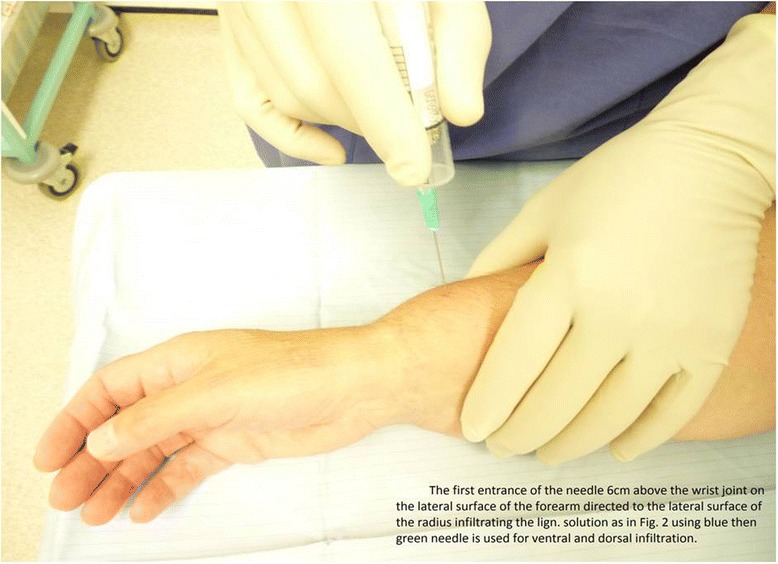
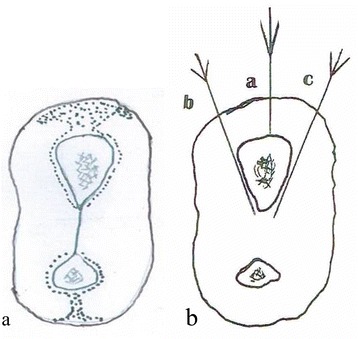
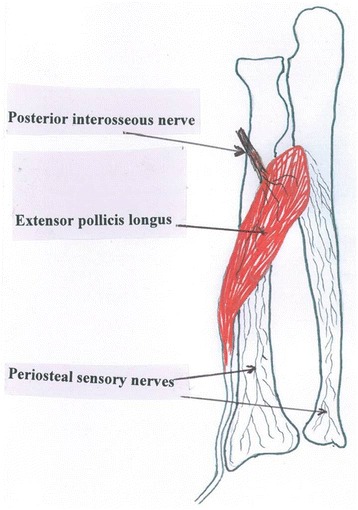
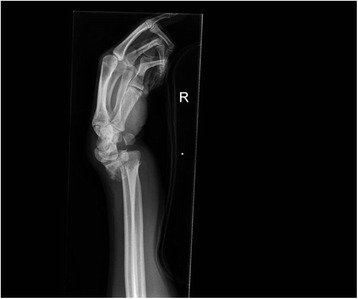
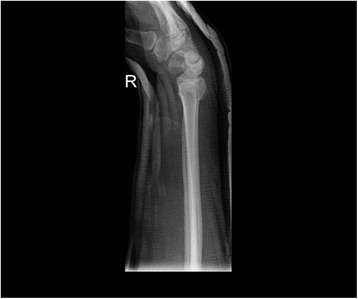
We present a pilot series of patients with distal forearm fractures manipulated following a proximal periosteal nerve block with local anaesthesia. This is a novel technique which can be utilised in adults and children and is described herein.
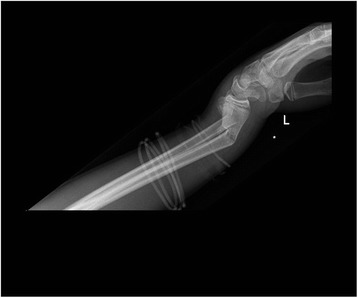
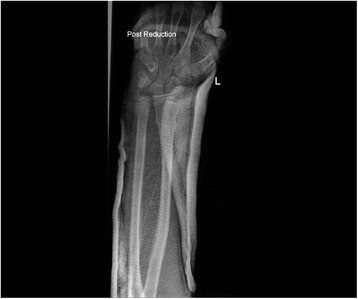
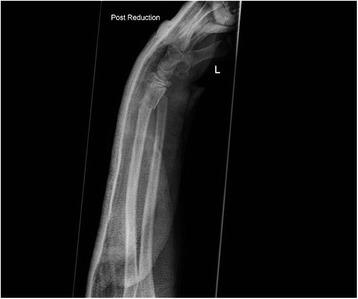
With a median of 40 years (range 10-81 years), 42 patients (16 children) with distal radial and ulnar fractures were included. Of these patients, 40 underwent periosteal blocks in the emergency room or fracture clinic; 2 were already inpatients. Fractures were manipulated routinely and immobilised with plaster. Mobile fluoroscopy was not used for patients in the emergency department or fracture clinic.
Of the 42 patients, 40 patients (95%) had successful fracture manipulation and did not require subsequent treatment. Two patients (5%) needed subsequent surgery, one for K-wire stabilisation of their fracture and the second for volar plate fixation. The procedure was described as painless in 35 (83%) patients (visual analogue scale/VAS score 0), with 6 (14%) suffering minimal pain (VAS 1-3). In the 12-16-year age group, 15 patients (94%) described the manipulation as painless; 1 patient described the procedure as minimally painful. No additional analgesia of any kind was given. There were no direct complications from any of the periosteal nerve blocks.
Local anaesthetic periosteal nerve blocks injected proximally to the fracture sites are a simple and yet very effective new technique which provide good/excellent analgesia and facilitate the reduction of distal radial and ulnar fractures.
我们展示了一组采用近端骨膜神经阻滞联合局部麻醉手法治疗的前臂远端骨折患者的初步病例系列。这是一种可用于成人和儿童的新技术,本文对此进行描述。
纳入42例桡骨和尺骨远端骨折患者,年龄中位数为40岁(范围10 - 81岁),其中16例为儿童。这些患者中,40例在急诊室或骨折诊所接受了骨膜阻滞;2例为住院患者。骨折常规进行手法复位并用石膏固定。急诊室或骨折诊所的患者未使用移动荧光透视。
42例患者中,40例(95%)骨折手法复位成功,无需后续治疗。2例患者(5%)需要后续手术,1例因骨折克氏针固定,另1例因掌侧钢板固定。35例(83%)患者称该操作无痛(视觉模拟评分法/VAS评分为0),6例(14%)有轻微疼痛(VAS 1 - 3)。在12 - 16岁年龄组中,15例(94%)患者称手法复位无痛;1例患者称该操作有轻微疼痛。未给予任何额外的镇痛措施。骨膜神经阻滞均未引起直接并发症。
在骨折部位近端注射局部麻醉骨膜神经阻滞是一种简单而非常有效的新技术,能提供良好/极佳的镇痛效果,并有助于桡骨和尺骨远端骨折的复位。