Hakimzadeh Nazanin, Nossent A Yaël, van der Laan Anja M, Schirmer Stephan H, de Ronde Maurice W J, Pinto-Sietsma Sara-Joan, van Royen Niels, Quax Paul H A, Hoefer Imo E, Piek Jan J
Department of Biomedical Engineering & Physics, Academic Medical Center, University of Amsterdam, Amsterdam, The Netherlands.
Department of Surgery, University Medical Center, Leiden, The Netherlands; Einthoven Laboratory for Experimental Vascular Medicine, Leiden, University Medical Center, Leiden, The Netherlands.
PLoS One. 2015 Sep 2;10(9):e0137035. doi: 10.1371/journal.pone.0137035. eCollection 2015.
Coronary collateral arteries function as natural bypasses in the event of coronary obstruction. The degree of collateral network development significantly impacts the outcome of patients after an acute myocardial infarction (AMI). MicroRNAs (miRNAs, miRs) have arisen as biomarkers to identify heterogeneous patients, as well as new therapeutic targets in cardiovascular disease. We sought to identify miRNAs that are differentially expressed in chronic total occlusion (CTO) patients with well or poorly developed collateral arteries.
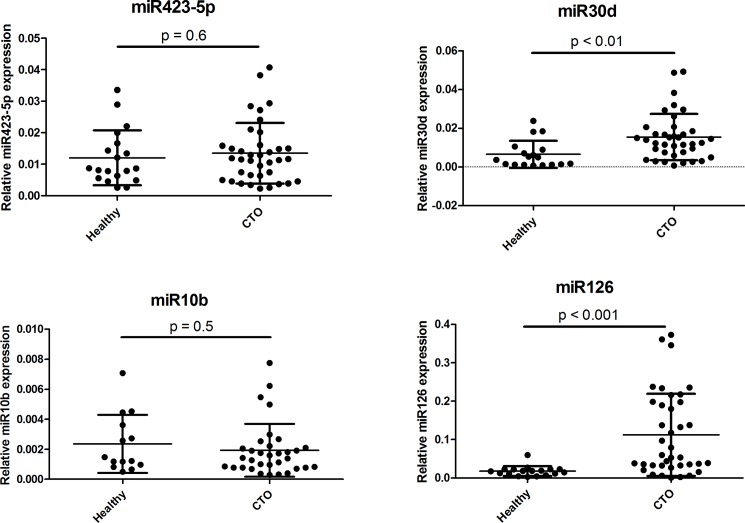
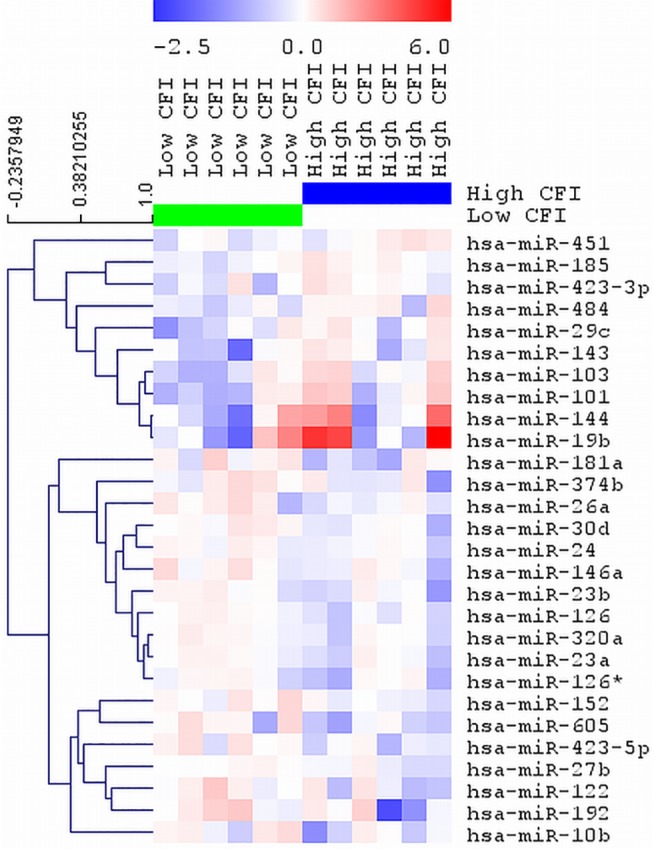
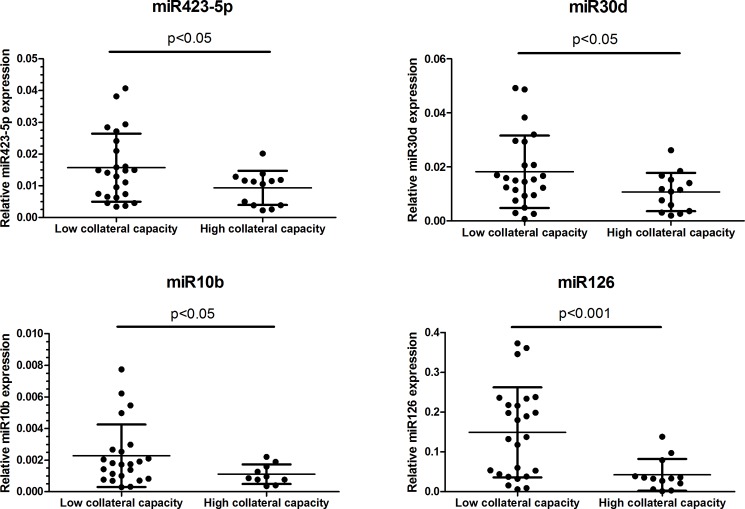
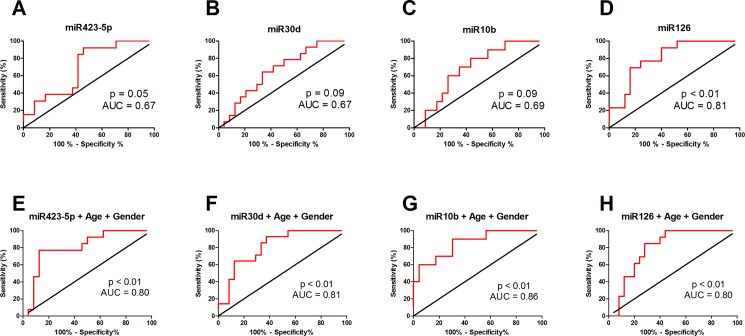
Forty-one CTO patients undergoing coronary angiography and invasive assessment of their coronary collateralization were dichotomized based on their collateral flow index (CFI). After miRNA profiling was conducted on aortic plasma, four miRNAs were selected for validation by real-time quantitative reverse transcription polymerase chain reaction in patients with low (CFI<0.39) and high (CFI>0.39) collateral artery capacity. We confirmed significantly elevated levels of miR423-5p (p<0.05), miR10b (p<0.05), miR30d (p<0.05) and miR126 (p<0.001) in patients with insufficient collateral network development. We further demonstrated that each of these miRNAs could serve as circulating biomarkers to discriminate patients with low collateral capacity (p<0.01 for each miRNA). We also determined significantly greater expression of miR30d (p<0.05) and miR126 (p<0.001) in CTO patients relative to healthy controls.
The present study identifies differentially expressed miRNAs in patients with high versus low coronary collateral capacity. We have shown that these miRNAs can function as circulating biomarkers to discriminate between patients with insufficient or sufficient collateralization. This is the first study to identify miRNAs linked to coronary collateral vessel function in humans.
冠状动脉侧支循环在冠状动脉阻塞时起到天然旁路的作用。侧支循环网络的发育程度对急性心肌梗死(AMI)患者的预后有显著影响。微小RNA(miRNA,miR)已成为识别异质性患者的生物标志物,以及心血管疾病的新治疗靶点。我们试图鉴定在慢性完全闭塞(CTO)患者中,侧支动脉发育良好或不良时差异表达的miRNA。
41例接受冠状动脉造影和冠状动脉侧支循环侵入性评估的CTO患者,根据其侧支血流指数(CFI)分为两组。对主动脉血浆进行miRNA谱分析后,选择4种miRNA通过实时定量逆转录聚合酶链反应在侧支动脉能力低(CFI<0.39)和高(CFI>0.39)的患者中进行验证。我们证实,在侧支循环网络发育不足的患者中,miR423-5p(p<0.05)、miR10b(p<0.05)、miR30d(p<0.05)和miR126(p<0.001)的水平显著升高。我们进一步证明,这些miRNA中的每一种都可以作为循环生物标志物来区分侧支能力低的患者(每种miRNA的p<0.01)。我们还确定,与健康对照相比,CTO患者中miR30d(p<0.05)和miR126(p<0.001)的表达明显更高。
本研究鉴定了冠状动脉侧支能力高与低的患者中差异表达的miRNA。我们已经表明,这些miRNA可以作为循环生物标志物来区分侧支循环不足或充足的患者。这是第一项在人类中鉴定与冠状动脉侧支血管功能相关的miRNA的研究。