Choi Seng Jin, Kim Min-Hye, Jeon Jinseong, Kim Oh Youn, Choi Youngwoo, Seo Jihye, Hong Sung-Wook, Lee Won-Hee, Jeon Seong Gyu, Gho Yong Song, Jee Young-Koo, Kim Yoon-Keun
Department of Life Sciences, Pohang University of Science and Technology (POSTECH), Pohang, Republic of Korea.
Department of Medicine, Ewha Womans University School of Medicine and Ewha Institute of Convergence Medicine, Ewha Womans Medical Center, Seoul, Republic of Korea.
PLoS One. 2015 Sep 2;10(9):e0136021. doi: 10.1371/journal.pone.0136021. eCollection 2015.
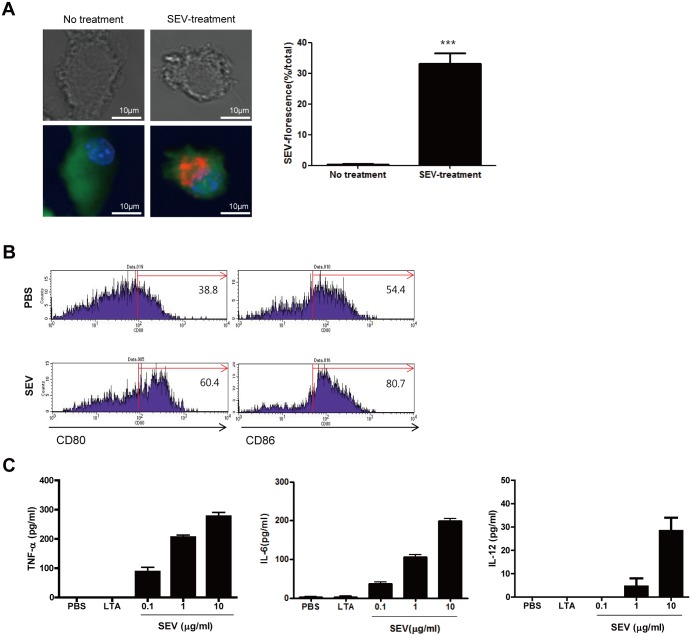
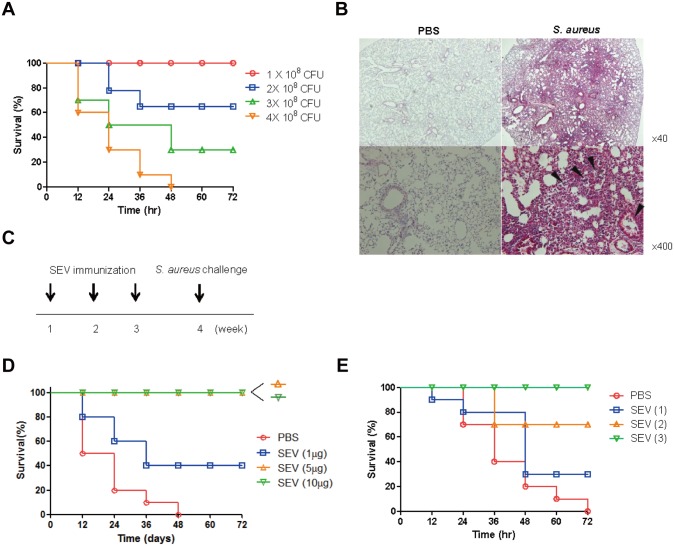
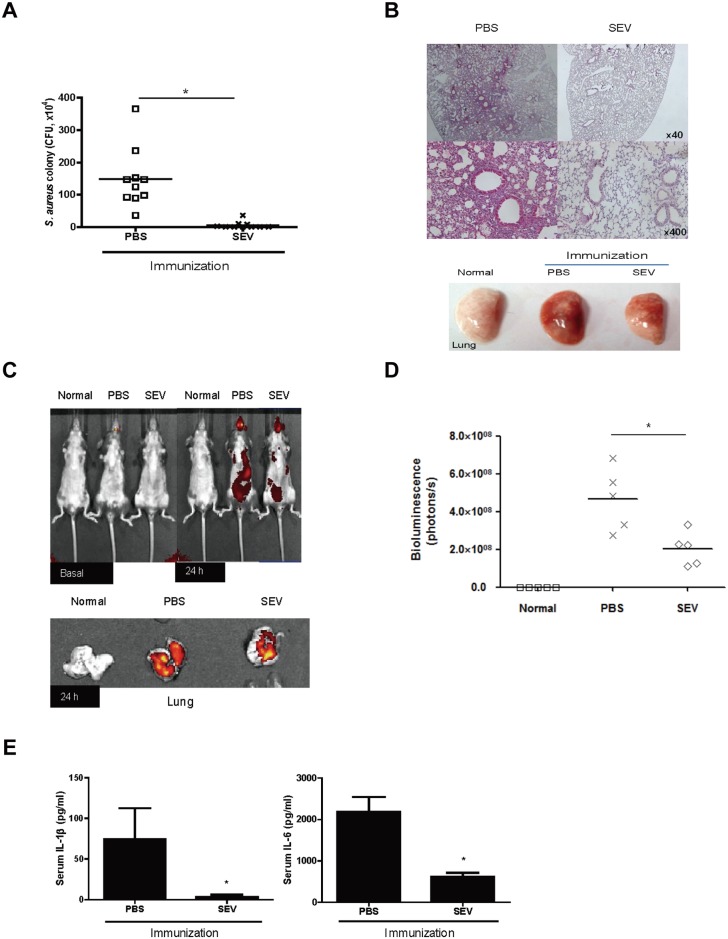
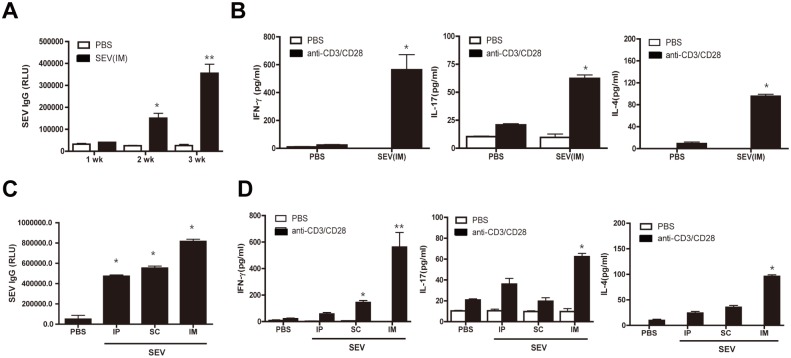
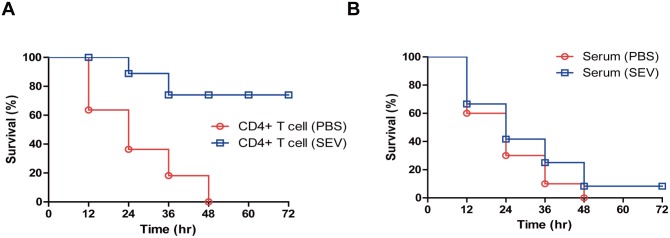
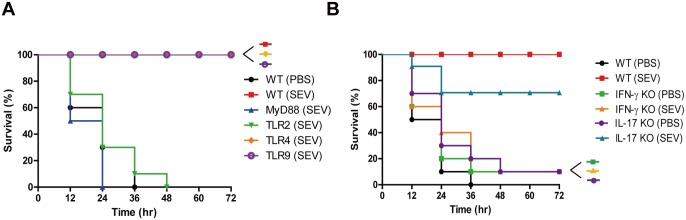
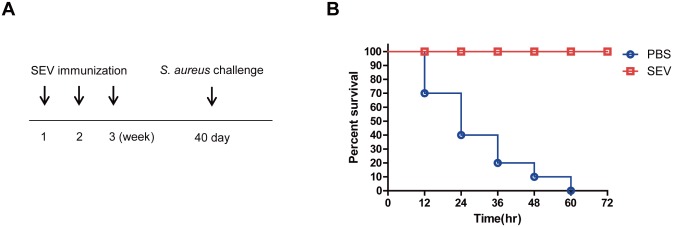
Staphylococcus aureus is an important pathogenic bacterium that causes various infectious diseases. Extracellular vesicles (EVs) released from S. aureus contain bacterial proteins, nucleic acids, and lipids. These EVs can induce immune responses leading to similar symptoms as during staphylococcal infection condition and have the potential as vaccination agent. Here, we show that active immunization (vaccination) with S. aureus-derived EVs induce adaptive immunity of antibody and T cell responses. In addition, these EVs have the vaccine adjuvant ability to induce protective immunity such as the up-regulation of co-stimulatory molecules and the expression of T cell polarizing cytokines in antigen-presenting cells. Moreover, vaccination with S. aureus EVs conferred protection against lethality induced by airway challenge with lethal dose of S. aureus and also pneumonia induced by the administration of sub-lethal dose of S. aureus. These protective effects were also found in mice that were adoptively transferred with splenic T cells isolated from S. aureus EV-immunized mice, but not in serum transferred mice. Furthermore, this protective effect of S. aureus EVs was significantly reduced by the absence of interferon-gamma, but not by the absence of interleukin-17. Together, the study herein suggests that S. aureus EVs are a novel vaccine candidate against S. aureus infections, mainly via Th1 cellular response.
金黄色葡萄球菌是一种重要的致病细菌,可引发多种传染病。金黄色葡萄球菌释放的细胞外囊泡(EVs)含有细菌蛋白、核酸和脂质。这些EVs可诱导免疫反应,导致出现与葡萄球菌感染时相似的症状,并且具有作为疫苗制剂的潜力。在此,我们表明用源自金黄色葡萄球菌的EVs进行主动免疫(接种疫苗)可诱导抗体和T细胞反应的适应性免疫。此外,这些EVs具有疫苗佐剂能力,可诱导保护性免疫,如共刺激分子的上调以及抗原呈递细胞中T细胞极化细胞因子的表达。而且,用金黄色葡萄球菌EVs接种疫苗可提供保护,抵御致死剂量的金黄色葡萄球菌气道攻击所诱导的致死性以及亚致死剂量的金黄色葡萄球菌给药所诱导的肺炎。在接受从经金黄色葡萄球菌EVs免疫的小鼠中分离的脾T细胞过继转移的小鼠中也发现了这些保护作用,但在血清转移的小鼠中未发现。此外,金黄色葡萄球菌EVs的这种保护作用在缺乏干扰素-γ时显著降低,但在缺乏白细胞介素-17时未降低。总之,本文的研究表明金黄色葡萄球菌EVs是一种针对金黄色葡萄球菌感染的新型疫苗候选物,主要通过Th1细胞反应发挥作用。