Li Xiaoyu, Ouyang Jing, Zhou Yonghua, Yang Huaming
Centre for Mineral Materials, School of Minerals Processing and Bioengineering, Central South University, Changsha 410083, China.
School of Chemistry and Chemical Engineering, Central South University, Changsha 410083, China.
Sci Rep. 2015 Sep 3;5:13763. doi: 10.1038/srep13763.
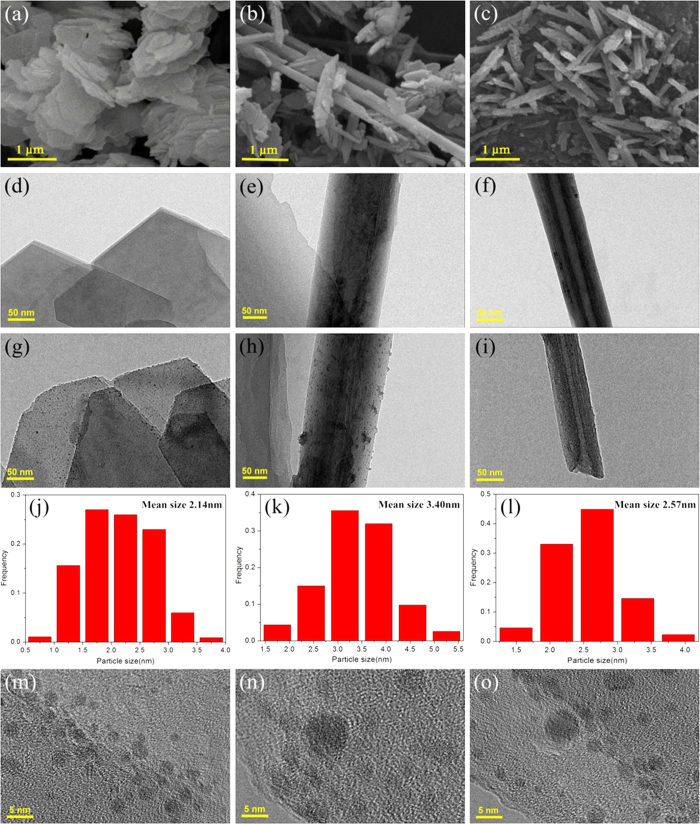
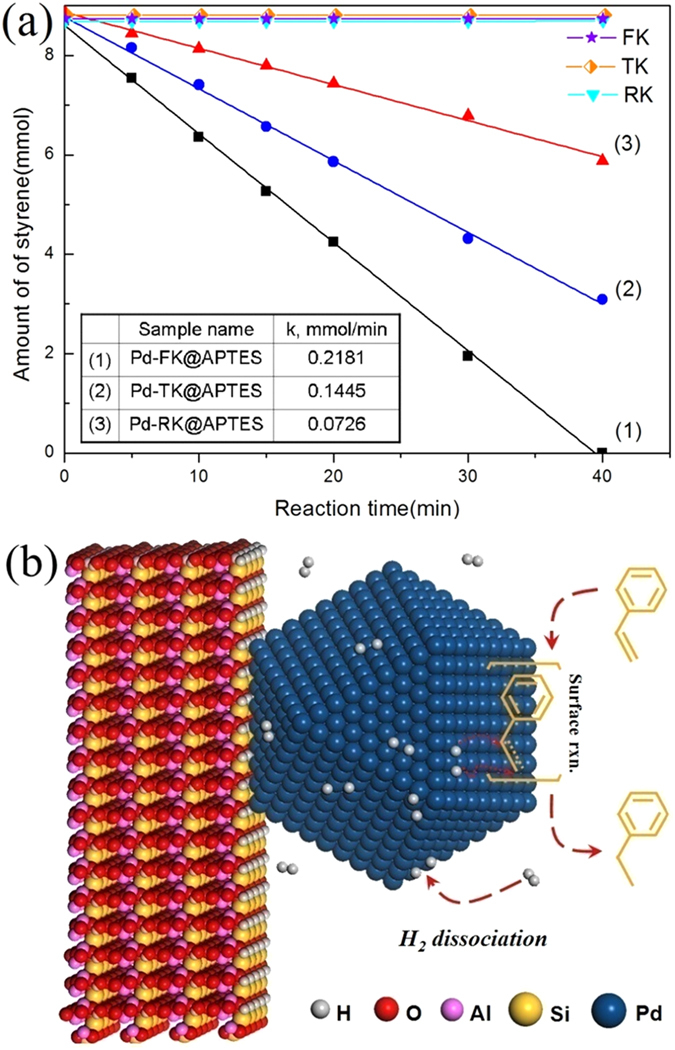
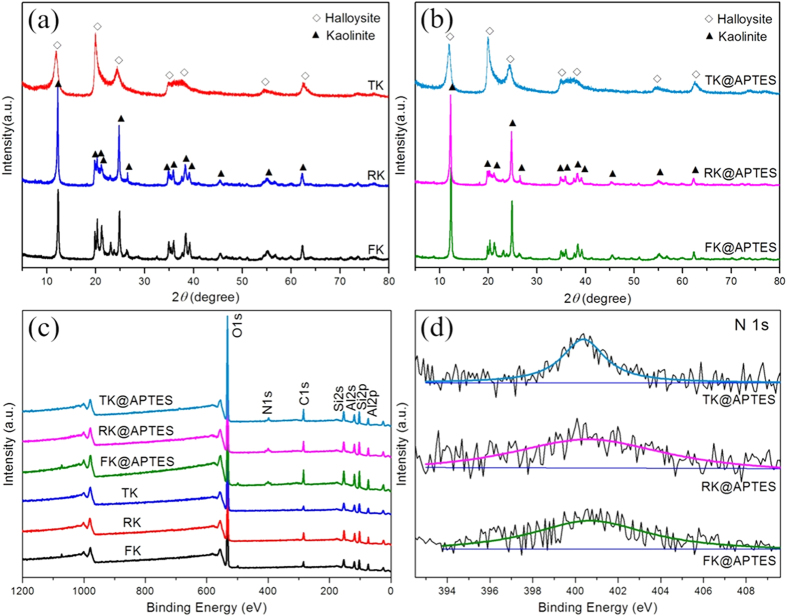
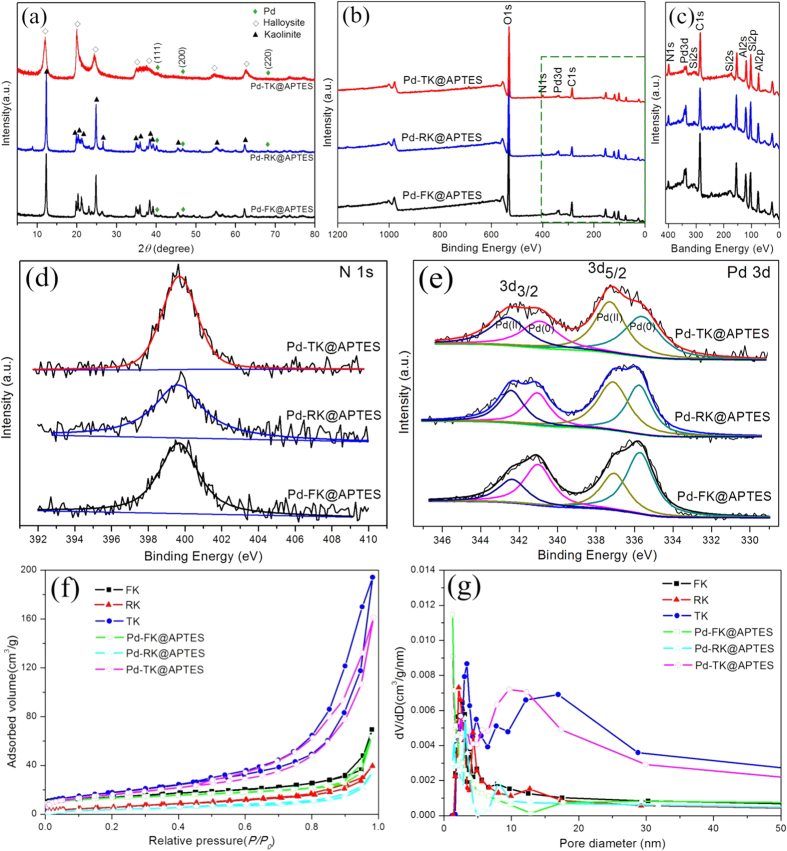
Nanocomposites of aluminosilicate minerals, kaolins (kaolinite and halloysite) with natural different morphologies assembling with palladium (Pd) nanoparticles have been successfully synthesized through strong electrostatic adsorption and chemical bonding after surface modification with 3-aminopropyl triethoxysilane (APTES). Meanwhile, the influence of different morphologies supports on catalytic hydrogenation properties was explored. The surface concentration of amino groups on the kaolins was related to the morphology and surface nature. Electronmicroscopy revealed that the monodisperse Pd nanoparticles were uniformly deposited onto the surface of kaolins, ranging in diameter from 0.5 nm to 5.5 nm. The functional groups could not only improve the dispersion of kaolins with different morphologies in solution, but also enhance the interaction between Pd precursors and kaolins, thus preventing small Pd nanoparticles from agglomerating and leading to high activity for the catalytic hydrogenation of styrene. Pd-FK@APTES was more active compared to other samples. Selecting the kaolin morphology with a different surface nature allows the selective surface modification of a larger fraction of the reactive facets on which the active sites can be enriched and tuned. This desirable surface coordination of catalytically active atoms could substantially improve catalytic activity.
通过3-氨丙基三乙氧基硅烷(APTES)进行表面改性后,利用强静电吸附和化学键合成功合成了具有天然不同形态的铝硅酸盐矿物高岭土(高岭石和埃洛石)与钯(Pd)纳米粒子的纳米复合材料。同时,探讨了不同形态载体对催化氢化性能的影响。高岭土上氨基的表面浓度与形态和表面性质有关。电子显微镜显示,单分散的Pd纳米粒子均匀沉积在高岭土表面,直径范围为0.5纳米至5.5纳米。官能团不仅可以改善不同形态高岭土在溶液中的分散性,还能增强Pd前驱体与高岭土之间的相互作用,从而防止小Pd纳米粒子团聚,并导致对苯乙烯催化氢化具有高活性。与其他样品相比,Pd-FK@APTES活性更高。选择具有不同表面性质的高岭土形态,可以对更大比例的反应面进行选择性表面改性,在这些反应面上活性位点可以富集和调节。催化活性原子的这种理想表面配位可以显著提高催化活性。