Wang Defeng, Zhu Fengping, Fung Ka Ming, Zhu Wei, Luo Yishan, Chu Winnie Chiu Wing, Tong Mok Vincent Chung, Wu Jinsong, Shi Lin, Ahuja Anil T, Mao Ying
Department of Imaging and Interventional Radiology, The Chinese University of Hong Kong, Shatin, New Territories, Hong Kong, China.
Research Center for Medical Image Computing, Department of Imaging and Interventional Radiology, The Chinese University of Hong Kong, Shatin, Hong Kong SAR, China.
Sci Rep. 2015 Sep 14;5:14140. doi: 10.1038/srep14140.
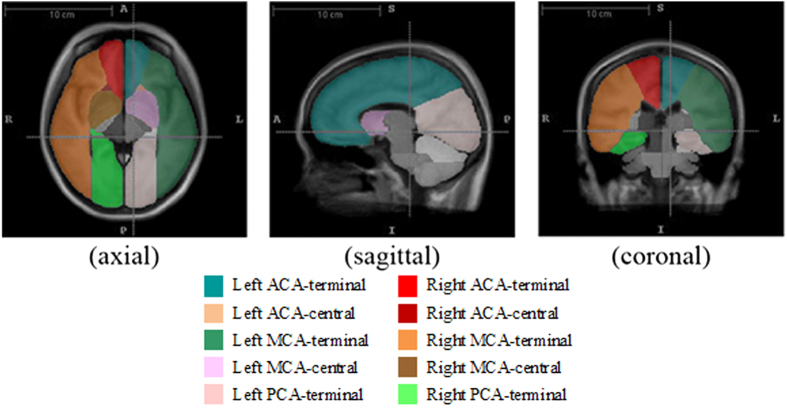
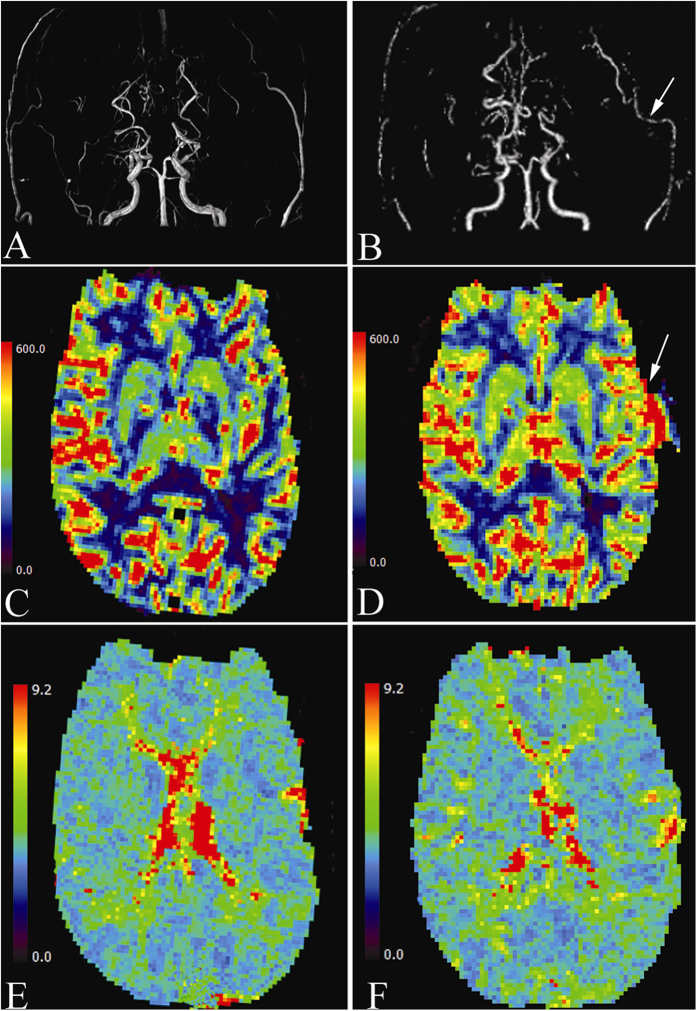
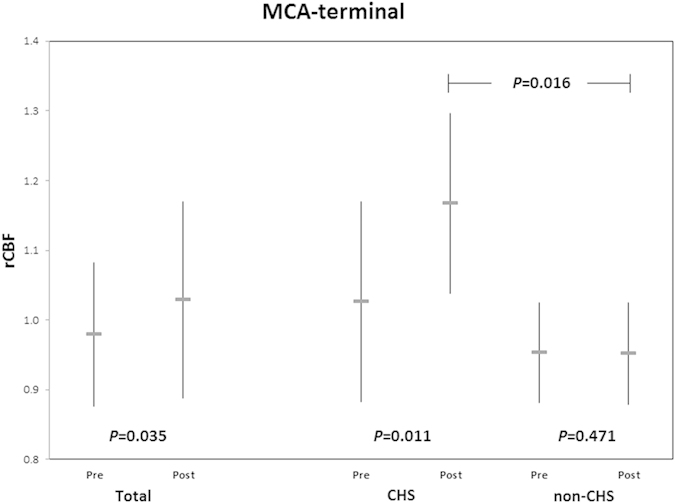
Moyamoya disease leads to the formation of stenosis in the cerebrovasculature. A superficial temporal artery to middle cerebral artery (STA-MCA) bypass is an effective treatment for the disease, yet it is usually associated with postoperative cerebral hyperperfusion syndrome (CHS). This study aimed to evaluate cerebral hemodynamic changes immediately after surgery and assess whether a semiquantitative analysis of an intraoperative magnetic resonance perfusion-weighted image (PWI) is useful for predicting postoperative CHS. Fourteen patients who underwent the STA-MCA bypass surgery were included in this study. An atlas-based registration method was employed for studying hemodynamics in different cerebral regions. Pre- versus intraoperative and group-wise comparisons were conducted to evaluate the hemodynamic changes. A postoperative increase in relative cerebral blood flow (CBF) at the terminal MCA territory (P = 0.035) and drop in relative mean-time-transit at the central MCA territory (P = 0.012) were observed in all patients. However, a significant raise in the increasing ratio of relative-CBF at the terminal MCA territory was only found in CHS patients (P = 0.023). The cerebrovascular changes of the patients after revascularization treatment were confirmed. Intraoperative PWI might be helpful in predicting the change in relative-CBF at MCA terminal territory which might indicate a risk of CHS.
烟雾病会导致脑血管系统形成狭窄。颞浅动脉-大脑中动脉(STA-MCA)搭桥术是治疗该疾病的有效方法,但术后通常会伴有脑过度灌注综合征(CHS)。本研究旨在评估手术后即刻的脑血流动力学变化,并评估术中磁共振灌注加权成像(PWI)的半定量分析是否有助于预测术后CHS。本研究纳入了14例行STA-MCA搭桥手术的患者。采用基于图谱的配准方法研究不同脑区的血流动力学。进行术前与术中及组间比较以评估血流动力学变化。所有患者均观察到大脑中动脉终末段区域相对脑血流量(CBF)术后增加(P = 0.035),大脑中动脉中央段区域相对平均通过时间下降(P = 0.012)。然而,仅在CHS患者中发现大脑中动脉终末段区域相对CBF增加率显著升高(P = 0.023)。血管重建治疗后患者的脑血管变化得到证实。术中PWI可能有助于预测大脑中动脉终末段区域相对CBF的变化,这可能提示存在CHS风险。