Ehrhardt M J, Brazauskas R, He W, Rizzo J D, Shaw B E
Division of Cancer Survivorship, Department of Oncology, St Jude Children's Research Hospital, Memphis, TN, USA.
Division of Biostatistics, Institute for Health and Society, Medical College of Wisconsin, Milwaukee, WI, USA.
Bone Marrow Transplant. 2016 Jan;51(1):83-8. doi: 10.1038/bmt.2015.203. Epub 2015 Sep 14.
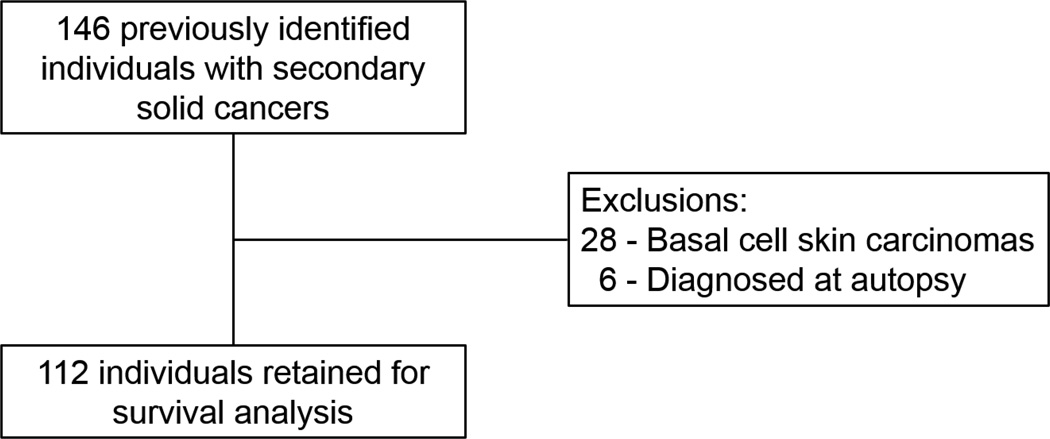
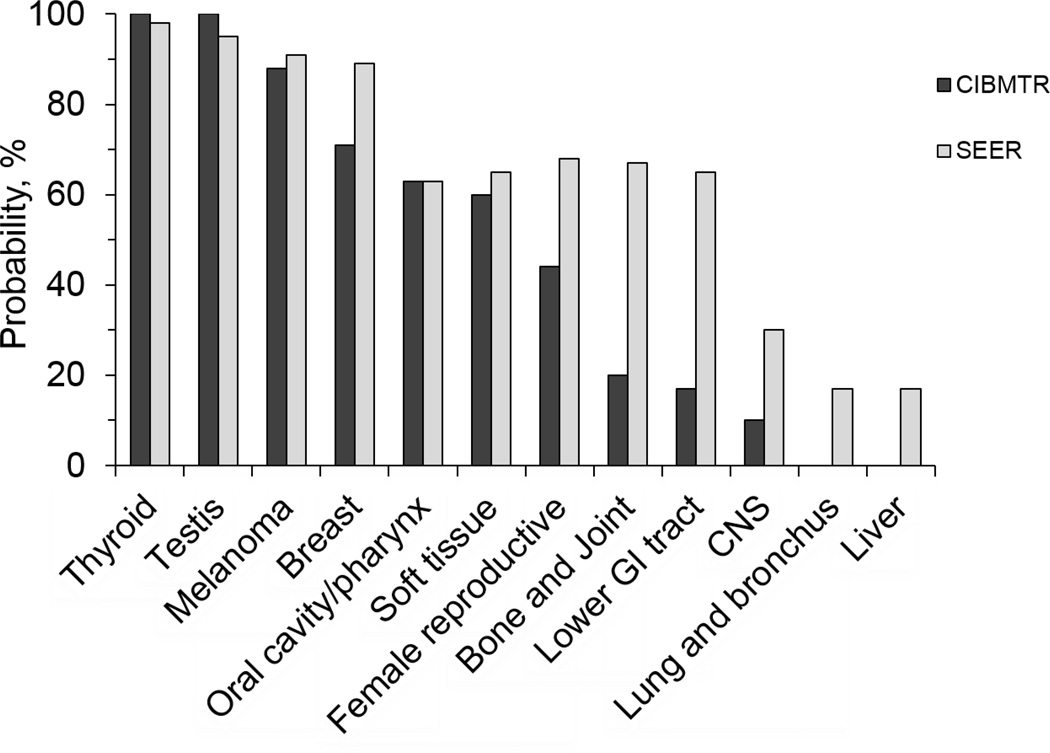
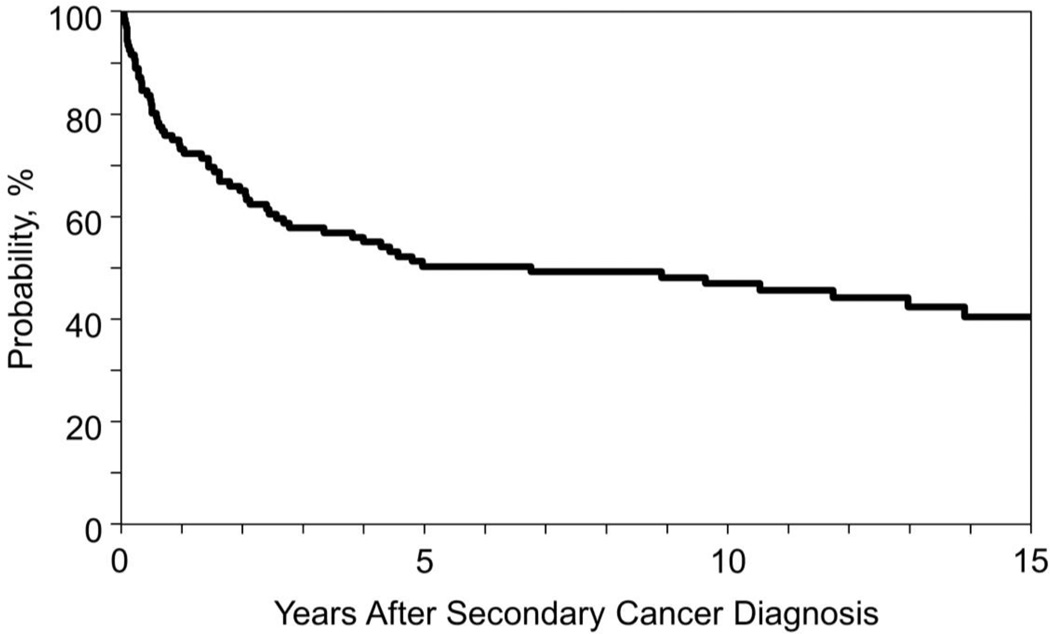
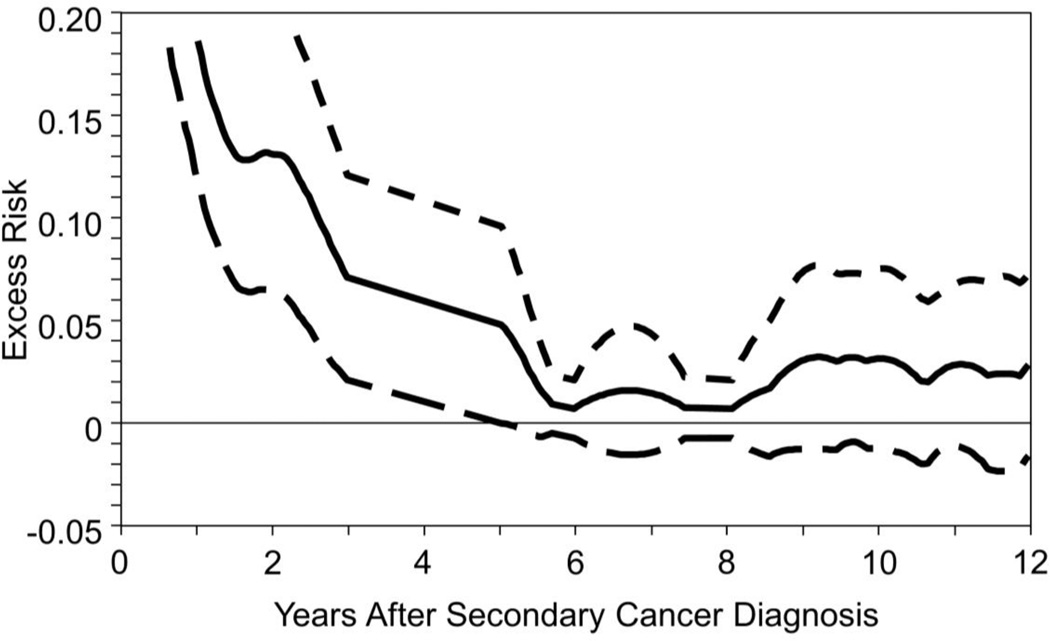
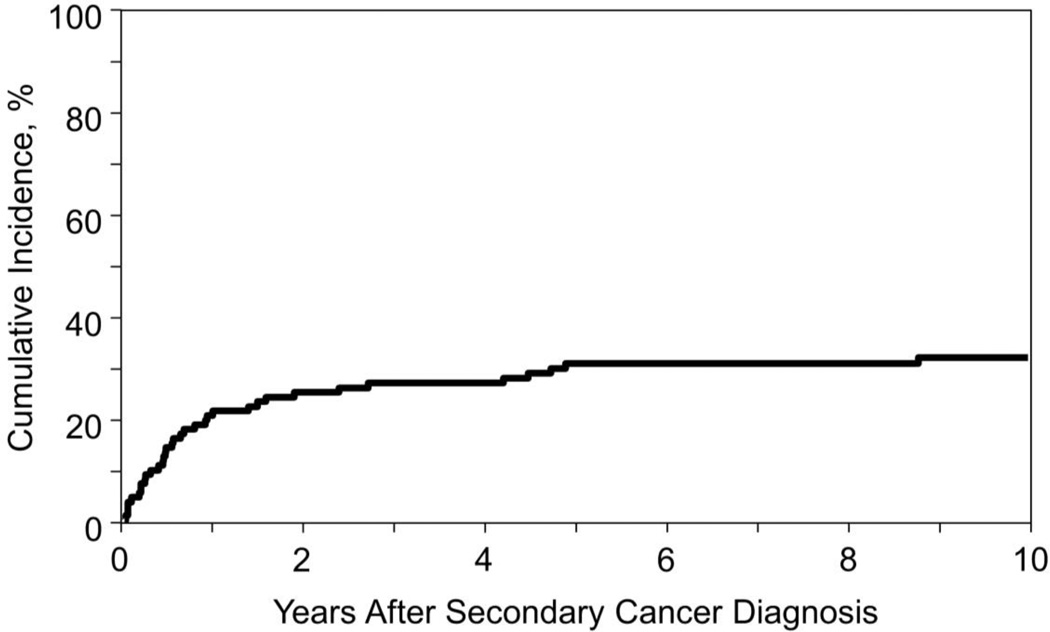
Allogeneic hematopoietic cell transplantation is associated with late adverse effects of therapy, including secondary solid cancers. Most reports address risk factors; however, outcomes after secondary solid cancer development are incompletely described. Our objective was to estimate survival probabilities for transplant recipients dependent on secondary solid cancer subtype. We used a previously identified and published cohort who developed secondary solid cancers following allogeneic transplant. Follow-up for these 112 previously identified patients was extended and their survival probabilities were studied. Median duration of follow-up from the development of secondary cancer for survivors was 11.9 years (range: 0.8-23.4) and 75% were followed >7.0 years. The 5- and 10-year overall survival probabilities were 50% (95% confidence interval (CI): 41-60) and 46% (95% CI: 37-57), respectively. Overall survival varied by secondary cancer type. Secondary cancer was the cause of death in most patients who died following development of melanoma, central nervous system, oral cavity, thyroid, lung, lower gastrointestinal tract and bone cancers. Extended follow-up allowed for the most comprehensive longitudinal evaluation to date of this rare condition. These findings will enhance clinicians' ability to predict outcomes and counsel transplant survivors who develop secondary solid cancers.
异基因造血细胞移植与治疗的晚期不良反应相关,包括继发性实体癌。大多数报告关注危险因素;然而,继发性实体癌发生后的结局描述并不完整。我们的目标是根据继发性实体癌亚型估计移植受者的生存概率。我们使用了一个先前确定并发表的队列,该队列在异基因移植后发生了继发性实体癌。对这112名先前确定的患者进行了延长随访,并研究了他们的生存概率。幸存者从继发性癌症发生开始的中位随访时间为11.9年(范围:0.8 - 23.4年),75%的患者随访时间超过7.0年。5年和10年总生存概率分别为50%(95%置信区间(CI):41 - 60)和46%(95%CI:37 - 57)。总生存因继发性癌症类型而异。在黑色素瘤、中枢神经系统、口腔、甲状腺、肺、下消化道和骨癌发生后死亡的大多数患者中,继发性癌症是死亡原因。延长随访使得对这种罕见疾病进行了迄今为止最全面的纵向评估。这些发现将提高临床医生预测结局的能力,并为发生继发性实体癌的移植幸存者提供咨询。