Hallée Stéphanie, Richard Dave
Centre de recherche en infectiologie, CHU-Université Laval, Quebec City, Quebec, Canada.
PLoS One. 2015 Sep 16;10(9):e0138626. doi: 10.1371/journal.pone.0138626. eCollection 2015.
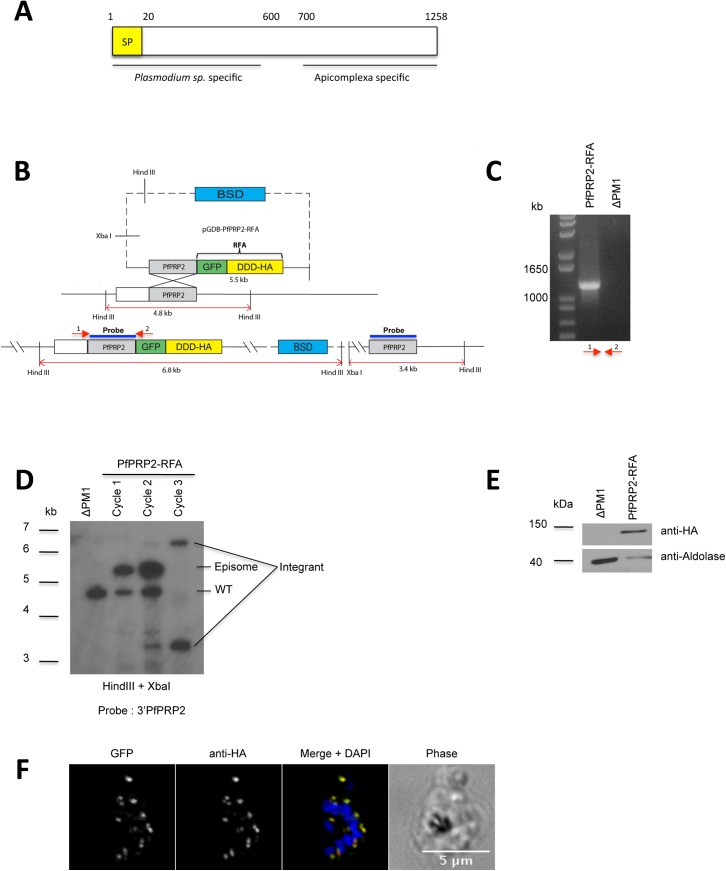
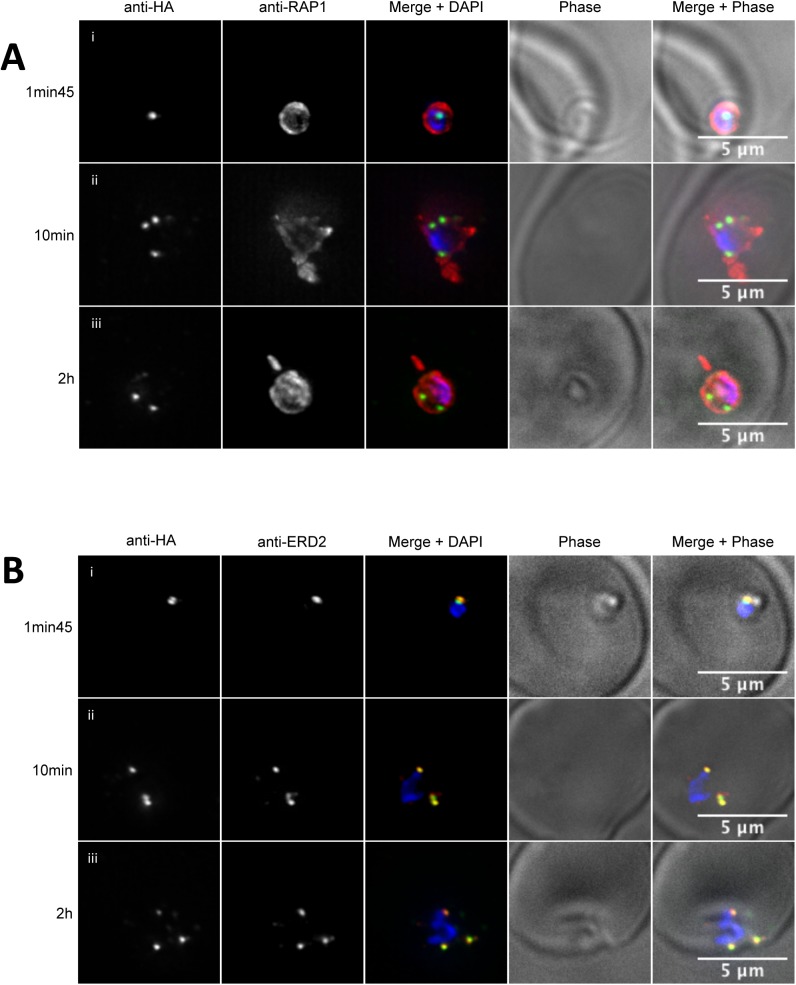
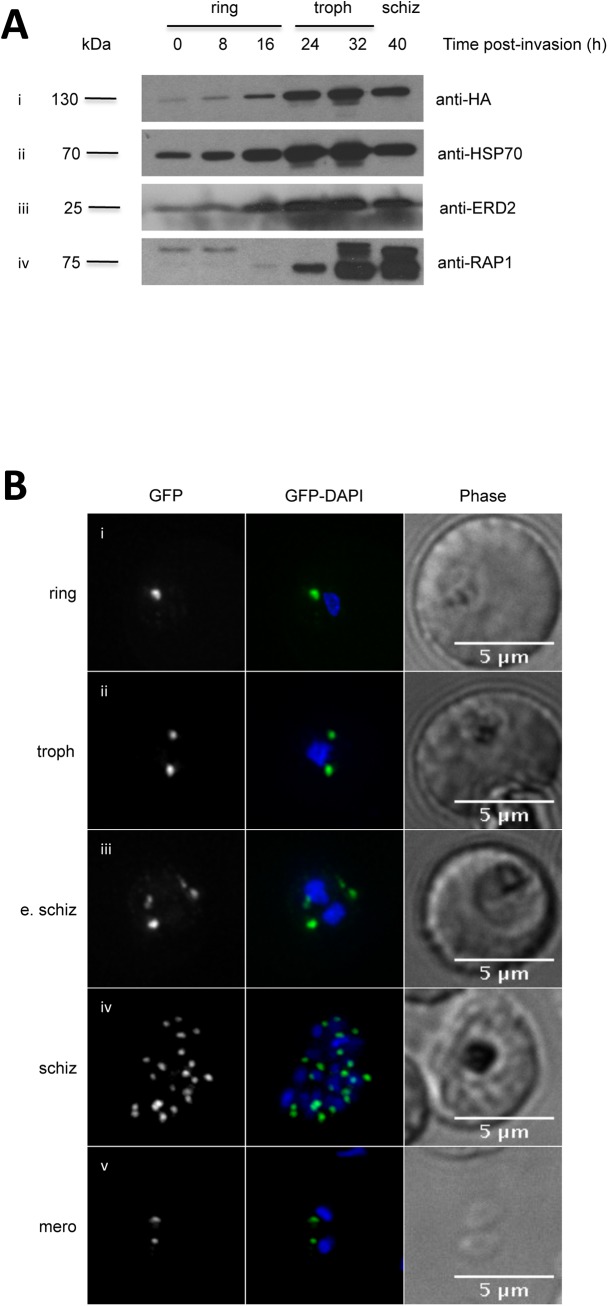
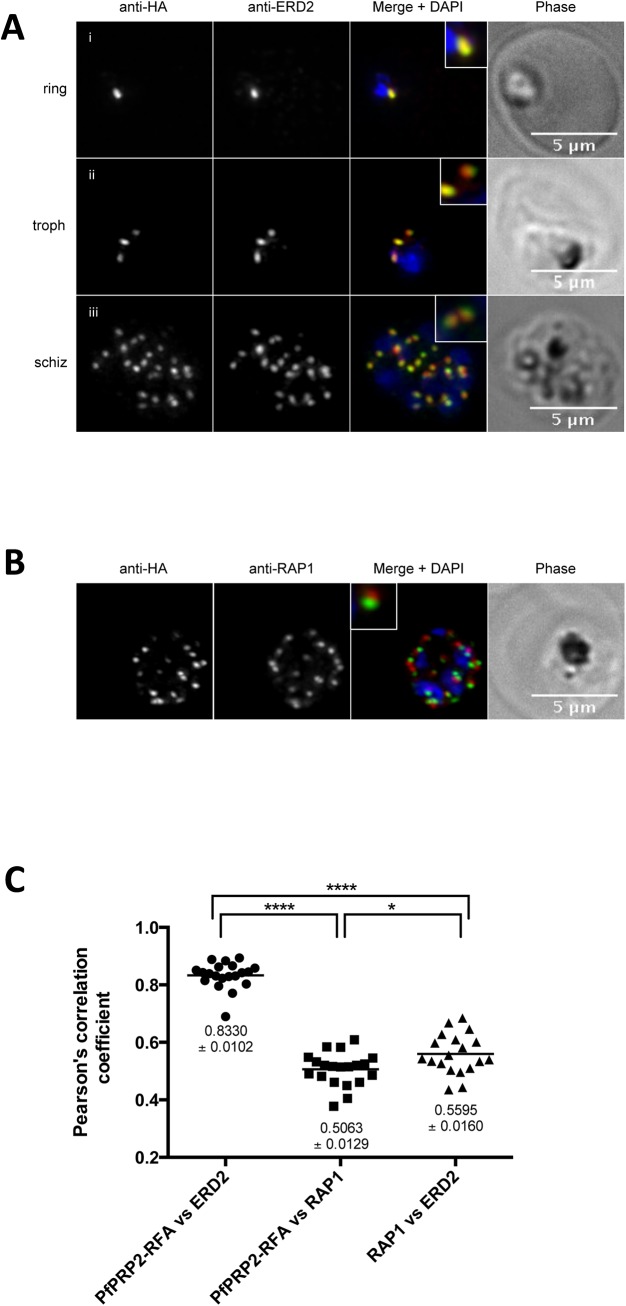
Invasion of a red blood cell by Plasmodium falciparum merozoites is an essential step in the malaria lifecycle. Several of the proteins involved in this process are stored in the apical complex of the merozoite, a structure containing secretory organelles that are released at specific times during invasion. The molecular players involved in erythrocyte invasion thus represent potential key targets for both therapeutic and vaccine-based strategies to block parasite development. In our quest to identify and characterize new effectors of invasion, we investigated the P. falciparum homologue of a P. berghei protein putatively localized to the rhoptries, the Putative rhoptry protein 2 (PbPRP2). We show that in P. falciparum, the protein colocalizes extensively with the Golgi apparatus across the asexual erythrocytic cycle. Furthermore, imaging of merozoites caught at different times during invasion show that PfPRP2 is not secreted during the process instead staying associated with the Golgi apparatus. Our evidence therefore suggests that PfPRP2 is a Golgi protein and that it is likely not a direct effector in the process of merozoite invasion.
恶性疟原虫裂殖子侵入红细胞是疟疾生命周期中的一个关键步骤。参与这一过程的几种蛋白质储存在裂殖子的顶端复合体中,该结构包含分泌细胞器,在侵入过程中的特定时间释放。因此,参与红细胞侵入的分子成分是阻断寄生虫发育的治疗和疫苗策略的潜在关键靶点。在我们寻找和鉴定新的侵入效应子的过程中,我们研究了伯氏疟原虫一种可能定位于棒状体的蛋白质的恶性疟原虫同源物,即假定的棒状体蛋白2(PbPRP2)。我们发现,在恶性疟原虫中,该蛋白在整个无性红细胞周期中与高尔基体广泛共定位。此外,对侵入过程中不同时间捕获的裂殖子进行成像显示,PfPRP2在该过程中不分泌,而是与高尔基体保持关联。因此,我们的证据表明PfPRP2是一种高尔基体蛋白,并且它可能不是裂殖子侵入过程中的直接效应子。